


Just a few months after the Revolutionary War began, Congress authorized the invasion of Canada. After some initial success, the invading forces were defeated at the Battle of Quebec in December 1775 and were forced out of Canada entirely the following June. Despite this failure, many still expected Canada to join the union as the fourteenth state. Indeed, a British-held Canada was widely viewed as a threat to the security of the United States. It provided, in the eyes of Revolutionaries, an easy corridor for British attacks against the Northern states and facilitated Great Britain’s efforts to cultivate alliances with Native Americans. Large British offensives from Canada in 1776 and 1777, including the participation of many Indigenous warriors in the latter campaign, confirmed these fears.
It is then not surprising that on the British defeat at Saratoga in 1777 that Patriot leaders favored another attempt at capturing Canada and “liberating” the province’s inhabitants. Congress subsequently authorized an “irruption” into Canada in January 1778. Yet, the actual planning and logistics of the campaign have largely been overlooked. Instead, this invasion has usually been framed within the politics of the “Conway Cabal,” obscuring the origins of the operation, its rationale, the broader military context, and why it ultimately failed. The planned invasion was motivated primarily by concerns over the nation’s geographic security and formed part of a greater continental vision embraced by many Americans, who imagined the new republic extending beyond the thirteen original states. Its failure resulted from a combination of poor timing, inadequate preparation, political infighting, different strategic priorities within American leadership, and increased war weariness among the civilian population.
Even before the Saratoga surrender, some Americans were contemplating a second expedition against Canada. Maj. Gen. Horatio Gates, who commanded the Northern Continental Army, talked about this possibility with his former aide-de-camp, Col. Walter Stewart. On October 12, Stewart wrote to Gates with an update on affairs in Pennsylvania, but added the remark, “I hope one day or other to pay you a visit in Canada, when you have the Government.”[1]
With the British defeat at Saratoga in October 1777, simmering thoughts of acquiring Canada rose to the surface. Col. Moses Hazen was among the most enthusiastic about such an endeavor. Although born in Massachusetts, Hazen settled in Canada after the French and Indian War where he became a prominent seigneur and merchant. In January 1776, while Continental forces still controlled much of Quebec, Hazen raised the 2nd Canadian Regiment. Because he and his men had been forced from their homes, Hazen had particularly strong motivations to support another invasion. Writing on October 26, 1777, Hazen proposed to Gates that the army should undertake a winter campaign. Canada was “unguarded” and it would be “an Easy, ‘tho’ a Great Conquest.” He believed that most Canadians would support them. Hazen also argued there were many practical benefits to acquiring Canada. Seizing Montreal would sever ties between interior Indigenous nations and Great Britain, bringing peace with Indians “from Hudsons Bay to Mexico.” The conquest of Canada would also make noise in Europe and contribute to commercial growth for the new nation. Hazen thought a winter expedition was essential because reinforcements could not arrive from Europe until the frozen St. Lawrence River melted in the spring. The invading force would seize control of Lake Champlain and then capture Montreal, which would be a base for taking the rest of the province. Hazen volunteered his services, saying that he would be of great use because “I perfectly know the whole Country by Land and Water.”[2]

Hazen was hardly alone in thinking it was the right time to strike. “Congress have now an opportunity of getting Quebeck, and all of Canada, in our hands, before any Reinforcement can arrive,” Gov. John Rutledge of South Carolina observed. A quick occupation would secure “the Confidence of the people there” and bring another state into the American union. Congress itself showed interest. On November 29, it created a committee tasked with translating the Articles of Confederation into French, drawing up an address inviting Canadians to join the United States, and developing a plan to win Canadians to their side.[3]
To the north, Gates began taking preliminary measures for an offensive. On November 15, he ordered Col. Timothy Bedel of New Hampshire to raise a regiment of five hundred volunteers which would be based out of Coos (the Upper Connecticut River Valley). Bedel was to lead his regiment to St. John’s (now Saint-Jean-sur-Richelieu), located on the Richelieu River, and seize the fort if it could be surprised. Then, Bedel was to burn the fort and the ships, along with “every Article that can be Burnt.” On the other hand, if Bedel learned that the fort was too strong to take, he should focus on destroying the vessels. In either situation, he was to return to Coos after the raid.[4]
In early December, Congress developed a secret plan to raid St. John’s that resembled what Gates had directed to Bedel. James Duane, a congressman from New York, wrote that the operation entailed “a sudden Irruption with 3 or 400 Volunteers, to attempt to burn the Enemy’s shipping at St. John’s.” Congress hoped that destroying the British vessels would provide greater security to the northern frontier. At the very least, a successful raid would make it more difficult for the British to advance south on Lake Champlain the next campaign season. Congress tasked Brig. Gen. John Stark of New Hampshire with heading the operation. To maintain secrecy, Duane went to Albany to verbally communicate the instructions to Stark. Consequently, Stark informed Bedel that the expedition was now under his control.[5]
Gates’ ambitions in Canada confronted a problem in early November. Lieut. Col. Alexander Hamilton, aide-de-camp to General George Washington, arrived at Gates’ headquarters in Albany with orders to gather reinforcements for Washington’s army in Pennsylvania. Gates had already sent troops to Maj. Gen. Israel Putnam in the Hudson Highlands and was reluctant to detach more. Initially, Gates only wanted to send one brigade to Washington, but he eventually relented and dispatched two. In writing to Washington on November 7, Gates made clear his dissatisfaction, saying it was important to keep troops in Albany to protect the city and the arsenal, which he felt Washington was overlooking. In the initial draft of his letter, Gates also wrote that “all hopes of possessing Canada Vanishes with the Troops taken from hence,” but thought better of it and did not include that text in the final version.[6] To Congress, Gates also expressed his disapproval, saying that “Had a larger Force remained here . . . St. Johns, and Quebec would have been the great Objects of Sr. Guy Carleton’s [the Governor of Quebec] attention this Winter.”[7]

Despite there being fewer troops in the north than he wanted, Gates would soon have an opportunity to develop a larger expedition into Canada. Congress was reorganizing the Board of War and Ordnance, which it had established in 1776 to oversee and support the Continental Army. Members of Congress were so busy with other duties that they frequently neglected the Board of War’s business. To make the committee more efficient, the new structure consisted of five members who were not Congressional delegates. Gates was fresh off his victory at Saratoga and had deep administrative experience as a staff officer, dating back to his many years in the British Army. Thus, Congress appointed Gates president of the Board of War on November 27. After attending to affairs in Albany, he arrived in York on January 19, where Congress was meeting while the British occupied Philadelphia.[8]
On January 22, just three days after Gates reached York, the Board of War brought several dispatches from the Northern Department to Congress. This intelligence convinced Congress to resolve that “an irruption be made into Canada, and that the Board of War be authorized to take every necessary measure for the execution of the business.”[9] The following day, Congress appointed Maj. Gen. the Marquis de Lafayette to lead the expedition, with Maj. Gen. Thomas Conway and Brig. Gen. John Stark second and third in command respectively. Congress effectively enlarged the scope of the existing operation. Given that Congress authorized the expedition immediately after Gates arrived in York, there is little doubt that his presence was a driving force behind the resolution. The idea of adding Canada as a state was quite popular. Henry Laurens of South Carolina, president of the Continental Congress, remarked that although he did not approve of the campaign, “I am almost single in opinion.”[10]
Lafayette, Conway, and Stark were logical choices to lead the army. Although Lafayette was just twenty years old and relatively inexperienced, he came from a distinguished French family. Many American leaders thought that Canadians would respond more favorably to an army led by a Frenchman. Indeed, on informing Lafayette of his command, Gates told him to bring Lieut. Col. François de Fleury along with “such other gallant French officers as you think will be serviceable.” There were also sound reasons why Conway was second-in-command. Conway was Irish by birth, but he moved to France as a child, was an officer in the French Army, and spoke the language. Unlike Lafayette and Conway, Stark had no ties to France. But he was a native of New Hampshire and had been a member of Rogers’ Rangers during the French and Indian War, gaining experience on the northern frontier. He had also had substantial success during the recent Saratoga Campaign where he led New England militia to an overwhelming victory at the Battle of Bennington. Congress chose these men from a combination of political and practical reasons.[11]
Gates provided Lafayette with a detailed plan for the invasion. Lafayette could expect at least 2,500 men, and although he would assume command at Albany, Bennington was the rendezvous location. From there, he would head north to the mouth of the Onion River (also known as the Winooski River) to meet Bedel’s regiment coming from Coos. Gates stressed that Lafayette had the ideal soldiers and officers under his command for this undertaking, with “most of the Troops ordered for this Service, have been upon Duty in Canada.” Many of the officers were deeply experienced in the region as well and knew “every Road, Pass and Post in the Country.” After capturing St. John’s and Montreal, the latter of which was the focal point of the campaign, Lafayette was to publish a declaration inviting Canadians to join the Revolution. If Lafayette found Canadians disposed to support them, he should invite Canada to send delegates to Congress and “to conform in all Political Respects to the Union and Confederation.” Gates told Lafayette to protect Canadians from plunder which might alienate them from the cause. If Lafayette instead found Canadians unfriendly, he was to destroy the fortifications and vessels at St. John’s, Chambly, Île aux Noix, and retreat to American posts north of Albany. Gates gave Lafayette significant discretion, recognizing that the success or failure of the expedition largely rested on how Canadians reacted.[12]

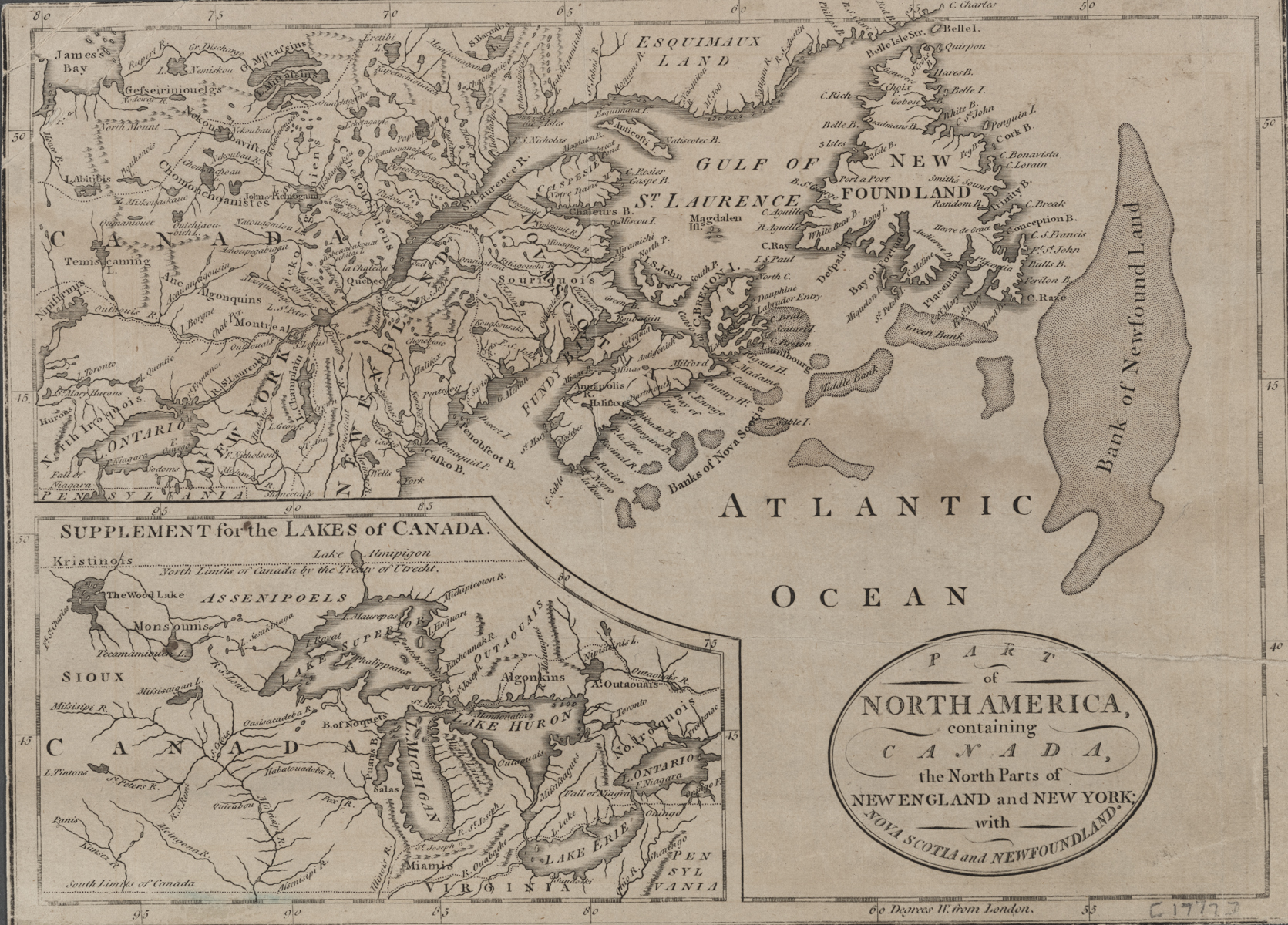
The structure of Gates’ plan is insightful in a few ways. First, the design was similar to what Moses Hazen had proposed to Gates in October. It focused on seizing Montreal before taking control of the remainder of the province. Secondly, although Gates anticipated militia joining Lafayette, 2,500 men was a small force to launch such an offensive. Gates and others were clearly banking on goodwill from Canadians.[13] Americans certainly expected the British to be demoralized after Saratoga, especially with rumors of France entering the war on the side of the United States. The American force was nonetheless too small to have much success without a groundswell of Canadian support.
Political infighting immediately undermined the expedition. The “Conway Cabal,” a supposed conspiracy by which certain leaders in the army and Congress sought to replace Washington with Gates, took place that winter. There is little evidence that there was a serious effort to replace Washington, but the idea that there was a conspiracy emerged in November when Washington learned that Conway had written a letter to Gates critical of the commander-in-chief.[14] Because of this revelation Lafayette, who was very loyal to Washington, was disinclined to serve with Conway. Writing to Henry Laurens, Lafayette said he was “flattered and honour’d” to be appointed, but of all the men who could be his second-in-command, Conway was the most disagreeable. Lafayette did not want to serve with “a man who has spocken of my friend in the most insolent and abusive terms.” Any officer who had done the same in the French Army would be “cashiered by a court martial.” Lafayette needed someone who he could trust and said that his first choice was Maj. Gen. Alexander McDougall, although he would also be happy with Maj. Gen. Johann de Kalb.[15]
Congress and the Board of War were reluctant to alter the makeup of the expedition, but Lafayette insisted that he would refuse the command if he could not bring another major general to Albany. Even more ominously, Lafayette threatened to persuade the other French officers serving in the Continental Army to join with him in resigning and returning to France. Congress and the Board of War resisted complying with Lafayette’s demands, but they knew the importance of Lafayette to the expected alliance with France. As a result, Congress agreed on February 2, permitting Lafayette to bring McDougall or Kalb. McDougall was too sick to participate, and Kalb would join Lafayette in Albany.[16]
Washington was opposed to the whole undertaking. As he told Thomas Nelson Jr. of Virginia, the plan “is the child of folly, & must be productive of capital Ills, circumstanced as our affairs are at present.” Washington was perturbed that he had not been consulted but explained that he had not openly opposed the operation because it was the first substantial action taken by the reorganized Board of War.[17] Knowing that Washington was unenthusiastic, Gates carefully pointed out that it was Congress’ plan when writing to him on January 24. Gates asked if Washington would “spare Hazen’s Regiment or even that Part of it, which is composed of Canadians” for the expedition.[18] Washington replied from Valley Forge on January 27, professing little knowledge about the endeavor, saying “as I neither know the extent of the Objects in view—nor the means to be employed to effect them, It is not in my power to pass any Judgement upon the subject.” He did, however, agree to send Hazen’s regiment to Albany.[19]
Why was Washington so opposed to the expedition? Historian John Ferling argues that his skepticism was primarily political because he saw it as a scheme to undermine his authority concocted by Gates, Conway and others who wanted to remove him from command. It is possible that this concern influenced Washington, but there were certainly additional factors. Most importantly, Washington saw the invasion as sapping resources from the effort to confront the British in Philadelphia and New York, which he considered more important. The previous invasion of Canada had also ended disastrously, and Washington questioned whether a second try would succeed.[20]

Conversely, Gates’ divergent military background may explain his particular focus on Canada. He had confronted both British offensives from Quebec in 1776 and 1777, giving him a special appreciation for the threat it presented to the United States. Even during the French and Indian War, when he was a British officer, Gates spent much of the conflict in the upper Hudson and Mohawk Valleys facing attacks from Canada by France and its Native allies. Based on his experiences, Gates placed a high priority on seizing Canada, seeing it as a geographic achilles heel. Gates additionally had an ideological focus on “liberating” Canada, arguing that Canadians, especially of the middling and lower sort, had imbibed the principles of the Revolution and wanted to join the United States.[21]
Washington and his allies saw the whole expedition as part of the broader Conway Cabal, especially because Conway had been appointed second-in-command. Lafayette complained to Congress that they had affronted Washington by not notifying the commander-in-chief about placing Lafayette in command. Later, Lafayette doubted that the plan was actual military in its purpose, stating “that the actual scheme is to have me out of this part of the continent, and general connway in chief under the immediate direction of general gates.”[22] Maj. Gen. Nathanael Greene was also direct in his criticism, saying that he considered the whole plan nothing more than “a creation of faction” designed “to increase the difficulties of the General.” Although these views were widespread, Washington, Lafayette, Greene, and others were mistaken. The origins and goals of the plan were strategic and not about the politics of command.[23]
The most articulate opposition to the Canada expedition came from the Committee at Camp that Congress sent to Valley Forge, consisting of Francis Dana, Nathaniel Folsom, Gouverneur Morris, Charles Carroll, and Joseph Reed. While visiting the winter encampment, the committee sent a letter to Laurens. They questioned if the country had the financial resources to prosecute a long war in Canada which, even if successful in capturing the province, might involve leaving a large army to guard against another British attack. Should the expedition fail, it would add “Disgrace to our Arms,” increase desertion, lessen the possibility of European support, and encourage Indians to join the British. The logistics of the campaign were enormously challenging, too. “Have not [Richard] Montgomery and Burgoyne demonstrated the Imprudence of distant Expeditions across an inhospitable Wilderness where there is but one Road by which to advance or retire?” they asked. It would be difficult to transport supplies to the army, and the soldiers could not live off the land in Canada. If affairs took a turn for the worse, there was no guarantee the army could retreat. Supplying the troops in Canada would lead to shortages elsewhere, they continued, saying that “every Musket carried into Canada will be in Effect be the Loss of a man to the main Army.” Even if the army succeeded in taking Canada, the United States’ hold on it would be tenuous. Should Britain capture an undermanned Hudson River the next campaign, it would sever the supply line to Canada, leaving the men there to starve. The committee suggested the troops should instead be stationed along the Hudson River.[24]
Lafayette arrived in Albany on February 17. Conway, who departed York before learning he had been replaced, had already been there for a few days. He immediately told Lafayette that the expedition was impossible. “I was at first very diffident of this report, but have found that he was in right,” Lafayette admitted. On personally examining affairs, Lafayette came to the same conclusion. Rather than finding a force of at least 2,500, he had just 1,437 men fit for duty on February 20. To Washington, Lafayette vented his anger, grumbling that he had been deceived by the Board of War. The clothing situation was dismal, with not even enough for even a summer campaign. Morale among the soldiers was low because of lack of pay. He complained that Gates had told him that Stark would have already burned the British fleet at St. John’s. Instead, Lafayette received a letter from Stark asking how many troops he should bring, where they should be raised, and the point of rendezvous, indicating Stark was nowhere near ready to move. Lastly, a British deserter brought intelligence that forces in Canada were stronger than previously believed. Based on this information, Lieut. Col. Robert Troup, one of Gates’ aides-de-camp, reported that they could expect more than 2,400 enemy troops.[25]
Col. Moses Hazen, the deputy quartermaster general for the expedition, was the only senior officer who remained convinced that the invasion could succeed. He had worked tirelessly to gather the necessary supplies for the army. Writing to Lafayette on February 18, Hazen projected optimism, insisting that the army would have enough snowshoes, sleighs, axes, and provisions. “I am not under the least apprehensions of any Defect or delay in the business which I have undertaken,” Hazen wrote. Hazen also persuaded Maj. Gen. William Heath in Boston to send a scouting party to the Chaudière River to convince locals that the invasion would come by that route. He expected this disinformation would have “a very good effect” in making the invasion easier. The only major difficulties, Hazen said, were the number of men and lack of clothing, but he pointed to reasons why those issues could be overcome.[26]
Hazen was too sanguine. The war-weariness of the broader public made it especially hard to procure all the necessary supplies. Sleighs were a particularly big issue. Hazen had obtained permission from both Massachusetts and New York to gather sleighs. New York granted him power to impress 500 for up to twenty-four days, with two horses and a driver for each. Four counties—Albany, Tryon, Dutchess, and Ulster—were to supply the sleighs and each town was assigned a quota. Surviving records from Northeast Precinct in Dutchess County show the public was reluctant to cooperate. The precinct’s committee, which was the revolutionary body overseeing the community’s war effort, chose seventeen men to appear on February 17, each with two horses and a sleigh. Only one man showed up. The committee then took more coercive measures by fining the delinquent men. The men slated to be impressed provided different reasons why they could not go, including having sick children, that there was no one to manage their farm, and not having enough forage for their horses. Jacob Louke pleaded that he did not have any horses fit for such a long journey, but the committee rejected his “frivolous” excuses, saying that “he had several good Able Horses at Home or that he had sent them out of the way purposely.” The committee fined Louke £20. Nicholas Stickle was brought before the committee for abusing the guard that came to take two horses and a sleigh from his father. Stickle confessed that he was so frustrated that “he was Determined to have knoct them down and that he prepared a Club for that purpose.” This opposition to impressment was not rooted in support for the British, but rather from a public that was exhausted by war. Many of these men would have been on militia duty repeatedly the previous two years. They had little interest in again being away from home and risking their property.[27]
Similar problems abounded across New York. In responding to an inquiry from Lafayette, the Albany Committee explained why it was unable to help supply the army. With Britain occupying New York City, there was no port by which to import goods and locals had to gather necessaries from New England. The committee additionally said it had no forage to contribute, stemming from a combination of the army consuming so much of it, destruction from enemy attacks, and because men had so frequently been called out to fight that they had not worked their farms.[28] Echoing this point, Congressman James Duane remarked that “The Irruption of the Enemy last Summer having prevented the Harvest in the Northern and North Eastern Parts of this State.”[29]
The senior officers in the Northern Department of the Continental Army—Benedict Arnold, Philip Schuyler, and Benjamin Lincoln—all doubted the propriety of going forward with the expedition. Arnold told Conway that the invasion could not meet its goals. He pointed out that no militia had arrived, the invading force was not of sufficient size, and that the supply situation was inadequate. He also questioned the importance of Montreal and St. John’s, instead suggesting that when the season would admit, it would be better to attack New York City, which he felt held more strategic value. Maj. Gen. Philip Schuyler shared similar concerns, adding that even if more militia showed up, they would be undisciplined and undermine the expedition by plundering civilians which “will Injure us In the Opinion of the Canadians.” Maj. Gen. Benjamin Lincoln said the same as Arnold and Schuyler, telling Conway that the various obstacles were too great to be resolved quickly and thus the incursion should be abandoned.[30]
Under the circumstances, Lafayette canceled the invasion on February 19, just two days after reaching Albany. He informed Congress and the Board of War that success of the expedition was too doubtful to go forward. Two weeks later, on March 2, Congress passed a resolution officially scrapping the campaign, saying that carrying it out would be “extremely imprudent.”[31] Henry Laurens, who noted that he was almost alone in opposing the invasion at first, remarked on March 11 how sentiments had changed, writing that “I can scarcely find a Man in Congress, now, who favoured it.”[32]
Moses Hazen was unhappy. He told Gates that he was “greatly hurt” that the Canadian expedition had been canceled. He criticized the other officers, likely referring to Schuyler, Arnold, and Lincoln, for convincing Lafayette not to follow through with the campaign. Hazen continued that the 366 men of his regiment “are so warm for the expedition” that they would go “almost naked into Canada.” “I wish I could see as much forwardness in the other Troops,” Hazen regretted.[33] Lafayette consulted Hazen before laying the expedition aside, but he questioned Hazen’s motives. As he told Henry Laurens, Hazen had “reasons to be” sanguine about the prospects of success, insinuating that Hazen was eager to reclaim his property in Canada.[34]
Although most people understood why Lafayette canceled the expedition, Hazen was not alone in thinking that it had been cut short. Robert Troup blamed both Arnold and Lafayette. Troup thought that Arnold was still smarting from his falling out with Gates at Saratoga and his longstanding feud with Hazen. “The Motive of this Man is so bitter and his Spirit so vindictive,” Troup said of Arnold, thinking that Arnold had biased Lafayette against taking the expedition seriously. Troup was not impressed with Lafayette and wished he would take the “Blunders of his Youth, & Inexperience” and return to the main army in Pennsylvania.[35]
Although this planned expedition never got off the ground, discussions about invading Canada continued. Gates, Hazen, and Bedel remained some of the biggest advocates for doing so, and at times, proposals for an invasion were developed in expectation of French naval support. Indeed, so strong were American hopes of adding Canada that France permanently renounced claims to it in the Treaty of Alliance, signed in 1778. Washington retained his earlier skepticism, however. He placed Hazen’s regiment at Coos in 1779 to spread disinformation about a possible invasion, but he never seriously considered the idea or thought it feasible. As Washington explained to John Jay, he would only support an expedition into Canada if Great Britain withdrew from the thirteen states. Some Americans thought Britain might remove its troops with the entrance of France and Spain into the war, but even in that scenario, Washington thought “it was doubtful whether our resources would be equal to the supplies required.”[36]
There are a variety of reasons why this plan failed. The biggest problem was that the enlarged plan was not authorized until the end of January, meaning there was a very narrow window in which to launch the invasion. That timeframe was made even shorter by Lafayette, who ignored his orders to go immediately to Albany and instead fought with Congress to replace Conway. At the same time, Gates and others had not taken adequate steps to ensure that the army was ready to move quickly. The various problems Lafayette and Conway encountered in Albany were great enough that there was no prospect of moving soon, something they could ill-afford given it was late winter. Gates, Hazen and Bedel were also too optimistic about Canadian support, finding reasons to explain away the relatively limited backing the Continental Army received from Canadians a few years earlier. The public, worn down by the demands of war, had lost the popular enthusiasm that existed early in the conflict, making it harder to supply the expedition. Although Washington did not openly oppose the invasion, his position that Canada should not be a priority made the expedition more unlikely to succeed. By removing several brigades from the Northern Department, there were fewer men to partake in the invasion. Moreover, his skeptical view of the plan influenced other political and military leaders. A variety of factors converged to prevent the plan from being put into action.
Even as the war concluded, American hopes of acquiring Canada remained. The Articles of Confederation, written in 1777 and ratified in 1781, invited Canada to join the union. Two years later, at the peace negotiations in Paris, Benjamin Franklin unsuccessfully pushed for the acquisition of Canada as part of the treaty.[37] For many Americans, the desire to seize Canada extended far beyond 1783. Famously, the United States launched repeated and unsuccessful invasions of Canada during the War of 1812. Hazen was among those who never fully let the issue go, writing towards the end of his life that there was “a storm a brewing in Canada which will be allay’d only by a union of that Country with these United States.”[38]
This planned winter invasion, consequently, should be see as one small part of a broader effort by the United States to take control of Canada. Rather than a political ploy to undermine Washington’s authority as part of the Conway Cabal, it was established with legitimate strategic reasons in mind, such as cutting off an avenue of attack and severing ties between Native Americans and Great Britain. Whether it would have achieved any of its aims is questionable at best. Given the lukewarm reaction among Canadians to the invasion of 1775, it is unclear if the popular response would have been more favorable. Nonetheless, this incident is a reminder that many Americans saw the Revolution as a larger continental struggle extending beyond the original thirteen states.
[1] Walter Stewart to Horatio Gates, October 12, 1777, reel 5, Horatio Gates Papers (Sanford, N.C.: Microfilming Corporation of America, 1978) (HGP).
[2] Holly A. Mayer, Congress’s Own: A Canadian Regiment, the Continental Army, and American Union (University of Oklahoma Press, 2021), chap. 2; Moses Hazen to Horatio Gates, October 26, 1777, reel 6, HGP (quotes).
[3] Philip M. Hamer, George C. Rogers Jr., David R. Chesnutt, et. al., eds., The Papers of Henry Laurens (PHL), 16 vols. (University of South Carolina Press, 1968-2003), 12:36 (quotes); Journals of the Continental Congress, 1774-1789 (JCC), 34 vols. (U.S. Government Printing Office, 1904-37), 9:981.
[4] Gates to Timothy Bedel, November 15, 1777, Timothy Bedel Papers, American Philosophical Society.
[5] JCC, 9:999-1001; James Duane to George Clinton, March 13, 1778, folder 1, Clinton Family Papers, Library of Congress (quote); Duane to Gates, December 16, 1777, reel 6, HGP; Bedel to Gates, March 14, 1778, Timothy Bedel Papers, New Hampshire Historical Society.
[6] Gates to George Washington, November 7, 1777, Founders Online, National Archives (NARA).
[7] Gates to Congress, November 10, 1777, Transcripts of Letters from Maj. Gen. Horatio Gates, 1775-81, Papers of the Continental Congress, NARA.
[8] Mark Edward Lender, Cabal! The Plot Against General Washington (Westholme, 2019), chap. 5; JCC, 9:971; Gates to Joseph Trumbull, January 20, 1778, reel 5, HGP. Gates misdated the letter “1777.”
[9] JCC, 10:84-85.
[10] JCC, 10:87; Hamer, PHL, 12:380 (quote).
[11] Gates to the Marquis de Lafayette, January 24, 1778, reel 6, HGP.
[12] Gates to Washington, January 24, 1778, Founders Online, NARA. Gates’ instructions are in footnote #1.
[13] Vermont resolved to raise 300 volunteers while Congress recommend New York raise 400 men. See, Thomas Chittenden to Moses Hazen, February 9, 1778, roll 183, item 166, page 85, Canadian and Indian Affairs, Papers of the Continental Congress (PCC), NARA; JCC, 10:88.
[14] Mark Edward Lender makes the persuasive argument that although there was no effort to replace Washington as commander in chief, the reorganized Board of War tried to limit Washington’s power. Lender calls this the “real cabal.” See, Lender, Cabal!, iv-xix.
[15] Hamer, PHL, 12:350-54.
[16] Hamer, PHL,12:379-80, 386-88; JCC, 10:107; Board of War Meeting, January 31, 1778, roll 157, item 147, page 469-70, Canadian and Indian Affairs, PCC, NARA; Washington to Henry Laurens, February 8-14, 1778, Founders Online, NARA.
[17] Washington to Thomas Nelson, Jr., February 8, 1778, Founders Online, NARA.
[18] Horatio Gates to Washington, January 24, 1778, Founders Online, NARA; Mayer, Congress’s Own, 156-57.
[19] Washington to Gates, January 27, 1778, Founders Online, NARA.
[20] John Ferling, The Ascent of George Washington: The Hidden Political Genius of an American Icon (Bloomsbury Press, 2009), 168-71
[21] Gates to Comte d’Estaing, December 31, 1778, reel 8, HGP.
[22] Hamer, PHL, 12:380; Lafayette to Washington, February 23, 1778,” Founders Online, NARA (quote).
[23] Richard K. Showman, ed., et. al., The Papers of General Nathanael Greene, 13 vols. (University of North Carolina Press, 1976-2015), 2:294.
[24] JCC, 10:41, 67; Paul H. Smith, et. al., eds., Letters of Delegates to Congress, 1774-1789, 26 vols. (Library of Congress, 1976-), 9:72-75 (quotes).
[25] Lafayette to Washington, February 19, 1778,” Founders Online, NARA (quote); General Return of the Troops under the Command of the Marquis de Lafayette, February 20, 1778, roll 183, item 166, page 77a, Canadian and Indian Affairs, PCC, NARA; John Stark to the Marquis de Lafayette, February 3, 1778, roll 183, item 166, page 57, Canadian and Indian Affairs, PCC, NARA; Intelligence from John Nevill, undated, roll 183, item 166, page 75, Canadian and Indian Affairs, PCC, NARA; Robert Troup to Gates, February 19, 1778, reel 6, HGP.
[26] Hazen to the Lafayette, February 18, 1778, roll 183, item 166, page 67-69, Canadian and Indian Affairs, PCC, NARA (quotes); Hamer, PHL, 12:423.
[27] Votes and Proceedings of the Senate of the State of New York (Samuel Loudon, 1777), 51-54; Minute Book of the Committee for the Northeast Precinct of Dutchess County (1778), page 15-16, 21-35, 43, HM 592, The Huntington Library, San Marino, CA (quotes).
[28] Albany Committee to the Lafayette, February 19, 1778, roll 183, item 166, page 107-108, Canadian and Indian Affairs, PCC, NARA.
[29] Duane to George Clinton, March 13, 1778, folder 1, Clinton Family Papers, Library of Congress.
[30] Benedict Arnold to Thomas Conway, February 16, 1778, roll 183, item 166, page 71-72, Canadian and Indian Affairs, PCC, NARA; Philip Schuyler to John Jay, February 1, 1778,” Founders Online, NARA (quote); Benjamin Lincoln to Conway, February 16, 1778, roll 183, item 166, page 81, Canadian and Indian Affairs, PCC, NARA.
[31] Hamer, PHL, 12:468-71; Lafayette to the Board of War, February 20, 1778, roll 183, item 166, page 71-72, Canadian and Indian Affairs, PCC, NARA; JCC, 10:216-17 (quote).
[32] Hamer, PHL, 12:543.
[33] Hazen to Gates, February 20, 1778, roll 183, item 166, page 117-20, Canadian and Indian Affairs, PCC, NARA.
[34] Hamer, PHL, 12:469.
[35] Troup to Gates, February 19, 1778, reel 6, HGP.
[36] Treaty of Alliance with France; February 6, 1778, Perfected Treaties, 1778 – 1945, General Records of the United States Government, Record Group 11, NARA; Mayer, Congress’s Own, 166-81; Washington to John Jay, April 14, 1779, Founders Online, NARA (quote).
[37] Jeffers Lennox, North of America: Loyalists, Indigenous Nations, and the Borders of the Long American Revolution (Yale University Press, 2022), 120-27.
[38] Hazen to Gates, September 28, [1791], reel 15, HGP. The letter is chronologically located with date of 1791 within the collection, but the transcript provided on the microfilm dates the letter as 1795.

Recent Articles
The Loyalist Experience and Aftermath in Revolutionary Philadelphia
America’s Original Stimulus Package: A Catalytic, Consequential Fishing Policy
The Battle of Cowpens: Correcting A Historical Error
Recent Comments
"La Petite Guerre and..."
This is a fascinating examination of the distinction between European *petite guerre*...
"James Wilson and Popular..."
Kelly – thanks for this contribution to the growing body of work...
"The Battle of Cowpens:..."
Kudos to you for a thoroughly researched article that corrects some of...