

At ten o’clock on the morning of March 14, 1780, the British garrison of Fort Charlotte marched out with drums beating and surrendered Mobile to Spain. Bernardo de Gálvez, the governor of Spanish Louisiana, led his troops into the fort, raised Spanish colors and began the inventories that turned conquest into possession. Only then did four boats from New Orleans appear. They carried 130 militiamen who had been left behind for want of vessels. Twenty-six were Americans. They had joined an expedition against Mobile and reached it after Mobile had fallen.[1]
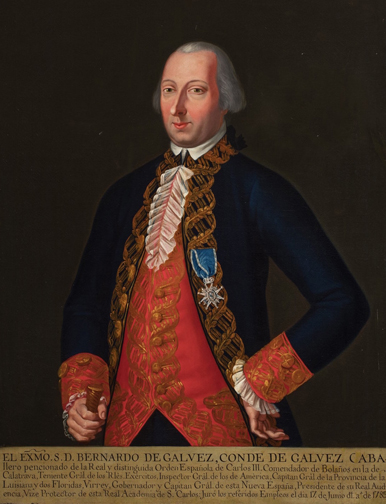
That accident of timing is the hinge of a larger story. The episode is more than a correction to an order of battle: it helps explain why Mobile fell. Gálvez’s multinational army succeeded not because every man listed in New Orleans reached the siege, but because enough men, guns and powder reached Fort Charlotte before Campbell could move a relief force across flooded country. The twenty-six belonged to Gálvez’s expedition, but not to the force that won Fort Charlotte. Assignment, movement and battlefield presence were three different things. Gálvez’s campaign diary opens a window onto an army that existed in motion rather than as a tidy order of battle. Ships scattered, cannon sank, men waited for transport and news crossed the Gulf at uncertain speed. In the final hours, two detachments converged on Mobile from opposite directions. The Americans approached from the west. Maj. Gen. John Campbell, Britain’s commander in West Florida, struggled in with a relief column from Pensacola. Neither reached Fort Charlotte in time to affect the surrender.
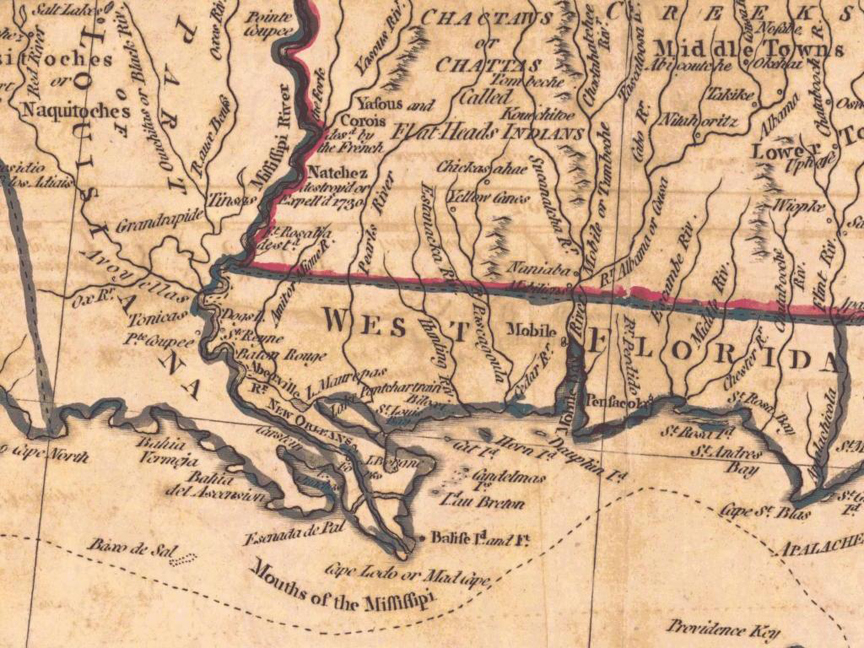
Mobile mattered because it stood between Gálvez’s victories on the lower Mississippi and Pensacola, the capital of British West Florida. After Spain entered the war against Great Britain in 1779, Gálvez captured Manchac, Baton Rouge and Natchez. Mobile was the next British post and the necessary base for an attack farther east. Spain had not allied itself with the United States; it fought for Spanish objectives in a global war. Yet the Gulf campaign drew American agents, sailors and militiamen into Spanish money, Spanish vessels and Spanish plans. The twenty-six late arrivals were one part of that American presence. Capt. William Pickles, an American naval officer operating from New Orleans, was another.[2]
Americans In Spanish Service
Oliver Pollock, the Irish-born New Orleans merchant who served as Congress’s commercial agent in the lower Mississippi Valley, lived at the intersection of American need and Spanish power. He purchased supplies, carried intelligence, advanced his own credit and negotiated with Gálvez. On January 20, 1780, Pollock appointed Pickles to command the captured British sloop West Florida. His orders supplied the vessel for a crew of fifty-eight men, directed Pickles to meet Gálvez at Ship Island and told him to assist the operations against Mobile and Pensacola for twenty days or longer if required. If Pickles captured a better vessel, he could exchange ships. He was also to keep a journal of the expedition for Congress.[3]
Pickles already had a reputation on the lakes east of New Orleans. A Spanish report described Americans commanded by their captain, “Mr. Pirke”—the copyist’s rendering of Pickles—taking a British corsair of superior force in a vessel Gálvez had supplied after the American frigate Rebeca capsized during a hurricane. Gálvez later praised the officer who had captured West Florida and assisted his arrangements during the Mobile expedition. The paper trail runs from Pollock’s orders to Gálvez’s recommendation and, after the war, to Superintendent of Finance Robert Morris’s support for confirming Pickles as a captain in the United States Navy.[4]
The exchange ran in both directions. A royal communication approved 22,640 pesos advanced to Pollock for the maintenance and subsistence of Rebeca and for provisions sent to troops guarding the Illinois settlements. Pollock furnished money, sailors and intelligence; Spanish officials furnished funds, hulls and operational support. On the Gulf Coast, cooperation was less a diplomatic formula than a chain of credit, timber, flour, gunpowder and favors.[5]
Pickles therefore gives the Mobile expedition a named American, a vessel and a chain of command. His documentary trail also separates two strands of American service. His naval crew had its own orders before the fleet sailed. The matching number and documentary sequence strongly suggest that the twenty-six auxiliaries counted in January were the twenty-six Americans later listed among the delayed militia in four New Orleans boats. Pickles’s naval crew and the twenty-six delayed militiamen appear in the record as separate groups, and the difference matters: “American participation” at Mobile was not a single unit moving under a single flag.
A Fleet Coming Apart
Gálvez reviewed the expedition at New Orleans on January 11. The full campaign diary listed troops from the regiments of España, Príncipe, Havana and Louisiana, artillerymen, carabineers, 323 white militiamen, 107 free Black and mixed-race militiamen, twenty-four enslaved men and twenty-six “English-American auxiliaries.” It was a paper army of many legal statuses, colors, languages and obligations. Three days later it went down the Mississippi aboard an awkward convoy of merchant vessels, xebecs, packets, brigs, a galley, the frigate Volante and the royal brig Kaulicán.[6]

The Gulf immediately began breaking that order apart. On February 6, wind, rain, thunder and hail nearly capsized the convoy. Two mornings later Gálvez could see only four vessels near his brig. The ships slowly found one another off Mobile Bay, then shoals and another turn of weather scattered them again. Volante grounded on February 10. Gálvez’s brig struck the same bank and worked free only after hours of labor, badly damaged and taking nine inches of water an hour. Troops and sailors spent two nights beyond the bar waiting for boats.[7]
By February 17 Gálvez counted about eight hundred shipwreck survivors gathered on a deserted beach. Many had saved nothing but themselves. Provisions, ammunition and artillery had vanished into the surf, and much of the force stood without proper clothing or equipment. Wreckage became military stores: Gálvez ordered scaling ladders made from broken vessels and established a battery at Mobile Point with recovered cannon. The campaign later rendered as a clean arrow across a map began as a salvage operation. Transport failure was also financial. Writing from the Mobile camp on March 4, Gálvez reported that Acadian families, British prisoners and two campaigns in Louisiana had exhausted the royal treasury. For the expedition he could raise only 4,000 pesos; 2,000 remained in New Orleans, and Intendant Martín Navarro could find no one else willing to lend.[8]
The missing Kaulicán was another fragment. The royal brig had turned back toward the Mississippi. The diary says that the 130 delayed militiamen included twenty-six Americans and twenty-seven militiamen, followed by a relative clause describing men who had left Kaulicán and attempted the quicker route through the lakes. The punctuation allows two readings: the lake route may describe the twenty-seven alone or the combined fifty-three; historian Eric Beerman chose the latter. On either reading, the Americans belonged to the 130 left in New Orleans because the expedition lacked vessels, and they reached Mobile later in four boats.[9]
Reinforcements and supplies from Havana began reaching Mobile Bay, though the larger Cuban expedition Gálvez expected did not arrive in time. He moved the usable vessels into the bay and landed his battered force near the Dog River. Men unloaded provisions, built bridges across bayous, cleared a road, hauled cannon and cut fascines for the siege works. Every mile toward Fort Charlotte had to be constructed.[10]

A Siege Against The Clock
Inside the fort, Capt. Elias Durnford, a British military engineer and Mobile’s commandant, had a small garrison, thickened earthworks and one great hope: relief from Pensacola. On March 1 Gálvez demanded surrender and warned that useless resistance would expose the defenders to the extremities of war. Durnford acknowledged the difference in numbers but refused to yield until experience proved resistance vain. He invoked Gálvez’s reputation for humanity toward prisoners, turning courtesy into a reminder that the besieger’s conduct would be watched.[11]
Their formal defiance did not prevent a strangely intimate exchange. People sheltering in the fort received permission to carry refreshments to family members outside. Gálvez and Durnford sent each other wine, poultry, sweets and tobacco while discussing how to spare the little town from destruction. Around them, soldiers dragged eighteen-pounders from the landing place, surveyed the ground and prepared to open trenches.[12]
On the night of March 9, two hundred armed men and three hundred workers began the trench. The defenders discovered it the next morning and answered with round shot, grapeshot, muskets and rifles. The first half hour killed or wounded several besiegers before work resumed under darkness and heavy rain. By ten o’clock on March 12, eight eighteen-pounders and a twenty-four-pounder were ready. They fired until sunset, when Fort Charlotte raised a white flag. Durnford offered terms on March 13. Gálvez rejected the first proposals and gave him four hours to decide. The capitulation was signed that day, with the transfer fixed for ten the following morning.[13]
Campbell was already marching. Britain’s commander in West Florida left Pensacola on March 5 and 6 after receiving Durnford’s appeal. Spanish intelligence inflated his column to 1,100 men; Campbell’s own return counted about 520: eighteen Royal Artillery personnel, 393 sergeants and rank and file from regular and provincial corps, 105 Native allies including four leaders, and four local volunteers. He also brought a howitzer and two three-pounders.[14]
Flooded country slowed the column. Campbell reached the Tensaw River about thirty miles above Mobile and worked toward a creek roughly three miles from town. His plan required one crossing to reach the Mobile River and another improvised movement toward the fort. Men built rafts and collected canoes while the Spanish batteries sounded across the wet country. The relief force was close enough to shape Durnford’s decision, but it was not poised just outside the walls.[15]
On March 14 Spanish colors appeared over Fort Charlotte before Campbell completed the crossing. The garrison he meant to relieve had become prisoners of war. He abandoned the attempt and withdrew toward Pensacola. Four soldiers of the 60th Regiment drowned at the Perdido River and three men deserted on the return. Campbell’s dispatch to London was written to explain a failure, but it also measured the margin of Gálvez’s success: the fort surrendered before an approaching force could become a fighting one.[16]
The Boats After The Flag
The Spanish diary fixes the order of the morning. At ten o’clock the fort was delivered. The ceremony ended. Gálvez thanked the troops in the king’s name, sent armed launches upriver to observe Campbell, moved the camp beneath the fort’s guns, stored the remaining ammunition and began the inventories. Then the four vessels from New Orleans arrived with the 130 delayed militiamen, including the twenty-six Americans.[17]
They were late by hours, not weeks, and entered a place still on a war footing. Campbell’s column remained in the field, prisoners and civilians crowded Mobile, and the fort had to be repaired, supplied and held against counterattack. Six days later Gálvez ordered Capt. Enrique Grimarest, the wounded trench major from the siege, to serve as interim governor with a two-hundred-man garrison; an engineer was to improve the defenses, money and provisions were to be left behind, and Mobile’s river and lake approaches kept open. The danger did not vanish with the surrender. On May 12 a British frigate captured a Havana packet carrying provisions to Mobile. The Americans arrived in that exposed transition from conquest to occupation, beneath a Spanish flag already flying above Fort Charlotte.[18]
The surviving texts help explain how that distinction faded. The full archival diary placed twenty-six English-American auxiliaries in its January review. A shorter relation prepared for gazette use retained twenty-six Anglo-Americans but dropped one hundred white militiamen from 323 to 223, even though its stated total still required the larger figure. The version printed in the Gaceta de Madrid also gave 223 white militia and omitted a separate American category at the opening. All of the principal versions, however, placed twenty-six Americans in the boats that arrived after the fort’s transfer.[19]
Historian Joseph Barton Starr preserved both halves of the closing drama: the Americans’ late arrival and Campbell’s failed relief. His 1976 study did not make the gap between nominal expedition strength and battlefield presence its central question. In some later force lists and public histories, the twenty-six remained in Gálvez’s expedition total while the timing of their arrival receded. The compression is understandable. A muster looks like a list of participants, and a campaign total looks like battlefield strength. At Mobile, the diary records an army at several moments: assigned in New Orleans, carried across the Gulf, saved from wrecks, present in the trenches or delivered after the colors changed.[20]
Galveztown, the Canary Islander settlement northeast of New Orleans, offers the strongest named lead to the identities of the twenty-six. On June 15, 1779, its Spanish commandant, Francisco Collell, proposed organizing thirty-three English settlers, experienced in arms and the woods, as a separate militia company. Twelve days later his signed return recorded the Second Company of Militia of the Villa de Gálvez: thirty-three officers and men under Capt. Jauyme Nikolson, Lt. Genaro Nikolson and 2nd Lt. Meo Gre, alongside a separate first company of sixty-two. The return matters because it turns a proposal into a named, organized unit before Mobile. A November 1781 return again recorded an American Company at Galveztown under Capt. James Nicolson and Lt. Henry Nicolson. The twenty-six cannot yet be matched name for name, but the inquiry now begins with a roster rather than an anonymous category.[21]
Historians of Spanish Louisiana have steadily widened the frame around Mobile. Earlier military narratives reconstructed Gálvez’s career, British West Florida and the siege itself; more recent work has placed the campaign among Native nations, enslaved people, mobile communities and competing imperial projects. The late boats join those scales. Gálvez’s label was administrative as well as geographic: “English-American auxiliaries” placed the men within a Spanish hierarchy of service rather than treating them as troops sent by an allied United States. They show how a Spanish expedition could depend on American credit, sailors and auxiliaries while serving Spain’s own war aims—and how an imperial muster could count men before its transports could carry them.[22]
Mobile’s capture removed a British post that threatened Spain’s lower Mississippi position, shifted the Gulf front east and created the base from which the campaign against Pensacola could continue. It also illuminates a less familiar geography of the Revolution. An American naval captain sailed under overlapping authority. Congress’s agent relied on Spanish money. Spanish regulars served beside Louisiana militia, free men of color and enslaved laborers. British regulars, provincial soldiers, Native allies and local volunteers tried to save the fort.[23]
The victory belonged to the force Gálvez could put before Fort Charlotte before Campbell crossed the Tensaw. The twenty-six Americans reached Mobile on the day it changed hands, but after the decision had been made. When their boats came into view, Spanish colors were already above the fort and the inventories were under way.
[1] Bernardo de Gálvez, campaign diary enclosed with letter from Mobile, March 20, 1780, Archivo General de Simancas (AGS), Secretaría de Guerra, SGU, leg. 6912, “Con carta de la Mobila 20 de Marzo 1780,” typed transcript, 26-27, Library of Congress foreign-copy reproduction; “Suplemento a la Gaceta de Madrid del Martes 20 de Junio de 1780,” Gaceta de Madrid, no. 49 (June 20, 1780), 449-50; The Remembrancer; or, Impartial Repository of Public Events, vol. 10, pt. 2 (J. Almon, 1780), 98-99.
[2] John Walton Caughey, Bernardo de Gálvez in Louisiana, 1776-1783 (University of California Press, 1934), 126-73; Joseph Barton Starr, Tories, Dons, and Rebels: The American Revolution in British West Florida (University Presses of Florida, 1976), 151-71; Gonzalo M. Quintero Saravia, Bernardo de Gálvez: Spanish Hero of the American Revolution (University of North Carolina Press, 2018), 202-30; Frances Kolb Turnbell, Spanish Louisiana: Contest for Borderlands, 1763-1803 (Louisiana State University Press, 2024).
[3] Oliver Pollock to William Pickles, instructions, January 20, 1780, Papers of the Continental Congress, Item 50, Letters and Papers of Oliver Pollock, archival pp. 123-24, National Archives Microfilm Publication M247, roll 64, Record Group 360, National Archives. The first page specifies provisions for a crew of fifty-eight and directs Pickles to join Gálvez for Mobile and Pensacola; the second authorizes prize substitutions and requires a journal. Pollock’s retrospective certification of May 6, 1783, gives thirty-eight men; the article follows the contemporaneous order for the January crew figure.
[4] Gálvez, report on the Mississippi campaign, AGS, SGU, leg. 6912, “Sobre la conquista de la Mobila,” typed transcript, 9, Library of Congress foreign-copy reproduction; Gálvez to the president of Congress, Mobile Bay, May 8, 1780, Papers of the Continental Congress, Item 97, Letters and Papers Relating to Spanish Negotiations, archival pp. 391-93, M247, roll 125, RG 360; Robert Morris, report on the memorials of Thomas Bell and William Pickles, July 10, 1783, Papers of the Continental Congress, Item 137, vol. 2, archival pp. 615-615b, M247, roll 149, RG 360.
[5] Royal communication approving funds advanced to Pollock, San Ildefonso, October 3, 1779, AGS, SGU, leg. 6912, selected typed transcript, Library of Congress foreign-copy reproduction, scan p. 43. The record states that 22,640 pesos supported Rebeca and provisions for troops guarding the Illinois establishments.
[6] Gálvez campaign diary, January 11 entry, AGS, SGU, leg. 6912, “Con carta de la Mobila,” typed transcript, 2-3; “Suplemento,” 435-36. For the textual variants, see Eric Beerman, “El diario de Bernardo de Gálvez de la batalla de Mobila (1780),” Cuadernos de Investigación Histórica 13 (1990): 126-27.
[7] Gálvez campaign diary, February 6-12 entries, AGS, SGU, leg. 6912, “Con carta de la Mobila”; “Suplemento,” 437-39.
[8] Gálvez campaign diary, February 17 entry, AGS, SGU, leg. 6912, “Con carta de la Mobila”; “Suplemento,” 439-40. The archival transcript and shorter relation report approximately eight hundred shipwreck survivors; the damaged number in the printed page is best rendered here as “about eight hundred.” For the fiscal crisis, see Gálvez to Diego José Navarro, Mobile camp, March 4, 1780, no. 247, Gálvez Letter Book No. 3, frames 217–18, Archivo Nacional de Cuba Records, MSS17376, Manuscript Division, Library of Congress.
[9] Gálvez campaign diary, March 14 entry, AGS, SGU, leg. 6912, “Con carta de la Mobila,” typed transcript, 27; “Suplemento,” 449-50; Beerman, “El diario,” 140-41. The relative clause concerning departure from Kaulicán and the lakes most directly follows the twenty-seven militiamen. Beerman’s editorial note applies it to the coordinated group of fifty-three. The main chronology is unchanged under either reading.
[10] “Suplemento,” 440-43; Quintero Saravia, Bernardo de Gálvez, 207-16.
[11] Gálvez-Durnford correspondence, March 1780, Archivo General de Indias (AGI), Papeles procedentes de Cuba, leg. 2351, selected photostats, Library of Congress foreign-copy reproduction, scan pp. 6-10; “Suplemento,” 443-44.
[12] “Suplemento,” 445; AGI, Cuba, leg. 2351, selected Gálvez-Durnford correspondence.
[13] “Suplemento,” 445-49; articles of capitulation enclosed with John Campbell to George Germain, March 24, 1780, The National Archives, Kew, CO 5/597, fols. 339-58. The articles were signed March 13 and required delivery at ten o’clock on March 14. A same-day dispatch from the Mobile camp reported nine killed during the first half hour; the later campaign diary and gazette relation reported six killed and five wounded. The versions agree on the timing, suspension and nighttime resumption of the work. Gálvez to Diego José Navarro, Mobile, March 10, 1780, Gálvez Letter Book No. 3, frame 218, MSS17376, Manuscript Division, Library of Congress.
[14] John Campbell to George Germain, March 24, 1780, CO 5/597, fols. 331-38. Campbell’s return lists eighteen Royal Artillery personnel, 393 sergeants and rank and file of regular and provincial corps, 105 Native men including four leaders, and four inhabitants serving as volunteers. Gálvez’s March 20 report likewise gave Campbell 1,100 men and emphasized that the Spanish works and bombardment forced the surrender while Campbell watched and then withdrew. Gálvez to José de Gálvez, Mobile, March 20, 1780, Letters of Bernardo de Gálvez, frames 377–80, MSS17376, Manuscript Division, Library of Congress.
[15] Ibid. Campbell placed the Tensaw crossing roughly thirty miles above Mobile and the creek crossing about three miles from town.
[16] Ibid. Campbell reported returning to Pensacola on March 18 and 19; four men of the 60th Regiment drowned crossing the Perdido River and three deserted.
[17] Gálvez campaign diary, March 14 entry, AGS, SGU, leg. 6912, “Con carta de la Mobila,” typed transcript, 26-27; “Suplemento,” 449-50; Remembrancer, 98-99.
[18] Bernardo de Gálvez to Gerónimo Girón y Moctezuma, instructions, Mobile, March 20, 1780, and Miguel de Alderete to Gabriel de Aristizábal, with copy to Gálvez, May 19, 1780, AGI, Papeles procedentes de Cuba, leg. 2359, Library of Congress Foreign Copying Program reproductions. Gálvez ordered an interim governor and two-hundred-man garrison, an engineer, funds, provisions and boats; Alderete reported the British capture of the provision packet on May 12.
[19] Gálvez campaign diary, January 11 and March 14 entries, AGS, SGU, leg. 6912, “Con carta de la Mobila,” typed transcript, 2-3, 26-27; “Noticias para la Gaceta sobre la toma de Mobila,” AGS, SGU, leg. 6912, selected typed transcript; “Suplemento,” 435-36, 449-50. The shorter relation lists 223 white militiamen and twenty-six Anglo-Americans but states a total of 1,400; the categories total 1,300 unless 223 is corrected to 323. The printed Gaceta lists 223 white militia and no separate opening American category. The Library of Congress photostat sequence reviewed for this revision reproduces pages 1–8 of “Noticias para la Gaceta,” including the 223/26 opening force list; the sequence ends before the post-surrender late-boats passage, which is independently present in the full diary transcript and the printed Gaceta.
[20] Starr, Tories, Dons, and Rebels, 165-69, especially 168, records both Campbell’s attempted relief and the Americans’ post-surrender arrival. For later presentations that retain the twenty-six in the expedition’s opening strength without giving the same prominence to their arrival after the transfer, see Michael C. Hough, Spain’s Louisiana Patriots in Its 1779-1783 War with England During the American Revolution, 2nd ed. (Louisiana Society, Sons of the American Revolution, 2000), 5; King S. Robinson, “Sustaining the Glory: Spain’s Melting Pot Army in America, 1779-1781” (MA thesis, Southeastern Louisiana University, 2007), 54; and Barbara A. Mitchell, “America’s Spanish Savior: Bernardo de Gálvez,” HistoryNet, November 28, 2012. Together they illustrate how an opening strength return can shape later summaries even when the diary records the Americans’ arrival only after the transfer.
[21] C. Robert Churchill, S.A.R. Spanish Records, pt. 5, 310-11, transcription of a November 6, 1781, return formerly cited to AGI, Papeles procedentes de Cuba, leg. 161; Caughey, Bernardo de Gálvez, 233. Francisco Collell, returns of the First and Second Companies of Militia of the Villa de Gálvez, June 27, 1779, AGI, Papeles procedentes de Cuba, leg. 2351, frames 231–34, Library of Congress Foreign Copying Program reproductions. The returns total sixty-two in the first company and thirty-three in the second.
[22] William S. Coker and Hazel P. Coker, The Siege of Mobile, 1780, in Maps (Perdido Bay Press, 1982); Thomas E. Chávez, Spain and the Independence of the United States: An Intrinsic Gift (University of New Mexico Press, 2002); Kathleen DuVal, Independence Lost: Lives on the Edge of the American Revolution (Random House, 2015); Gabriel Paquette and Gonzalo M. Quintero Saravia, eds., Spain and the American Revolution: New Approaches and Perspectives (Routledge, 2020); Turnbell, Spanish Louisiana.
[23] Caughey, Bernardo de Gálvez, 166-73; Quintero Saravia, Bernardo de Gálvez, 218-30; Paquette and Quintero Saravia, Spain and the American Revolution.

Recent Articles
The Americans Who Reached Mobile Too Late
On This Week’s Dispatches: Ryan L. Cole on Lafayette’s Triumphant Return to the United States
The Intelligence War for Vermont
Recent Comments
"The Intelligence War for..."
Excellent article. Still learning new things about the Revolution. If Vermont had...
"Abigail Hartman Rice, Revolutionary..."
She is my fourth great grandmother.
"Deserter a Day 4..."
Hey there - I'm researching the Anspach-Bayreuth Jager, and I was curious...