


In 1779, the war between Britain and its thirteen rebel colonies in America was in its fifth year without any prospect of resolution. Although the British had had several opportunities to defeat Gen. George Washingtons’ Continental Army, they were unable to deliver the decisive blow. Even worse, the American victory over Gen. John Burgoyne’s army at Saratoga in 1777 led France to recognize American independence and enter the war the following year against Britain. This transformed the conflict from a colonial revolt into a world war.
As a result of these events, Lord George Germain, the Secretary of State for the American Colonies, decided to shift operations towards the Southern colonies of Georgia and the Carolinas, beginning in December 1778 with the British expedition to capture Savannah. But there was another region that seemed ripe for offensive operations: Virginia. After the burning of Norfolk on January 1, 1776, the Old Dominion was largely spared from the ravages of war.[1] The commander of the British Army in America, Gen. Sir Henry Clinton, was aware of the region’s importance, but unable to send a strong enough force to attack it. But a change in command of the Royal Navy in American waters in 1779 led to change in the calculus.
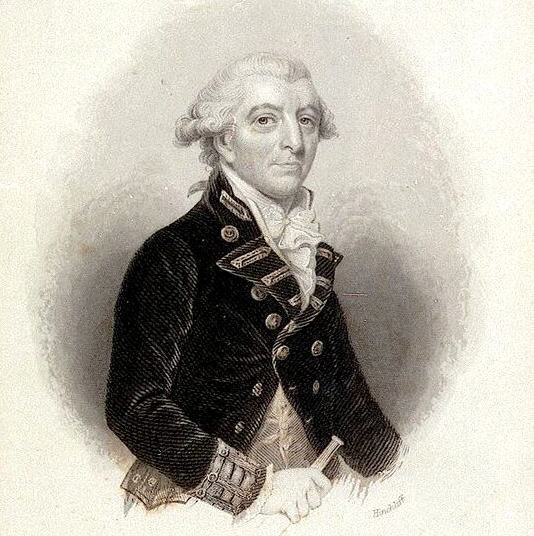
After Rear Adm. James Gambier was deemed unfit for any major command, leadership of the Royal Navy’s forces on the North American station fell to Cmdre. Sir George Collier. Born in 1738, he entered the navy in 1751 and rapidly rose to the rank of commander in 1761, and then to post-captain in July 1762. Knighted in 1775, he served as captain of the forty-four-gun HMS Rainbow at the start of the American Revolution and participated in the British landing at Long Island in August 1776. After capturing several ships on the American station, he participated in a raid against Machias, where he captured or destroyed thirty vessels and a large quantity of supplies. After Gambier’s departure, Collier was promoted to commodore and appointed acting-Commander-in-Chief of the North American station until a permanent replacement arrived.[2]
Collier left Halifax, Nova Scotia for New York on March 7, 1779, with the Rainbow, the sloop HMS Hunter, and several troop transports. It proved a most arduous journey, marked by constant foul weather. One of the transports got separated from the convoy and wound up wrecked on the Barnegat Shoals near Egg Harbor, New Jersey, resulting in the loss of 170 troops, along with some women and children, leaving twenty-seven survivors to become prisoners of war. Collier finally arrived in New York on April 3 and hoisted his broad pennant on board HMS Raisonable.[3]

As acting-commander-in-chief of the Royal Navy’s North American station, Collier’s command stretched from Cape Breton to the Bahamas. He was responsible for the protection of British settlements and trade and charged with carrying the war against the enemy. But the commodore was mortified when he saw the condition of his ships. The proud fleet of over one hundred warships which arrived off New York three years earlier was a pale shadow of itself. Many of the ships were foul due to lack of cleaning and severely undermanned. Some of the guard ships stationed along the rivers and bays on the coast had been on station for two to three years and were described as almost ready to sink for lack of repairs and caulking.[4]
Regardless of these deficiencies, Collier was determined to engage the enemy. He believed it necessary to employ his ships as best he could, stating that “Merely acting on the defensive was not only disgraceful to the King’s cause, but would give fresh vigor to the Rebels and draw attacks from them.”[5] He believed Virginia to be a region ripe for attack, stating that it was “The province which of all others gave sinews to the rebellion from its extensive traffick.”[6]
It was well known that the Americans were dependent on European military aid to equip their army, but had very little money to purchase these vital supplies. What they did have in abundance were commodities that could be used in lieu of money, such as tobacco. Tobacco was already one of the most important exports from the colonies before the war, and its importance grew exponentially during the conflict. In May 1778, American agents in Europe were able to negotiate an agreement with France to receive an advance of two million livres in exchange for a promised delivery of five thousand hogsheads of tobacco.[7] According to Collier,
An attack of that province and the shutting up the navigation of the Chesapeake would probably answer very considerable purposes, and if not of itself sufficient to end the war, would drive the Rebels to infinite inconveniences and difficulties and especially as Washington’s Army was constantly supplied with salted provisions sent by water through the Chesapeake.[8]

But before he could begin to make plans for such an operation, he would need the cooperation of the army to fulfill it, which meant getting the approval of Gen. Henry Clinton.
Getting Clinton on board appeared a daunting task, as the general had a reputation of being a most difficult person to deal with. His relations with the naval branch were decidedly negative, dating back to Cmdre. Sir Peter Parker’s abortive attack on Charlestown in 1776, and his hatred of Gambier was described as bordering on psychotic. But in Collier he found a naval officer with sufficient skill to conduct amphibious operations and able to have a good relationship with him, a rarity during his tenure.[9]
Clinton understood that there were a number of advantages that could be achieved from raiding the Chesapeake, but a shortage of troops meant that he would not be able to detach more than two thousand.[10] He assembled a force comprised of detachments of grenadiers and light infantry of the Guards, the Hessian Prince Charles Regiment, the Volunteers of Ireland, and the 42nd Regiment, along with a detachment of the Royal Artillery, totaling about 1,800 men.[11] Command of the ground forces was given to Maj. Gen. Edward Mathew, a veteran of the battles of Brandywine, Germantown, and Monmouth.[12] In a letter dated April 29, 1779, Clinton’s specific instructions to Mathew were: 1) to draw back to Virginia any of their troops that may have been detached westward or southward; 2) to prevent the march of Virginian troops destined for Washington’s army; 3) to destroy the ships and magazines in the Elizabeth River that would be used to supply the American army in South Carolina. Once these goals were accomplished, Mathew was to return to New York no later than the last week of May.[13]

The naval portion of the expedition would consist of Collier’s flagship HMS Raisonable (sixty-four guns), the fifth-rate HMS Rainbow (forty-four guns), sloops HMS Otter, HMS Haerlem, and HMS Diligent, galley HMS Cornwallis, and twenty-two transports.[14] Because there were few suitable warships available to operate in the shallow waters of the Chesapeake, Collier grudgingly accepted an offer of four privateers to accompany his fleet. These were the Dunmore, schooner Hamond, sloop Lord North, and Fincastle.[15] These ships belonged to the notorious Goodrich pirates, led by John Goodrich, an opportunistic Virginia merchant who began the war delivering supplies for the Rebels, but later switched to the British side.[16]

Collier’s fleet departed for the Chesapeake on May 5. Good weather accompanied the fleet all the way down to Cape Henry, where they arrived on the afternoon of May 8. The fleet anchored off Willoughby Point, where it was beset by a violent thunderstorm that evening, though none of the ships suffered any serious damage.[17]
While most of the fleet remained at anchor, Collier ordered Richard Creyk, commander of HMS Otter, to proceed into the Chesapeake with the privateers Lord North, Fincastle, and Dunmore to begin raiding operations. This small squadron wasted no time finding adequate targets. On the morning of May 9, they captured a Rebel sloop loaded with tobacco and other provisions, and later spotted a galley lying in Papper (Pepper) Creek. The galley came within gunshot range of the British vessels at 9:00 am, but the lack of wind and the Rebel galley’s oars allowed her to escape. The Fincastle had a little more success, as she brought back a schooner boat loaded with coal. At 10:30 am, Creyk’s squadron spotted a brig and two schooners at anchor in the East River, and he ordered the boats of the Otter, Lord North and Dunmore prepared to attack. The British boats came under heavy musket fire from both sides of the river but succeeded in capturing a six-gun French polacre, while the crew of one of the other schooners quickly abandoned ship after grounding ashore. The only losses recorded by the British were “a black musquet and a cartouche box.” While Creyk’s squadron busied itself in the East River, the Fincastle captured another schooner loaded with tobacco later in the afternoon.[18]
With Creyk’s squadron busy conducting raids on the Chesapeake, Collier was ready to launch his attack on land. After shifting his broad pennant on May 9 from the Raisonable to the Rainbow, due to the former’s heavier draught, he boarded a small armed schooner to reconnoiter an enemy fort on the Elizabeth River named Fort Nelson. Two local inhabitants were captured and informed him that there were very few troops in the area, and that no British attack was expected.[19] Collier returned to the Rainbow where he found his ships becalmed and unable to proceed up the river. Not willing to waste any time, General Mathew ordered the first division of troops into the flat boats, and both he and Collier boarded the Rainbow’s barge in the first wave. The transports would be protected on the flanks by the Cornwallis galley and several gunboats, each armed with a 6- or 9-pounder gun in their prows.[20]
Collier’s boats advanced two miles up the river when the weather suddenly turned in their favor. A fresh breeze sprung up, allowing his ships to weigh anchor and catch up to the boats, a formation later described as “the finest regatta in the world.”[21] Once the leading boat came within musket range of the landing spot known as the Glebe (located one mile from Fort Nelson and three miles from Portsmouth), Collier displayed a flag ordering it to halt, while the Cornwallis and gunboats proceeded onwards to begin their cannonade against the shore. The fort’s cannons immediately replied, but their shots fell short of the British ships. The flat boats proceeded to the Glebe and encountered no opposition to their landings. Once disembarked, the boats promptly returned to the transports to embark the remaining troops, along with the artillery and horses, which also arrived unmolested. After the landings, Collier and Mathew conferred and agreed on a joint attack against the fort early the following morning, with the Rainbow leading the bombardment from the sea while Mathew’s troops assaulted it from the land.[22]
On the morning of May 11, the Rainbow moved into position to begin its bombardment of the fort, while Mathew and his troops moved across Scott’s Creek to begin the land assault, but they quickly discovered that all their preparations were for nought. To their astonishment, they observed a lone figure inside the fort hauling down the American colors, welcoming the British troops inside. This was a Royal Navy lieutenant by the name of Dickey (his first name has not been determined), the recent commander of the schooner HMS Fortunatus, which had been captured in the Chesapeake by the Virginia State Navy schooner Liberty earlier that spring. Lieutenant Dickey had been granted parole and freedom of the town, and was out for a walk in the woods when he observed the fort’s defenders abandoning it. Once he saw that the fort was deserted, he entered and later welcomed the British troops inside its walls.[23]
The British found Fort Nelson to be strongly built on the side facing the river, with a parapet fourteen-feet in height and fifteen-feet thick surrounded by strong timbers, and an ordnance of nine 24-pounders, two 9-pounders, eleven 6-pounders, four 4-pounders, and two 3-pounders. But its rear parapet was no more than three feet thick, and did not have a single gun in position to face an attack from that direction.[24] Worse still, because of the desperate need for troops for the Continental Army, there were fewer than one hundred troops in the garrison under the command of Maj. Thomas Matthews. Matthews quickly realized that any attempt to defend the fort against such an overwhelming force was futile and ordered it evacuated that evening. All the fort’s guns were spiked save for one brass field piece which they removed, while leaving fort’s colors flying as a means of covering their escape.[25]
The quick and bloodless capture of Fort Nelson allowed Collier and Mathew to turn their attentions to Portsmouth and Norfolk. The grenadiers and light infantry of the Guards formed a defensive perimeter along a line stretching from the head of the western branch of the Elizabeth River of the Great Dismal Swamp, while the Volunteers of Ireland held the line from the swamp to the southern branch of the river. The British encountered almost no resistance, save for some minor skirmishing involving the Volunteers, who claimed to have inflicted some twenty-four casualties on the Virginians.[26] By nightfall, the British were in full possession of Portsmouth and Norfolk, including the Gosport Naval Yard, which Collier described as the finest shipyard on the North American continent. But Major Matthews did not intend to leave so valuable a prize intact for the invaders. At around 1:00 am on May 11, the British observed a great fire up the Elizabeth River. Following their rapid withdrawal from Fort Nelson, Matthews ordered his troops to set fire to several ships rather than let them fall in British hands, including the twenty-eight-gun frigate Virginia that was ready for launch, and two French merchantmen loaded with bale goods and a thousand hogshead of tobacco.[27] He also ordered his men to burn all the gunpowder save for what they could carry, and began a march through the Great Dismal Swamp until they arrived in Peynemine, North Carolina.[28] The Virginians’ haste meant that the British would not be left completely empty handed. Large quantities of tobacco, tar, and other valuable commodities were taken from the warehouses, and several other vessels in various stages of completion, including two frigates commissioned by Congress, fell into their hands.[29]
Following the British attack, several enemy vessels fled up the various branches of the Elizabeth River. Collier detached the Cornwallis galley, two gunboats, four flat boats, and four of the Goodrich privateers to pursue them. Over the next few days this little squadron would travel through the various branches of the river and capture or burn twenty-two enemy vessels, including the fourteen-gun privateer Black Snake, which was taken by British boats at a cost of only two wounded.[30]

Desiring to capitalize on the raid’s early successes, Collier set his sights on the town of Suffolk, which lay nineteen miles west in Nansemond County, and was an important depot of arms and other supplies for Washington’s army. Collier knew the town for having banished many inhabitants who had remained loyal to the crown, and he intended to strike a decisive blow against it.[31] When news of the British invasion spread throughout the region, the militia was finally called out. Unfortunately, the best they could muster was only two hundred poorly armed men, most of whom had to borrow their muskets, and two cannons from the privateer brig Mars anchored in the Nansemond River. Led by Col. Willis Riddick, this small force marched towards Portsmouth on May 12 and camped out near the Murdaugh House later that night.[32]
The militia’s attempt to defend the area got off on a very poor start. The three scouts sent ahead were captured during the night, depriving the militia of much-needed intelligence. Lulled into a false sense of security, Riddick returned home to sleep while two of his captains decided to visit a local tavern, which was soon surrounded by British troops. In the ensuing struggle, one of the officers was killed, while the other was able to escape and warn the militia of the approaching British force. The militia quickly retreated towards Suffolk. By the time they reached the town, less than one hundred men were left. Chaos quickly descended upon them. When Col. Edward Riddick arrived to take command of the militia troops, he found his small force confronted by six hundred British regulars who had done an all-night march to reach Suffolk on the morning May 13. Hopelessly outnumbered, the militia retreated and abandoned Suffolk to its fate. The operation to capture the town cost the British a single wounded redcoat.[33]
With Suffolk under their control, the British were free to plunder the town. There were numerous warehouses filled with thousands of barrels of salted pork, pitch, tar, turpentine and rum, as well as seven fully-laden ships anchored in the Nansemond River. But because they were unable to transport everything on the docks, they were forced to destroy most of what they captured, resulting in the most devastating action of the entire raid. Rather than leaving behind any supplies for the Rebels, the British troops destroyed of hundreds of barrels containing highly flammable substances that were left on the wharf and dumped into the river. These were soon ignited and turned the river into something resembling a flow of lava. The fire soon spread from the dry marsh grass to the opposite shore and into the town, setting almost every building ablaze.[34] For a region that had been far removed from the center of the conflict, the raid was a rude awakening to the horrors of war. As stated in Collier’s journal, “Numbers of inhabitants began to think it was time to make submission to their offended sovereign and the Commodore and General had innumerable applications for that purpose.”[35]
But while he had some measure of control over his own troops and sailors, Collier’s control over the Goodrich privateers was less than absolute. He issued strict orders to them that no wanton acts of cruelty such as the burning of houses or the molesting of innocent people were to occur.[36] But the Goodrich privateers had no idea of order or discipline. Collier found it extremely difficult to restrain these lawless people within any decent bounds. Collier wrote:
Amongst the rest of their cruel and wanton mischief, they set fire to the houses of four poor families near Cheriton, in Northampton County (upon the banks of the Chesapeake) which had been mostly esteemed as a loyal district. Such outrages, especially when unprovoked, must always give pain to humanity.[37]
As a way of atoning for the brutal tactics of the privateers, on May 17 Collier authorized sending a small sloop which had been recently captured by one of the boats of the Rainbow laden with salt, a rare commodity in the colonies, to Cheriton under a flag of truce along with a note of apology from the commodore to its inhabitants.[38] Collier received a measured reply of gratitude on May 24 from Isaac Avery, lieutenant of the County of Northampton, who thanked the commodore’s “Signal instance of humanity especially as it is the first of its kind that hath fallen under my observation though numberless have been the sufferings of the people on this shore of the same nature.”[39] It is interesting that Collier offered no note of apology to the citizens of Suffolk for the wanton destruction committed by the British regulars.
Another pressing issue that resulted from the presence of the British forces in the Chesapeake was the escape of hundreds of enslaved people from the plantations in the region. On May 13, the Raisonable received three local citizens under a flag of truce to present a note from Gov. Patrick Henry to Collier. The note regarded the restitution of four escaped slaves belonging to William Armistead of Gloucester County who found refuge on board the British ships. The Raisonable’s captain believed this was a ruse and ordered them detained until he received orders from Collier.[40] The commodore’s reply to Governor Henry was that the business of his ships in Virginia was neither to entice the enslaved to escape nor to detain them if they were found on board his ships, but added that any ship flying British colors afforded an asylum to the distressed, and protection upon supplication. Collier also believed that the three men were sent to gather information. He warned them to never again attempt to gather intelligence through a channel which “Ought to be sacred and never prostituted for such purposes.”[41]
In a letter to Clinton dated May 19, Collier stated,
Our success, and the present appearance of things, infinitely eased our most sanguine expectations; and if the various accounts of the General and myself have received can be depended upon, the most flattering hopes of a return to obedience to the Sovereign may be expected from most of this province; the people seem importunately desirous that the Royal Standard may be erected, and they give the most positive assurances that all ranks of men will resort to it.[42]
But the success of the raid began to fill Collier with an even more ambitious design, to do more than simply harass Rebel shipping and supply depots in the region. He believed that permanent possession of Portsmouth would provide the British with a safe and highly defensible harbor against even strong enemy forces, as well as giving them possession of a large marine yard with ample stocks of seasoned timber and other vital stores. By controlling this port, Collier believed “The whole trade of the Chesapeake is at an end, and consequently the sinews of the Rebellion destroyed.”[43] Additionally, keeping a permanent British force in the Chesapeake would give a lift to the spirits of the loyalists, who would otherwise feel abandoned once the British left.[44]
Collier asked Mathew to remain in the Chesapeake and wait for Clinton’s reply to his proposal, but the general refused. He informed the commodore that he intended to abide by his original instructions of April 29 and return his troops to New York by June 1 in order take part in Clinton’s expedition up the Hudson.[45] When Clinton did receive Collier’s request, he was also not enthusiastic. He was worried that sending any additional troops to the Chesapeake would interfere with his planned campaign. He waited a few days to respond to Collier’s proposition to see if any American troops were detached to the Chesapeake, and finally agreed that they could remain in Portsmouth provided that no additional reinforcements would be needed to hold it.[46] However, by the time he made his decision, it was too late. On May 24, after Mathew firmly rejected the proposal to remain in Virginia, the British commanders began preparations to return to New York.[47]
Mathew’s decision to reject Collier’s plan to keep a permanent force in Virginia was the correct one. The British success in the region had more to do with the unpreparedness of American defenses and their slow response to the incursion than anything else. It was one thing to launch a raid on an unsuspecting enemy, but quite another to leave a weak force far from any support and entirely reliant on being supplied by the sea. The danger of this scenario would unfold two years later when a much larger British army was cut off at Yorktown.
The British loaded seventeen prize ships with as much valuable stores as they could hold, as well as ninety Tories and 518 escaped enslaved people. Collier reported that there were five thousand loads of seasoned oak for shipbuilding, vast amounts of supplies and a few ships on the stocks at the shipyard that they could not bring back, and he had no intention of leaving behind so much valuable materiel to the enemy. On May 24, the shipyard and all remaining stores the British could not take back were set on fire. Collier stated “The conflagration in the night appeared grand beyond description, though the sight was a very melancholy one.”[48] In total, it was estimated the British captured or destroyed 137 vessels and stores valued at one million pounds.[49] After completing the embarkation of the troops at the fort, while being covered by the Cornwallis and four gunboats, the British set fire to it and the barracks and one large ship on the stocks.[50] On May 26, Collier transferred his broad pennant back to the Raisonable, and the fleet began its journey back to New York.[51] No serious attempt was made by the Virginians to harass their withdrawal, and the British departed as easily as they had arrived.
Governor Henry tried to put the best spin possible on their departure. He claimed that after the British force left Portsmouth,
They drew up their whole fleet before Hampton, and by a parade of their flat-bottomed boats, threatened a descent on that place; but a considerable body of troops, under Colonel Marshall, were so well prepared to receive them, and maintained so firm a countenance, that they did not choose to hazard the experiment.[52]
The truth was that the British were allowed to leave unmolested. On May 29, Collier’s fleet was safely back in New York, save for the Otter and Haerlem, which he ordered to remain behind in the Chesapeake, along with the Goodrich privateers. This resulted in the capture or burning of several more vessels and tobacco warehouses, and by June 24 both ships were back in New York.[53]
Collier’s tobacco raid was one of the most successful operations conducted by the British during the entire war. He brought the war to a region that had seen little of it up to this point. But he was also greatly aided by the almost lackadaisical response to their arrival. The defenses in this region were woefully unprepared, allowing the British to run completely unmolested for two weeks. Governor Henry’s failure in calling out the militia until it was too late also aided the British. Apart from the material success, the raid succeeded in disrupting one of the main supply lines for Washington’s army, and even diverted Virginia and North Carolina militia units from being able to reinforce South Carolina.[54]
Collier returned to New York in time to assist Clinton in the assault on Stony Point on May 30, and provide naval support for Maj. Gen. William Tryon’s raid on Connecticut in July.[55] His crowning achievement would occur in August when he inflicted the worst American naval defeat of the entire war by leading a squadron of ten warships into the Penobscot River in Maine that resulted into the capture or destruction twenty-one armed American vessels and twenty-four transports.[56]
One cannot help but imagine how the war might have progressed if the British had had other aggressive commanders in charge of their naval forces in North America like Collier. He brought much needed vigor to the American theatre and was even one of the few men who remained on good terms with Clinton. But his term as interim commander of the North American Squadron ended with the arrival of Vice Adm. Marriot Arbuthnot in New York on August 25, 1779. Unlike Collier, the aged Arbuthnot’s style of command would prove lethargic and an unfortunate detriment to the British war effort.
[1] Christopher Ward, The War of the Revolution, vol. 2 (The MacMillan Company, 1952), 867.
[2] James Ralfe, The Naval Biography of Great Britain: Consisting of Historical Memoirs of Those Officers of the British Navy Who Distinguished Themselves During the Reign of His Majesty King George III, Vol. 1 (Boston: George Press, 1972), 357-359; National Maritime Museum, BGR28, A Detail of some particular Services performed in America during the Years 1776, 1777, 1778, and 1779, by Sir George Collier, Commander-in-Chief on the American Station; compiled from Journals, and Original Papers by G. S. Rainier, 111.
[3] NMM, BGR28, 112-113.
[4] Ibid., 113-115. The warship and manpower shortages were exacerbated when Gambier left for England on April 5 with what Collier described as three of the best frigates on the station, and by American privateers sailing in from New York to entice British sailors to desert and join them.
[5] Ibid., 117.
[6] Cited in Gardner W. Allen, A Naval History of the American Revolution, vol. 2 (The Scholar’s Bookshelf, 2005), 395
[7] Robert Fallaw and Marion West Stoer, “The Old Dominion Under Fire: The Chesapeake Invasions, 1779-1781”, in Chesapeake Bay in the American Revolution, Ernest McNeill Eller, editor (Tidewater Publishers, 1981), 440-441. A typical tobacco hogshead at this time was a large wooden cask that could hold up to 1,000 lbs. of tobacco.
[8] NMM, BGR28, 117-118.
[9] John A. Tilley, The British Navy and the American Revolution (University of South Carolina Press, 1987), 162, 167.
[10] NMM, BGR28, 118-119; Distribution and Recapitulation of the Following Corps under the command of Sir Henry Clinton, 1st May 1779; Letter from Clinton to Germain, May 5, 1779, CO 5/97, Part 2, 300-301, The National Archives, Kew, UK (TNA). On May 1, 1779, Clinton had a total of 22,817 British, German, and Provincial troops stretched along New York, Long Island, and Rhode Island, of which 19,252 were fit for duty.
[11] NMM, BGR28, 119; Clinton to Germain, May 5, 1779, CO 5/97, Part 2, 239-240, TNA; Fallaw and Stoer, “The Old Dominion Under Fire,” 444; David Syrett, The Royal Navy in American Waters 1775-1785 (Scolar Press, 1989), 123. Most sources list the number of troops sent to the Chesapeake at around 1,800 men, while in his letter to Lord Germain on May 5, Clinton stated that he detached 2,500 troops for the expedition.
[12] Rick Atkinson, The Fate of the Day – The War for America, Fort Ticonderoga to Charleston, 1777-1780 (Crown, 2025), 468.
[13] Clinton to Mathew, April 29, 1779, CO 5/97, Part 2, 241-242.
[14] NMM, BGR28, 119-120; Allen, A Naval History, 395; Fallaw and Stoer, “The Old Dominion Under Fire,” 444; Syrett, The Royal Navy in American Waters, 123; Nick Hartley, The Prince of Privateers – Bridger Goodrich and his Family in America, Bermuda and Britain 1775-1825 (M&M Baldwin, 2012), 98; Charles B. Cross Jr., A Navy for Virginia – A Colony’s Fleet in the Revolution (Yorktown: Virginia Independence Bicentennial Commission, 1976), 44. The exact number of transports is unclear. BGR28, Fallaw and Stoer, and Syrett state there were twenty-eight transports in total, while Allen, Cross, and Hartley state that there were only twenty-two transports.
[15] Allen, A Naval History, 397; Hartley, The Prince of Privateers, 98.
[16] Hartley, The Prince of Privateers, 96-98; John E. Selby, The Revolution in Virginia 1775-1778 (The Colonial Williamsburg Foundation, 1988), 44-45, 69, 206.
[17] NMM, BGR28, 120; Collier to Clinton, May 19, 1779, CO 5/97, Part 2, 311; Master’s Log of HMS Raisonable, May 9, 1779, ADM 52/1939, TNA.
[18] Captain’s Log of HMS Otter, May 9-10, 1779, ADM 51/664, TNA; Master’s Log of HMS Otter, May 9-10, 1779, ADM 52/1896, TNA.
[19] NMM, BGR28, 121-122; Master’s Log of HMS Raisonable, May 10, 1779.
[20] NMM, BGR28, 122; Collier to Clinton, May 19, 1779, CO 5/97, Part 2, 312, TNA.
[21] NMM, BGR28, 122-123.
[22] NMM, BGR28, 123-124; Collier to Clinton, May 19, 1779, CO 5/97, Part 2, 312, TNA.
[23] Cross, A Navy for Virginia, 46-47; James Tormey, The Virginia Navy in the Revolution, Hampton’s Commodore James Barron and His Fleet (The History Press, 2016), 39, 85-87. The Fortunatus was a tender of the frigate HMS Emerald, carrying ten 6-pounder cannons and manned by fifty men under Lieutenant Dickey. She was captured by the Liberty within four or five miles of Cape Henry. Only four men were not killed or wounded, forcing Dickey to haul down the ship’s colors, while the Liberty did not suffer a single casualty. Dickey was paroled and given the freedom of the town of Portsmouth, where he became a great favorite by members of the community and was frequently invited into their homes.
[24] NMM, BGR28, 124; Cross, A Navy for Virginia, 46; John Burk, Skelton Jones and Louis Hue Girardin Matthews, The History of Virginia, Vol. 4 (M.W. Dunnavant, 1816), 333.
[25] NMM, BGR28, 124; Cross, A Navy for Virginia, 46-47; Burk, Jones and Matthews, The History of Virginia, 4:334. Major Matthews stated that he left the colors flying as a “Finesse to render sure his retreat.” Collier considered Matthews’ actions as “great cowardice.”
[26] Cross, A Navy for Virginia, 47.
[27] NMM, BGR28, 125; Collier to Clinton, May 19, 1779, CO 5/97, Part 2, 312, TNA; Captain’s Log of HMS Rainbow, May 11, 1779, ADM 51/762, TNA; Cross, A Navy for Virginia, 48; Selby, The Revolution in Virginia, 205.
[28] Burk, Jones, and Matthews, The History of Virginia, 4:334
[29] NMM, BGR28, 125-126; Selby, The Revolution in Virginia, 205.
[30] Collier to Clinton, May 19, 1779, CO 5/97, Part 2, 312-313, TNA; Cross, A Navy for Virginia, 47-48; Selby, The Revolution in Virginia, 205.
[31] NMM, BGR28, 126-127; Cross, A Navy for Virginia, 49.
[32] Cross, A Navy for Virginia, 49; David Lee Russell, The American Revolution in the Southern Colonies (McFarland & Company, Inc., 2000), 127-128.
[33] Ibid.
[34] NMM, BGR28, 126-127; Cross, A Navy for Virginia, 49; Russell, The American Revolution in the Southern Colonies, 127-128. Collier claimed to have found nine thousand barrels of salted pork destined to Washington’s army, as well as eight thousand barrels of pitch, tar, and turpentine.
[35] NMM, BGR28, 127.
[36] Ibid.
[37] Ibid., 127-128.
[38] Ibid., 128.
[39] Ibid., 128-129.
[40] Ibid., 130-131.
[41] Ibid., 131-132.
[42] Collier to Clinton, May 19, 1779, CO 5/97, Part 2, 313, TNA.
[43] NMM, BGR28, 132-133; Collier to Clinton, May 19, 1779, CO 5/97, Part 2, 313-314, TNA. With regards to the defensibility of Portsmouth, the Collier Journal noted on p. 132 that “It is surprising that Earl Cornwallis with his army did not take post here, instead of Old York [Yorktown], where the adjacent high grounds overlooked his works.”
[44] Fallaw and Stoer, “The Old Dominion Under Fire,” 449.
[45] NMM, BGR28, 133; Selby, The Revolution in Virginia, 207.
[46] Russell, The American Revolution in the Southern Colonies, 128.
[47] NMM, BGR28, 133; Fallaw and Stoer, “The Old Dominion Under Fire,” 449; Russell, The American Revolution in the Southern Colonies, 128; Selby, The Revolution in Virginia, 207.
[48] NMM, BGR28, 133-134; Captain’s Log of HMS Rainbow, May 24, 1779; Master’s Log of HMS Cornwallis, May 24, 1779, ADM 52/1676, TNA; Fallaw and Stoer, “The Old Dominion Under Fire,” 450; Selby, The Revolution in Virginia, 208.
[49] NMM, BGR28, 136; Cross, A Navy for Virginia, 51; Fallaw and Stoer, “The Old Dominion Under Fire,” 451; Russell, The American Revolution in the Southern Colonies, 129; Selby, The Revolution in Virginia, 208; Ward, The War of the Revolution, 2:867. Most sources list the damages sustained by the Rebels as upwards of a million sterling, while Selby and Ward claim it was two million pounds.
[50] NMM, BGR28, 134; Captain’s Log of HMS Rainbow, May 24, 1779
; Fallaw and Stoer, “The Old Dominion Under Fire,” 450.
[51] Captain’s Log of HMS Rainbow, May 26, 1779.
[52] Cited in Fallaw and Stoer, “The Old Dominion Under Fire,” 450.
[53] Captain’s Log of HMS Otter, May 27, 1779, and June 24, 1779; Master’s Log of HMS Otter, June 24, 1779; Atkinson, The Fate of the Day, 471; Fallaw and Stoer, “The Old Dominion Under Fire,” 451.
[54] Cross, A Navy for Virginia, 51.
[55] Atkinson, The Fate of the Day, 471-477.
[56] Ibid., 490-493.


5 Comments
The ships under construction destroyed at Portsmouth included the 28-gun Continental frigate Virginia II, the 36-gun Continental frigate Chesapeake, and the 18-gun Continental corvette Morgan. The other vessels destroyed were privateers and merchant ships. The Virginia State Navy to this point consisted only of small vessels, but Collier’s raid persuaded the House of Burgesses to come up with the money to build several 20-gun frigates (to which Governor Thomas Jefferson gave impressive Greek and Roman classical names), some 18-gun corvettes and some 16-gun corvettes, but without voting the money to pay for manning them properly. As a result, nearly all of the impressive Virginia warships were easily destroyed by Benedict Arnold’s raid in 1781.
This is an insightful and thought-provoking article. I am inclined to wonder to what extent market conditions influenced Collier’s decision to launch the raid. Did military commanders with commercial connections foresee potential revenue from the seized tobacco? Did they intend for the tobacco to be used as leverage against Virginia planters in future diplomatic negotiations should the British southern campaign prove successful? This topic and the questions it raises may lend itself to a multi-thematic analysis beyond a pure military history. Regardless, the significance of this event speaks for itself and deserves more attention in the historical record on a variety of fronts.
Well done! Nice examination of the Royal Navy’s coastal operations, which seem to get overlooked quite a bit. Thanks for this thorough piece.
It’s great to see this overlooked episode get a close look. This was when Virginia began to wake up after years of quiet on its own soil, so it is very much an important transition. Thanks for the great work.
Excellent article, thank you.