


1777 was a very good year for Daniel Morgan. He was promoted to colonel in late 1776 and received the commission in January 1777. Gen. George Washington had pushed Congress to make the promotion, having been impressed by Morgan’s performance leading three companies of riflemen in the ill-fated 1775 invasion of Canada. While the expedition was a disaster, Morgan’s leadership stood out, and Washington now intended for him to lend those skills to the army in a larger way.[1]
On June 9, 1777, Washington formed a new battalion, the provisional rifle corps, and assigned Morgan to command it. It was an elite light-infantry formation, created by drafting the best riflemen from each regiment in the army and consolidating them into a single 500-man battalion.[2] This composite corps was provisional—temporary—by nature, with the men returning to their “home” regiments at the end of the year when the army went into winter quarters. The corps would then be reformed the next year before the summer campaign season.
It was not long before Morgan and his new command saw action. Dispatched in August to reinforce the American army in New York under Maj. Gen. Horatio Gates, Morgan and his men were critical to the American victories at Saratoga in September and October. Gates said that Morgan’s corps was the one that the British were “most afraid of.”[3] The defeated British commander, John Burgoyne, said that Morgan’s men were among the “best classes of Rangers,” adding that there were “perhaps few better in the world.”[4]
Unfortunately for Morgan, the success he enjoyed in 1777 did not carry over to 1778. In June of that year, Washington again issued orders to form a new light infantry corps, and once again assigned Morgan to command it.[5] While Morgan’s light corps did serviceable work skirmishing after the British evacuated Philadelphia, due to vague orders or some miscommunication Morgan was out of position and failed to play any significant part in the battle of Monmouth on June 28. It was a disappointing outcome for Morgan, particularly given his outstanding performance the previous year.[6]

After Monmouth, Washington began a general reorganization of the army that placed greater emphasis on conventional light infantry armed with smoothbore muskets rather than riflemen.[7] Smoothbore military muskets could mount a bayonet and were better suited than rifles to close-quarters combat and shock tactics; rifles were more accurate and had longer range, but were slower to load and could not mount a bayonet.
The shift to smoothbores came at the expense of Morgan’s rifle corps. Numbering 500 men in 1777, the rifle corps was reduced to just two companies totaling no more than 109 rank-and-file in July 1778, shortly after the conclusion of the Monmouth campaign.[8] This number was too few to warrant a colonel to lead, so Morgan gave up command of the riflemen to Capt. Thomas Posey. Morgan was then given temporary command of a brigade of Virginia troops belonging to Brig. Gen. William Woodford, who had taken a leave of absence.
Then in August Washington formed a new battalion of light infantry. Composed of marksmen selected from the army as a whole, this battalion was armed solely with smoothbore weapons, and command was given to Brig. Gen. Charles Scott rather than to Morgan.[9] Morgan did not express any concern about this appointment at the time, perhaps because Scott’s unit was not that large, and the active campaign for that season had completed. But it foreshadowed what was to come.
In February 1779, Brig. Gen. Anthony Wayne wrote to Washington looking for a new assignment:

[I] wish to be Indulged with a Command in the Light Corps—if it can take place without prejudice to the Service or the exclusion of an Officer of more worth or experience, but if that can’t be done—I beg your Excellency not to spend an other thought—or give yourself a Single moments uneasiness.[10]
The letter was rich in subtext. “An officer of more worth or experience” was certainly a reference to Morgan. Clearly, Wayne thought Washington might balk at his request, given Morgan’s previous service. Instead, Washington responded enthusiastically, writing to Wayne that he would “chearfully” make the appointment as soon as the light corps was formed for that year’s campaign season.[11]
In 1777 and 1778, the Continental Army’s provisional light corps had been formed in June, and 1779 did not break that pattern. On June 15 Washington issued orders to form the largest light corps ever assembled by the Americans, comprised of sixteen elite light infantry companies drawn from each brigade in the army, enough for four battalions. Unlike in previous years, there was no mention of riflemen being assigned to the formation. Instead, the new corps was composed solely of conventional light infantry armed with smoothbore muskets and bayonets.[12]
Conspicuously lacking any orders to lead the new force and having given up command of his riflemen the previous year meant that for the first time in the war Morgan had no significant assignment as the summer campaign season approached. He had heard rumors that Wayne was to be given command, a fact confirmed on June 30, 1779.[13] That day, Morgan went to discuss the matter with Washington at the army headquarters in New Windsor, New York. There is no record of what transpired in the meeting, but we know that Morgan told Washington he intended to resign, and requested the general give him a pass to Philadelphia so he could turn in his commission to Congress.[14]

After the meeting, Richard Kidder Meade—Washington’s aide-de-camp—delivered the pass that Morgan had requested. It was written by Washington and addressed to John Jay, the president of Congress, and read simply:
Col. Morgan of the Virginia troops, who waits on Congress with his resignation will have the honor of delivering you this—I cannot in justice avoid mentioning him as a very valuable officer who has rendered a series of important services and distinguished himself upon several occasions.[15]
Meade was cognizant that Morgan might be chagrined at the brevity of the letter and the lack of any personal expressions of regret at his departure. Meade, therefore, attached his own message for Morgan that acknowledged that Washington’s note was “concise, but in justice to your merit makes handsome mention of your services. It were much to be wished that you could have reconc[ile]d a longer continu[ance in] the service.”[16]
The simplest explanation for why Washington gave Wayne command of the new light infantry corps was that it comprised four battalions, which was the standard size of a brigade in the Continental Army. As one of Morgan’s biographers put it, “The new command would be equivalent to a brigade in size, requiring the command of a brigadier general.”[17]
Washington had told Wayne that he could command the corps in February, four months before the light corps was formed in June. Washington may have already had in mind a new, larger light corps when he wrote to Wayne in February, but rank alone seems an insufficient justification for how Morgan was so completely sidelined and left “unemployed,” as one Congressman put it, in June 1779.[18]
If the choice of command of the light corps was simply a matter of rank, why hadn’t Morgan been selected as Wayne’s second? This position was instead given to Col. Richard Butler, a man who had previously served as Morgan’s second-in-command of the rifle corps, and to whom Morgan was senior in the army. When Morgan later wrote his letter of resignation to Congress, he said, “I am an older officer than either of the gentlemen who have succeeded me,” a reference to both Wayne and Butler.[19]
It may be that Washington saw Morgan’s role primarily as a leader of riflemen, and once the light corps no longer included riflemen, Washington may not have felt that Morgan was the right person to continue commanding it. As previously mentioned, in August of the prior year command of a battalion of conventional light infantry not given to Morgan but instead to Brig. Gen. Charles Scott.[20]
Riflemen were generally frontiersmen and hunters, and Washington thought it was best if they were commanded by someone like Morgan who came from “the same circle.” In 1776, when recommending Morgan for promotion to colonel so he could lead the army’s rifle regiment, Washington told Congress that Morgan was “a good and valuable officer for the sort of Troops he is particularly recommended to command.”[21]
Washington seemed to have lost faith in the rifle, and in the fall of 1779 he permanently disbanded the rifle corps shortly after it completed its final campaign as part of the Sullivan Expedition against the Iroquois. To underscore the permanence of the decision, he ordered the corps’ rifles to be “boxed up,” with none to be retrieved “without an order from the Commander in Chief.”[22]
There is yet another reason for Morgan’s sidelining, revealed long after the war ended: Washington had reservations about Morgan’s qualities as an officer. In 1792, then-President Washington issued a “Memorandum on General Officers” to Congress, in which he evaluated the merits of various officers who might be appointed to lead the army in operations against the Indians in the Northwest Territories. While Washington did not have a very high opinion of many of the officers mentioned in the memo—including Wayne—his take on Morgan was particularly harsh:
Has been fortunate, & has met with eclat. Yet there are different opinions with respect to his abilities as an Officer. He is accused of using improper means to obtain certificates from the Soldiers. It is said he has been (if the case is not so now) intemperate; that he is troubled with a palpitation which often lays him up. And it is not denied that he is illiterate.[23]
Washington’s comment about there being differing opinions on Morgan’s abilities as an officer is puzzling, as one would be hard-pressed to find anything but praise for Morgan’s abilities from his contemporaries in the army. The “different opinions” appear to be Washington’s. Morgan was not illiterate, but, as one biographer put it, “writing did not come easily” to him.[24] If not taken literally, the comment was a fair, if blunt, criticism of Morgan’s lack of education.
Washington later met to review the memo with two members of his cabinet, Thomas Jefferson and Henry Knox; the meeting notes record Washington’s terse final appraisal of Morgan: “No head. Health gone. Speculator.”[25]
After arriving in Philadelphia, Morgan composed his resignation letter. It was dated July 18, 1779, and it was read in Congress the following day. Morgan noted in the letter that he had never been “surprised or lost any troops through negligence or inattention,” a not-so-thinly veiled critique of Anthony Wayne, who commanded at the “Paoli Massacre,” a one-sided battle in 1777 where British forces had surprised and badly mauled Wayne’s troops in a bold night attack.
Morgan argued that his distinguished record led him to believe “that if at any time a respectable corps of light troops should be form’d I should be honored with the command of it.” He then observed that since “this command is now taken from me, it will Naturally be judged that this chang of officers has taken place either on account of some misconduct in me, or on account my want of capacity.” He ended, stating, “I must conclude from what has happend, that my country has no more occasion for me, I therefore beg leave to retire.”[26]
The letter was turned in and read in Congress on the same day that a report on the Battle of Stony Point was read to the legislators.[27] It was a spectacular victory for the Americans, achieved three days earlier, on July 16. Anthony Wayne led the corps of light infantry in a daring night attack on a small British fort at Stony Point, New York. The Americans suffered minimal casualties, and the entire British garrison of over 500 men was captured.
While speculative, it is possible, given the timing of his resignation letter’s delivery, that Morgan had somehow gotten advance word of the attack and waited until he learned the outcome before submitting his resignation. It was only a two- or three-day journey from the army headquarters in New Windsor to Philadelphia. Yet, Morgan waited over two weeks after meeting with Washington to deliver his resignation to Congress, a little too coincidentally on the same day that news of Stony Point arrived in the city. After all, if Wayne had failed, it would have strengthened Morgan’s argument that he should have retained command of the light troops.
In any case, Congress was disinclined to accept Morgan’s resignation. Henry Laurens wrote, “He is a good officer & we will not part with him, if persuasion can prevail.” Cyrus Bell, another Congressional representative, wrote, “Indeed, we could not [permit] such a resignation.”[28]
The Board of War, Congress’s standing committee on military matters, urged Morgan to accept a furlough instead of resignation, “until the Commander in Chief should call for him, or Congress should take order thereon.”[29] To this Morgan agreed, and he returned to his home in Virginia.
After the Battle of Monmouth in 1778, the war in the north had settled into a tense stalemate, and in late 1779 British focus shifted to the southern colonies. In May 1780, Charlestown, South Carolina, fell to a British army after a six-week siege, resulting in the largest capitulation of American troops in the war. The American Southern Army had all but ceased to exist, and Congress responded to the crisis by appointing Maj. Gen. Horatio Gates as the new commander of the Southern Department. To provide Gates with suitable lieutenants, on June 14, 1780, Congress revoked Morgan’s furlough and ordered him back to active duty, reporting to Gates.[30]
Morgan had been away from active service for nearly a year, but Gates envisioned a familiar role for him: leading a mixed force of riflemen and light infantry, akin to what he had previously done for Gates to decisive effect in the Saratoga campaign of 1777. Morgan liked the idea, but complained that another officer, Edward Stevens, had recently been promoted to brigadier general in the Virginia militia. Stevens had previously been junior to Morgan, but as a brigadier in the state militia, he would outrank Morgan in the theater, complicating his ability to command the militia there. Morgan told Gates he wanted a promotion to brigadier general.[31]
Gates appealed to Congress on Morgan’s behalf, and the Board of War responded positively, recommending on July 14, 1780, that the full Congress vote for Morgan’s promotion.[32] Congress would have certainly approved the measure at that time, but before the vote could take place, Joseph Jones, one of Virginia’s representatives in Congress and a key political ally of Washington, asked for a delay in order to get Washington’s opinion on the matter. He wrote to Washington about Morgan, saying,
As he left the Army in disgust under your immediate command I did not like the present mode of his obtaining the promotion, without (that I know of) any alteration of circumstances, at the pressing instance of General Gates.[33]
The important context here is that Major General Gates was Washington’s political rival within the army, and Washington believed that a conspiracy—or in Washington’s words, a “cabal”—had been formed within the army to promote Gates over himself. The conspiracy, if one actually existed, was defused before the end of 1778. But Washington was still suspicious of Gates and his dealings.[34]
In his response to Jones’s letter, Washington noted that due to the “delicate situation in which I stand with respect to General Gates,” he had to be careful with his words, lest “unfavourable interpretations [were] ascribed to them by illiberal Minds.” Washington then addressed the question of Morgan’s promotion, stating that Morgan:
is a brave Officer, and a well meaning man, but his withdrawing from Service at the time he did last year, could not be justified on any ground—there was not, to my knowledge, the smallest cause for dissatisfaction—and the season and circumstances were totally opposed to the measure.[35]
Whether one considers Washington’s response openly negative or simply indifferent, he clearly did not support the proposal to promote Morgan. Jones was therefore content to let the motion lie on the table—where he had placed it—essentially in limbo.[36]
A few weeks later, on August 16, 1780, fate once again intervened when Gates was decisively defeated in the Battle of Camden in South Carolina. This event shattered the American Southern Army for the second time that year. Morgan was not present at the battle, having been delayed in Virginia due to ill health, but was getting ready to depart to join the army when he heard the news.[37]
Gates needed experienced officers now more than ever, and he again wrote to Congress urging Morgan’s promotion, arguing that “his services not only entitle him to it, but as it will give him a weight and consequence with the militia that is just now absolutely necessary.”[38] Gates’s petition was seconded by letters from Gov. Thomas Jefferson of Virginia and Gov. John Rutledge of South Carolina, who demanded Congress take action on the matter. These entreaties from such powerful figures were enough to finally bring the motion of Morgan’s promotion to the floor of Congress, where it passed on October 12, 1780.[39]
As promised, Gates placed now Brig. Gen. Daniel Morgan in charge of a light corps, “consisting of Continental Cavalry, Hunters mounted with rifles, and light foot as well as Continentals.”[40] And after Gates was replaced by Maj. Gen. Nathanael Greene in December, Greene continued what Gates had started, leaving Morgan in command of a light corps of mixed Continental Army and militia units.
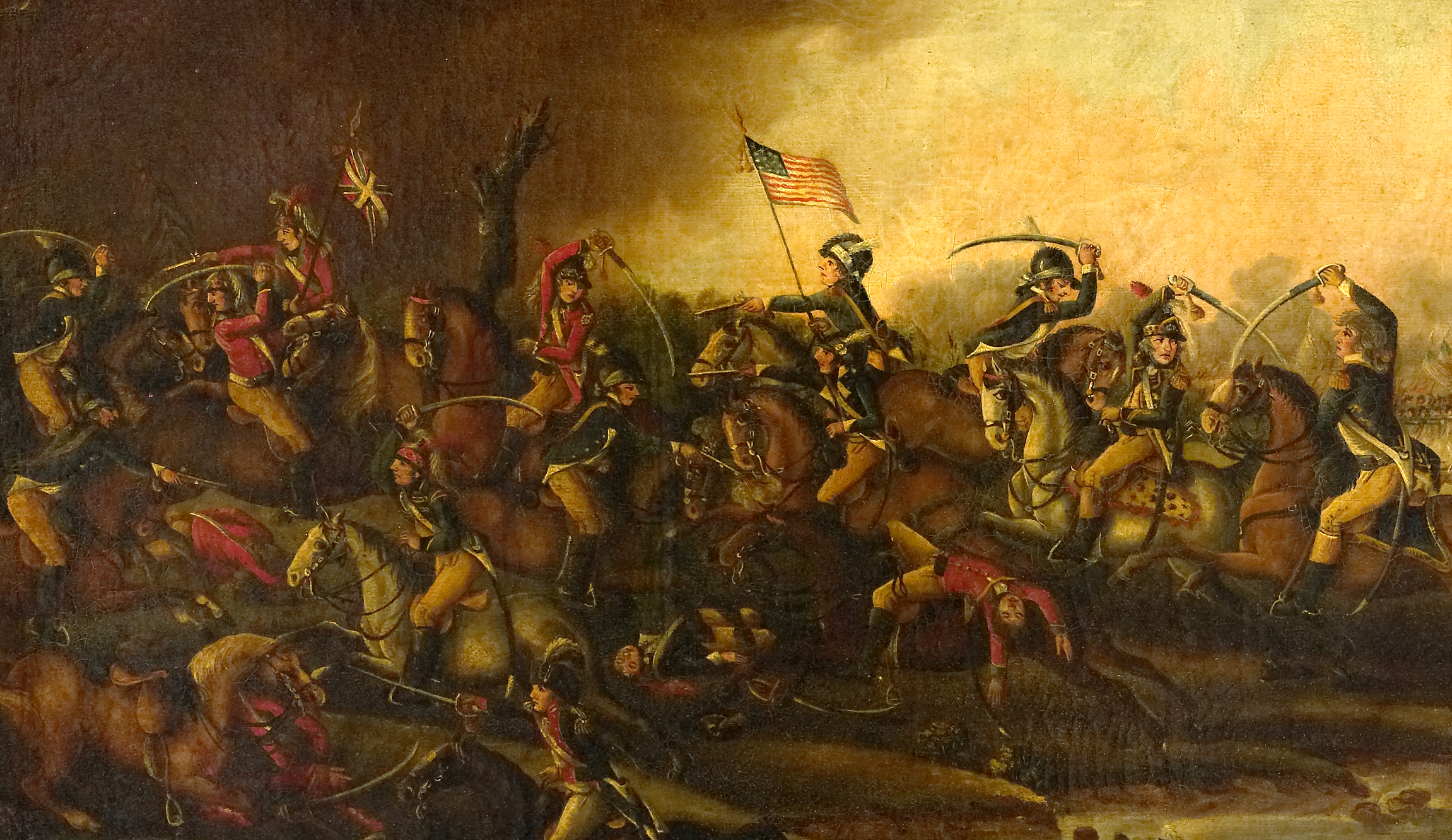
With this force, Morgan achieved the most spectacular achievement of his career, defeating an elite British detachment under the command of Lt. Col. Banastre Tarleton on January 17, 1781, at an obscure pasture named Cowpens in South Carolina. The brilliant tactics Morgan employed to gain victory were universally praised, with one officer saying the battle was “the most extraordinary of the whole war.”[41]
Looking closely at Morgan’s resignation, recall, and eventual promotion reveals that Washington valued him less highly than many of his contemporaries in the army and Congress. Washington had systematically diminished Morgan’s role by reducing his rifle corps and, in 1779, stripped him of his light infantry command entirely. Washington made no effort to retain Morgan when he submitted his resignation, and when Morgan returned to service in 1780, it was at Congress’s behest, not Washington’s. Nor did he support Morgan’s promotion to brigadier.
By contrast, members of Congress, officers such as Gates, and southern governors recognized Morgan’s value and championed his retention, recall, promotion, and assignment to a command that leveraged his unique talents. Their efforts were impactful. Cowpens was not only a tactical masterpiece; it was the catalyst for Cornwallis’s premature and ultimately disastrous invasion of North Carolina, an important step on the road to Yorktown and Britain’s defeat in the war.
[1] George Washington to Continental Congress, September 24, 1776, Founders Online, National Archives, founders.archives.gov/documents/Washington/03-06-02-0324.
[2] Washington to John Hancock, August 21, 1776; Washington to John Hancock, August 23, 1776; and Washington to Hancock, August 27, 1776,” Founders Online, National Archives, founders.archives.gov/documents/Washington/03-09-02-0571; founders.archives.gov/documents/Washington/03-09-02-0637; founders.archives.gov/documents/Washington/03-10-02-0026.
[3] Horatio Gates to Washington, October 5, 1777, Founders Online, National Archives, founders.archives.gov/documents/Washington/03-11-02-0418;
[4] John Burgoyne, A State of the Expedition from Canada: As Laid Before the House of Commons (London: Printed for J. Almon, 1780), 102.
[5] General orders, June 22, 1778, Founders Online, National Archives, founders.archives.gov/documents/Washington/03-15-02-0515.
[6] Daniel Morgan to Washington, June 27, 1778, Founders Online, National Archives, founders.archives.gov/documents/Washington/03-15-02-0607; Washington to Morgan, June 28, 1778, Founders Online, National Archives, founders.archives.gov/documents/Washington/03-15-02-0626.
[7] Washington to Congress, January 29, 1778, Founders Online, National Archives, founders.archives.gov/documents/Washington/03-13-02-0335; General orders, August 8, 1778, Founders Online, National Archives, founders.archives.gov/documents/Washington/03-16-02-0281.
[8] Tucker F. Hentz, Unit History of the Maryland and Virginia Rifle Regiment (1776–1781): Insights from the Service Record of Capt. Adamson Tannehill (Richmond: Virginia Historical Society, 2007), 29.
[9] General orders, August 8, 1778, Founders Online, National Archives, founders.archives.gov/documents/Washington/03-16-02-0281.
[10] Anthony Wayne to Washington, February 10, 1779, Founders Online, National Archives, founders.archives.gov/documents/Washington/03-19-02-0170.
[11] Washington to Wayne, February 16, 1779,” Founders Online, National Archives, founders.archives.gov/documents/Washington/03-19-02-0222.
[12] General orders, June 15, 1779, Founders Online, National Archives, founders.archives.gov/documents/Washington/03-21-02-0149.
[13] Don Higginbotham, Daniel Morgan: Revolutionary Rifleman (Chapel Hill: University of North Carolina Press for the Institute of Early American History and Culture, 1961), 96.
[14] Washington to John Jay, June 30, 1779, Founders Online, National Archives, founders.archives.gov/documents/Washington/03-21-02-0256.
[15] Ibid.
[16] George Washington Papers, Series 4, General Correspondence: Richard K. Meade to Daniel Morgan. 1779. Manuscript/Mixed Material, www.loc.gov/item/mgw454909/.
[17] Albert Louis Zambone, Daniel Morgan: A Revolutionary Life (Yardley, PA: Westholme Publishing, 2018), 192.
[18] Cyrus Griffin to Burgess Ball, August 10, 1779, in Letters of Delegates to Congress, 1774–1789, vol. 13, 1 June 1779–30 September 1779 (Washington, DC: Library of Congress), 346–47.
[19] Papers of the Continental Congress, 1774–1789, Record Group 360, National Archives, item 90, “[Miscellaneous] Letters Addressed to Congress, 1775–1789,” vol. 15 (M), p. 473, microfilm publication M247, roll 99.
[20] General orders, August 8, 1778,” Founders Online, National Archives, founders.archives.gov/documents/Washington/03-16-02-0281.
[21] Washington to Hancock, September 28, 1776, Founders Online, National Archives, founders.archives.gov/documents/Washington/03-06-02-0324.
[22] General orders, November 7, 1779,” Founders Online, National Archives, founders.archives.gov/documents/Washington/03-23-02-0176.
[23] Memorandum on General Officers, March 9, 1792, Founders Online, National Archives, founders.archives.gov/documents/Washington/05-10-02-0040.
[24] Higginbotham, Daniel Morgan, 96.
[25] Memorandum of Consultation on Indian Policy, March 9, 1792, Founders Online, National Archives, founders.archives.gov/documents/Jefferson/01-23-02-0205.
[26] Washington to John Jay, June 30, 1779, Founders Online, National Archives, founders.archives.gov/documents/Washington/03-21-02-0256; Papers of the Continental Congress, 1774–1789, Record Group 360, National Archives, item 90, “[Miscellaneous] Letters Addressed to Congress, 1775–1789,” vol. 15 (M), p. 473, microfilm publication M247, roll 99.
[27] Journals of the Continental Congress, 1774–1789, ed. Worthington Chauncey Ford, vol. 14, April 23–September 1, 1779 (Washington, DC: Government Printing Office, 1909), 851, 854.
[28] Henry Laurens to John Laurens, July 23, 1779, in Letters of Delegates to Congress, 1774–1789, vol. 13, 1 June 1779–30 September 1779 (Washington, DC: Library of Congress), 287; Cyrus Griffin to Burgess Ball, August 10, 1779, in ibid., 346–47.
[29] Journals of the Continental Congress, 1774–1789, 16 June 1780, vol. 17 (Washington, DC: Government Printing Office, 1910), 518–19.
[30] Ibid., 518–19.
[31] Joseph Jones to Washington, July 18, 1780, Founders Online, National Archives, founders.archives.gov/documents/Washington/03-27-02-0144; “The Southern Campaign, 1780: Gates at Camden,” Magazine of American History with Notes and Queries vol. 5, no. 4 (October 1880): 282.
[32] “The Southern Campaign, 1780: Gates at Camden,” 282; Journals of the Continental Congress, 1774–1789, 14 July 1780, vol. 17 (Washington, DC: Government Printing Office, 1910), 612-613.
[33] Jones to Washington, July 18, 1780, Founders Online, National Archives, founders.archives.gov/documents/Washington/03-27-02-0144.
[34] Washington to Patrick Henry, March 28, 1778, Founders Online, National Archives, founders.archives.gov/documents/Washington/03-14-02-0310.
[35] Washington to Jones, July 22, 1780, Founders Online, National Archives, founders.archives.gov/documents/Washington/03-27-02-0211.
[36] Jones to Washington, August 7, 1780, Founders Online, National Archives, founders.archives.gov/documents/Washington/03-27-02-0414.
[37] Morgan to Gates, August 15, 1780, The Colonial and State Records of North Carolina, 14:558, Documenting the American South, University of North Carolina at Chapel Hill, docsouth.unc.edu/csr/index.php/document/csr14-0454
[38] Gates to Samuel Huntington, October 5, 1780, Papers of the Continental Congress, RG 360, M247, vol. 2, p. 267, item 154.
[39] John Rutledge to the Delegates of South Carolina in Congress, October 4, 1780, in “Letters of John Rutledge,” annotated by Joseph W. Barnwell, The South Carolina Historical and Genealogical Magazine 17, no. 4 (October 1916): 139–40; Journals of the Continental Congress, 1774–1789, ed. Gaillard Hunt, vol. 18, 1780 (Washington, DC: Government Printing Office, 1910), 920–21.
[40] Gates to Huntington, October 5, 1780, Papers of the Continental Congress, RG 360, M247, vol. 2, p. 267, item 154.
[41] François Jean, Marquis de Chastellux, Travels in North America in the Years 1780, 1781 and 1782, rev. trans. and ed. Howard C. Rice Jr., vol. 2 (Chapel Hill: University of North Carolina Press for the Institute of Early American History and Culture, 1963), 398.

5 Comments
I congratulate David Wilson on the appearance of this thorough and very readable contribution about Daniel Morgan. I know much about Morgan’s accomplishments at Saratoga, and Morgan’s role at Cowpens is well established. However, I was unaware of the details of his interactions with Washington and other senior officers. Well done!
Wow, this changes my understanding of Washington’s ability on picking subordinates. Typically, he would do more to investigate to see if what he heard was true, but not this time. Why? Did he hear something from the British during the French and Indian War? But then, Washington didn’t check into things when he sent Bendict Arnold to West Point despite all kinds of red flags.
I enjoyed this article very much. Daniel Morgan seems like a blue collar leader who knew how to get results.He doesn’t seem like his British contemporaries who purchased their high priced appointments. Many of the American officers who fought in the French and Indian war for Britain may have been more like the British they were now fighting than we might want to think. Morgan probably wasn’t anything like that but did feel because of his success on the battlefield be should be recognized and rewarded. Washington always required his officers, and actually the whole Continental army for that matter, to be above reproach, unlike their counterparts on the other side. It’s possible that the effectiveness of Morgan was due to his tactics that Washington may not have totally approved, but liked the results. If Washington had asked him to reconsider I think he would not have resigned. It’s hard for me to question Washington because of his integrity, so it’s hard to say why he didn’t. But in my mind Morgan was one of the great heroes of the war. Thank you again for writing about this great Virginian and American.
Thank you for this fine article. My own reading in biographies and related materials had shown only Morgan’s view re the promotion. Washington’s response is disappointing, but I suspect in part derives from his forming his conception of military leadership from British leaders. But Gates and Morgan were neighbors and close friends to the end of Morgan’s life.
Coming after Saratoga, the summary “No head. Health gone. Speculator” strikes me not only wrong, but cruel. What did GW mean in this case by “Speculator”? Was he referring to Morgan’s land acquisitions in Kentucky? And why would that matter to this man who had speculated since late childhood?
When Washington called Morgan up, Morgan replied he would be happy to serve under Gates. Washington replied, telling him he believed he would be pleassed to serve under the new commander, Greene
After reading this, I better appreciate Morgan’s concern at what he considered a delay in the striking of his gold commemorative medal
I really enjoyed reading this article. I did not realize that George Washington had so little appreciation of Morgan’s value as a battlefield general. He certainly appreciated Benedict Arnold’s value as a battlefield general, but both Arnold and Morgan were together at Saratoga and it was their leadership that lead to that tremendous victory. I find it hard to understand on Washington’s part. Morgan was particularly effective at leading the militia, which was crucial to winning the war in the South. Nathaniel Greene followed the lead of Morgan in attempting to lead the militia with mixed results.