


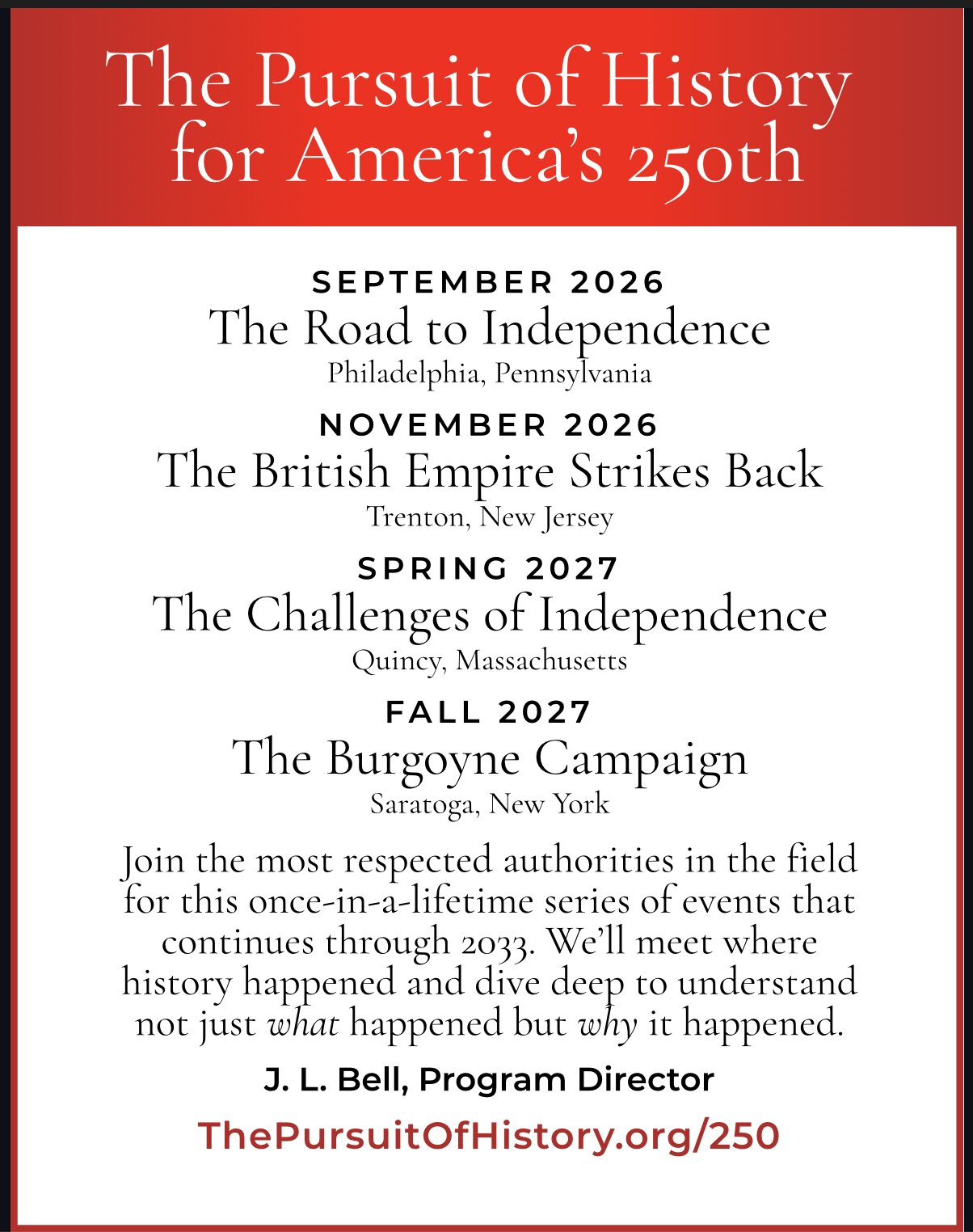
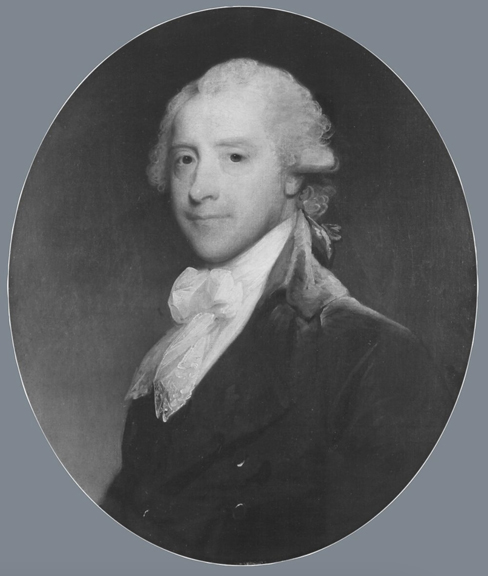
John Adams is a singular figure in the history of the American Revolution. No founder contributed more to the Revolution while drawing less attention from future generations, both historians and the public, searching for meaning in the American Revolution. Throughout his life Adams was aware of his reputation—“obnoxious, suspected and unpopular”—and the impact it would have on his place in history.[1] In a characteristically honest exchange with Benjamin Rush in 1790, he predicted that
The History of our Revolution will be one continued Lye from one End to the other. The Essence of the whole will be that Dr Franklins electrical Rod, Smote the Earth and out Sprung General Washington. That Franklin electrified him with his Rod—and thence forward these two conducted all the Policy Negotiations Legislation and War.[2]
Nor did time improve his mood. In his famous correspondence with Thomas Jefferson, nearly thirty years after his letter to Rush, he expressed with more than noticeable bitterness that Jefferson was destined for a far more hallowed pantheon than himself. “Your Character in History may be easily foreseen,” he told Jefferson; “your Administration, will be quoted by Philosophers, as a model, of profound Wisdom.” “Mine,” he wrote, “will have no Character at all.”[3]
Two hundred and fifty years after independence, Adams’ predictions have proven particularly prescient. Alexander Hamilton is the subject of a smash-hit Broadway musical that needs no introduction, wherein Adams is treated as a punchline. Washington and Jefferson have monuments on the National Mall. Efforts to erect a monument to Adams in DC are largely moribund, although a Congressional committee began studying the topic in 2023. Mount Vernon sees over a million visitors, and Monticello averages 500,000. In 2025, Adams National Historic Park (comprising the homes Adams occupied in and around Quincy, Massachusetts) welcomed only 48,726 people.[4]
Adams’ place in academic histories of the Revolution is similarly understated. This is largely a function of narrative: John Adams, devoted as he was to the classical political model predicated on virtue and happiness, does not fit neatly into the stories of the Revolution that most historians want to tell. The traditional teleological narrative of the Revolution—perhaps best captured in the work of so-called “consensus historians” like Louis Hartz—emphasizes the emergence of a modern liberal political order within a legalized, moderate, and modernizing American Revolution.[5] The intellectual successor to consensus histories, the neo-Whig approach of the 1960s, 1970s, and 1980s, challenged the degree to which liberalism dominated the Revolutionary period by introducing the importance of republican strains of thought and opposition politics formed in the crucible of the English Civil War. Admittedly, John Adams fits well within this tradition. Importantly, however, the neo-Whigs did not challenge the idea of the liberal political order as the end result of the Revolution, which means that under this model, the work and thought of John Adams loses importance as the Revolutionary period progresses.
Take for example the scholarship of Gordon Wood, one of the most important neo-Whig historians of the twentieth century. In his first work, Creation of the American Republic, he cast the Revolution as a modernizing event wherein classical causal influences gave way to liberal governing structures with the Constitutional moment acting as the hinge upon which this change occurred.[6] In his second major work, The Radicalism of the Revolution, he emphasized the degree to which the Revolution empowered the rights of ordinary white citizens in a process of modern state formation.[7] In Creation, Wood noted specifically that Adams was left out in the proverbial cold by this shift. A thoroughly classical mind, the shift to liberal modernity left him, in Woods’ phrasing, “irrelevant” to the American future.[8]
In recent decades, academic studies of the Revolution have uncovered the Revolution’s connection to a different modernity, emphasizing the degree to which the Revolution was part and parcel of the rise of race-based slavery, the dispossession of Native lands and settler colonialism, and the rise of industrial capitalism in the nineteenth century.[9] In this paradigm, there is more focus on what the Revolution did not achieve—the ways it enforced hierarchies and inequality—than on the rhetoric of rights and freedoms featured in earlier scholarship. Adams, the craggy consummate New Englander, bent over copies of Tacitus and Cicero, fits awkwardly in this story, especially when compared to other founders. Adams did not own slaves, and though he always lived comfortably, he was by no means a titan of the early American marketplace. Washington and Jefferson, enmeshed as they were in chattel slavery, plantation agriculture, and westward expansion, act as avatars for our national successes and sins. If the story of the Revolution is to be found on the plantation or the backwoods of the Ohio Country, then historians are far more likely to find Washington and Jefferson than Adams. If the Revolution is to be found in the halls of commerce or the merchant’s ledger, Hamilton and his financial plan fit right in. Once again, Adams is rendered historiographically irrelevant, albeit for very different reasons.
The irrelevance of John Adams in dominant understandings of the Revolution is to our collective detriment, especially today, when disagreements over the meaning of the Revolution underlie pressing public debates. More than any other founder, Adams threw himself into the peculiar world of political thought and better attention to his thought would help enrich our understanding of the founding period by centering it on the idea of happiness and the common good.

In a letter written to his wife Abigail in 1780, John Adams noted that he “must study Politicks and War” in order to give his sons the “liberty to study Mathematicks and Philosophy, Geography, natural History, Naval Architecture, navigation, Commerce and Agriculture,” and his grandchildren the “right to study Painting, Poetry, Musick, Architecture, Statuary, Tapestry and Porcelaine.”[10] Such a statement illustrates both Adams’ conception of an ordered and progressive society—wherein the imminently worldly arts of politics would provide the fuel for economic growth that would allow for future generations to enjoy the beauty of life—as well as the classical impulses which fueled his extraordinary career. Classical political thought can seem rather foreign to us today, given the dominance of philosophically liberal traditions in the nineteenth and twentieth century. Attention to the classical mindset, however, which emphasizes virtue, the common good, individual improvement, and the pursuit of happiness provides a model for the Revolution better prepared to provide context for the thorny political pressures of the present especially as relates to the current celebration of the 250th anniversary of the Declaration of Independence.
For those searching for a succinct and pithy summary of John Adams’ political convictions, his Thoughts on Government written in April 1776 just as the Continental Congress took the plunge towards independence, provides something akin to one-stop intellectual shopping. As befits a man still remembered for his stubbornness and steadfast principled nature, the thoughts which Adams hurriedly dashed out in this letter to Virginia delegate George Wythe can act as a proxy for the remaining fifty years of his career. Adams’ concern in the letter was to investigate the origins and ends of government. The answer he provided Wythe is both startingly simple and satisfyingly complex. Politics, he wrote, is “the science of social happiness,” a quantity which is itself dependent on constitutional design. More than other founders, Adams can seem obsessive about the structure of government, and it is from this conception that that instinct derives—a properly formed government was the only sure way for a society to experience the divine bliss of happiness. As for the ends of a governing system, he was similarly succinct: “All speculative politicians will agree that the happiness of society is the end of government as all divines and moral philosophers will agree that the happiness of the individual is the end of man.”[11]
From these simple maxims, we can develop a nuanced understanding of how Adams conceived of the relationship between individual experience, societal conditions, and political life. First is the interest of his connection of politics to the work of “divines” and “moral philosophers.” In making such a connection, Adams drew on natural rights philosophy evident within the works of John Locke and Jean-Jacques Burlamaqui to posit a sequential relationship between rights endowed by God and the drive God placed within man to seek their own happiness and the relationship between government and society.[12] As God compels man to seek his own happiness, so too should government enable the happiness of society. Adams followed up this argument with a proto-utilitarian statement, that the best government is that which “communicates ease, comfort, security, or in one word happiness to the greatest number of persons.”[13] Unlike later utilitarians, however, the dictates of natural law remain strong in Adams’ thought and give a greater purpose to the pursuit of happiness than would be evident in the sometimes dreary bean counting of nineteenth- and twentieth-century utilitarianism.
If Adams viewed happiness as the supreme end of government, it is important to understand from where he believed man derives a sense of happiness. Here, he drew on a long tradition of thinkers—“ancient and modern, pagan and Christian . . . Confucius, Zoroaster, Socrates, Mahomet”—to make a simple argument; that “the happiness of man, as well as his dignity, consists in virtue.”[14] Thus, it is important to found a government upon virtue, “the noblest and most generous affections in our nature,” rather than on the more common eighteenth century government derived from fear or honor. As the letter continued, he complicated his picture of happiness. His mentions of “ease” and “comfort” preceding his definition as well as continued references to “security” and “safety” add layered considerations of material well-being and order to his definition of happiness which fit neatly within mainstream conceptions of happiness in the eighteenth century and advance his thought beyond the relatively simple conception of happiness as virtue. Even as he complicated, however, he remained clear-eyed about the successive structuring of philosophical quantities—things like honor, comfort, and order are downstream consequences of and components to realized happiness. Adams thus reminded his readers to not make the mistake that so many future historians of the Revolution have made by confusing ends and means to ends. Happiness is the supreme end of government; other quantities, liberty, security, even freedom, are ways to realize happiness rather than the end goals that government should be pursuing.

Scholars who study John Adams have long acknowledged the importance of structure and order to his ideal republic, and for Adams, the only sensible form of government was republican, which he defined as an empire of laws and not of men.[15] Reflecting his devotion to ordered republicanism and to the rule of law, he took great care to examine how to properly structure representative government as well as how to ensure the supremacy of law within a polity. While the full Adamsonian structure of government would be built out in later writings (such as the Massachusetts Constitution of 1780 and his weighty Defense of the Constitution of the United States) in Thoughts, his basic precepts were made clear enough. At the base of his system is a representative assembly which should “be in miniature an exact portrait of the people at large.” In saying this, Adams was not thinking about matching population demographics to the composition of the assembly (as might be expected were a similar statement to be made today). Instead, on a deeper level, he recognized the unity between government and citizen within a republic, that a government composed of and empowered by individuals should “think, feel, reason, and act” like its component parts.[16] Such sentiments, while empowering, were recognized by Adams to have both a positive and negative connotation to them. If the population were enlightened, cultivated with the virtue he favored so highly, then the reflective government would be similarly virtuous in nature. If, however, the people became corrupted, then the reflective nature of republican government would backfire and reflect the venality of the population composing it.
It was Adams’ fervent hope that the Revolution would inspire the kind of virtue needed to sustain a classical political model. Writing in 1776, he was eternally optimistic for the future of a republic which, possessed of a constitution founded on sound classical political principles, would inspire in the population “good humor, sociability, good manners, and good morals.” The American population would have “the full power and a fair opportunity to form and establish the wisest and happiest government that human wisdom can contrive.”[17] Ultimately, the kind of politics Adams’ advocated for—centered on happiness and dependent on the virtues and moral sense of the population—collapsed during the early republic. Mirroring a wider collapse in enlightened thought, the advent of industrial capitalism, the pursuit of individual wealth, the unyielding crunch of westward settlement, and the increasing bellicosity of the plantation owner generated a political environment that had little relation to the sometimes-utopian dreams of revolutionaries in the 1760s and 1770s.[18] That this vision failed—that Adams and the political vision he represented did fall into irrelevance—does not render them meaningless or unworthy of historical study.
The fundamental hallmark of classical politics was that government should be devoted to the promotion of the common good and the protection of individual citizens’ pursuits of happiness. John Adams embodied this tradition, and it animated his political work during the Revolution. Rendered historiographically irrelevant by successive interpretative paradigms of the Revolution, Adams’ thought stands as a pillar which could be sorely useful in our current moment. As America celebrates 250 years, historians looking to understand the odyssey of America—the trials and tribulations but also the hopes and aspirations of the founding moment—would do well to begin with a better understanding of the odyssey, and modern-day irrelevance, of John Adams.
[1] John Adams to Timothy Pickering, August 6, 1822, Founders Online, National Archives, founders.archives.gov/documents/Adams/99-02-02-7674.
[2] “John Adams to Benjamin Rush, 4 April 1790,” Founders Online, National Archives, founders.archives.gov/documents/Adams/06-20-02-0181.
[3] Lester J. Cappon, Ed., The Adams-Jefferson Letters: The Complete Correspondence Between Thomas Jefferson and Abigail and John Adams (Omohundro Institute and University of North Carolina Press, 2012), 349.
[4] For Mount Vernon’s visitor statistics, see: www.mountvernon.org/about/privately-owned-not-government-funded; for Monticello, see: www.nps.gov/subjects/internationalcooperation/upload/WHSPeriodicRpt-Monticello-UVA.doc. For Adams National Historic Park, see: irma.nps.gov/Stats/SSRSReports/National%20Reports/Annual%20Visitation%20By%20Park%20(1979%20-%20Last%20Calendar%20Year).
[5] Louis Hartz, The Liberal Tradition in America: An Interpretation of American Political Thought since the Revolution (Harcourt, 1955). For a succinct summary of the historiography of the Revolution, see: Michael Hattem, “The Historiography of the American Revolution,” Journal of the American Revolution, August 27, 2013, allthingsliberty.com/2013/08/historiography-of-american-revolution/.
[6] Gordon S. Wood, The Creation of the American Republic, 1776-1787 (Omohundro Institute and University of North Carolina Press, 1969)
[7] Gordon S. Wood, The Radicalism of the American Revolution (Knopf, 1993).
[8] Wood, Creation, Chapter XIV.
[9] See for example: Carroll Smith-Rosenberg, This Violent Empire: The Birth of an American National Identity (Omohundro Institute and University of North Carolina Press, 2012), Alan Taylor, American Revolutions: A Continental History, 1750-1804 (Norton, 2017), Robert Parkinson, The Common Cause: Creating Race and Nation in the American Revolution (Omohundro Institute and University of North Carolina Press, 2016); Robert Parkinson, Thirteen Clocks: How Race United the Colonies and Made the Declaration of Independence (Omohundro Institute and University of North Carolina Press, 2021).; and Joseph J. Ellis, The Great Contradiction: The Tragic Side of the American Founding (Penguin, 2025). This view is also prominent in the New York Times’ “1619 Project,” which generated significant debate in academic circles. See: Nikole Hannah-Jones, “1619 Project: Introduction,” New York Times Magazine, August 14, 2019.For recent historiographical discussions on the state-of-the-field of Revolutionary studies, see for example: Michael A. McDonnell and David Waldstreicher, “Revolution in the Quarterly? A Historiographical Analysis,” William and Mary Quarterly, 74, no. 4 (2017); Trevor Burnard, Writing Early America: From Empire to Revolution (UVA, 2023); and Francis D. Cogliano, Ed., The American Revolution at 250: Twenty-Four Historians Reflect on the Founding (UVA, 2026).
[10] “John Adams to Abigail Adams, 12 May 1780,” Founders Online, National Archives, founders.archives.gov/documents/Adams/04-03-02-0258.
[11] John Adams, “Thoughts on Government” in The Political Writings of John Adams, George A. Peek, Jr., ed., (Hackett: 2003), 84-85.
[12] See for example John Locke, “An Essay Concerning Human Understanding,” Kenneth P. Winkler, ed. (Hackett, 1996) and Jean-Jacques Burlamaqui, The Principles of Natural and Politic Law, Petter Korman, Ed. (Liberty Fund, 2006).
[13] Adams, “Thoughts on Government,” 85.
[14] Ibid.
[15] See for example: Richard Ryerson, John Adams’s Republic: The One, the Few, and the Many (Johns Hopkins University Press, 2016).
[16] Adams, “Thoughts on Government,” 86.
[17] Ibid., 91-92.
[18] For discussion on how this particular Enlightenment worldview collapsed, see for example: Judith Shklar, After Utopia: The Decline of Political Faith (Princeton, 1957); Gareth Stedman Jones, An End to Poverty?: A Historical Debate, (Columbia University Press, 2004); Vivasvan Soni, Mourning Happiness: Narrative and the Politics of Modernity (Cornell 2010); and Richard Whatmore, The End of Enlightenment: Empire, Commerce, Crisis (Penguin, 2023).

6 Comments
I concur with your assertion that John Adams has been inappropriately overlooked by historians and the public. He was the foremost constitutional thinker of his time, influencing most state constitutions. While James Madison gets the credit, the US Constitution represents his thinking in Thoughts on Government. For example, Adams recommended separation of powers, a bicameral legislature, a chief executive veto, and an independent, lifetime judiciary, all aspects of the US Constitution. Additionally, Adams’s fear of the aristocracy overwhelming government has been overlooked by historians and remains relevant.
One area I would clarify is the concept of happiness. Eighteenth-century writers defined happiness differently from how it is commonly used today. Adams and his contemporaries viewed happiness as an activity, not a state of mind. Happiness is living virtuously, rather than a feeling of contentment or pleasure. To eighteenth-century Americans, virtue meant “moral goodness, opposed to vice.” People living virtuously (private virtue) contributed to making the society virtuous (public virtue).
Adams and others in Revolutionary America formed their views of happiness and virtue synthesizing classical Greek philosophy, Enlightenment thinking, and for some, the Puritan work ethic. Aristotle wrote that people achieve happiness, the highest good, when they pursue excellence and wisdom and take excellent and wise action.
As to being obnoxious and disliked, this is “imposter syndrome.” Adams set impossibly high standards for himself. Delegates assigned him to the most committees, so colleagues highly valued his contributions and eagerly sought his advice. Richard Henry Lee’s publishing Thoughts on Government is strong evidence of Adam’s high standing among the delegates.
Your point that Adams has been overlooked by the public is a good one. The current reprise of the play 1776, in which Adams plays the central role, has not received the same public reception as Hamilton. In any event, I highly recommend seeing 1776 (again).
Thanks for the comments and for reading Eugene. I agree with your thoughts on happiness as an activity rather than a state of mind. I am defending my master’s thesis on the role politicized notions of happiness played in the Revolution so look for more on this in the future!
This is a well-constructed reminder of the relevance of Adams. We all need that from time to time
Thanks for this thoughtful and up-to-date piece on Adams and his reputation. It seems to me that several things explain why Adams is less celebrated today than some of his Revolutionary compatriots for helping establishing America’s founding principles.
While there is no question that Adams was a champion of a republican form of government based on consent and the rule of law, and such key ideas as the separation of powers and checks and balances, an independent executive with veto powers and an independent judiciary, his prescriptions for the new nation in Thoughts on Government were based on a model of disunited and sovereign states, i.e., a confederated republic. That pamphlet showed no signs of the nationalist and Federalist he eventually became.
Like Jefferson, Adams missed the Constitutional Convention. Madison rightly would get the credit for guiding that affair and helping establish the foundations for a new, federalist constitutional order. Madison and Hamilton would further cement their reputation as first-order constitutional thinkers by their writings in The Federalist Papers. And while many of Adams’s prescriptions for governance were applied to the new national government created by the Constitution in 1787, he was, in effect, late to that party, his publication of The Defense of the Constitutions not withstanding.
Of the several principal participants during the Revolutionary period who later served as president (Washington, Adams, Jefferson, Madison, Monroe), only Adams was a one-termer. His role with the Alien and Sedition Acts during his administration tarnished his reputation and helped hasten the end of his presidency and the Federalist Party.
Interestingly, your (and Adams’s own) assessment of Adams’s future reputation appears to be on the mark, even as revelations of the indiscretions of, say, Jefferson, have come to light, or, as with the case of Hamilton and his flaws, even celebrated today.
I like to think the quote attributed to John Adams the most, “facts are stubborn things,” summarizes the man, his legacy, and American historiographical memory of him. No matter how hard some have tried to belittle or downplay his role, John Adams stubbornly keeps resurfacing as the one Founding Father whose absence would have undone everything we know and take for granted with the Revolutionary Period.
For indispensable men, there’s Washington for the military, Franklin for diplomacy, and Adams for politics.
Great article!
This is a great article!
Your discussion of Adams’s lack of historiographic attention is thought-provoking given his role in shaping the structures and values that encompass American government. Your critique of teleological approaches is especially convincing.
Given his highly nuanced philosophical views on the rule of law and the English constitutional order, this article spawns more questions as to how Adams deployed political strategy within extra-legal institutions like the Continental Congress. If we view independence as a contingent outcome, to what extent was Adams committed to preconceived political objectives?
I am inclined to recall the claims of Wood and John Ferling who mention how Adams considered his May 15th resolution requesting that the colonies to draft state constitutions as the true maxim of independence, a necessity of governance rather than an abstract principle. Perhaps with a greater historical understanding of Adams’s contributions to political philosophy, we can better understand him as a “politician thinking,” borrowing Rakove’s term as applied to Madison.
Very well done.