

In 1783, the Second Canadian, also known as Congress’s Own Regiment or Hazen’s Infernals, was a combination of two regiments formed in 1775 and 1776 for the Continental Army.[1] During the American Revolution its members fought in battles across the Upper and Middle former colonies. By the end of the war, they were a motley assortment of recruits from Canada, the various states, Ireland, Great Britain, and Germany.[2] Though no longer a purely Canadian regiment, the presence of Canadians, particularly those of French descent, in the American army provides a fascinating case study for the transnational appeal of American Whig ideology during the Revolution.
Missing from traditional studies of these regiments is the role of American Whig ideology in driving Canadian enlistment and some Canadians’ continued support for the Revolution.[3] Sebastian van Bastelaer has argued for the importance of ideology in leading Canadians to support the American invasion, however, his narrative concludes following the American defeat in Canada, leaving seven years of Canadian participation undiscussed. To ignore ideology or discount its impact on Canadian (both Anglo and French) recruitment obscures one of their primary motives for participation. While Canadian enlistments were driven by complex interests, their commitment to “the Common Cause,” or Englishmen’s rights (as defined by American Whigs), illustrates the role in which revolutionary ideology had on Canadians of both French and British heritage.[4]
Seeds of Discontent: The British Conquest and Colonial Government, 1763-1775
After the British conquest of French Canada in 1759, a military government was established under Gen. James Murray.[5] Many British officials, including Murray, deemed the French system inefficient, corrupt, and ruinous to the prosperity of the colony. Many advocated a new future for Canada, perhaps one similar to Ireland. Murray, however, advocated for milder measures to create imperial unity. [6]
To accommodate the new subjects, officials granted some “English liberties,” such as access to British courts and respect for Canadians’ property rights.[7] Though granting some English liberties, officials avoided attacking Catholicism, the dominant religion among French-Canadians, and did not enforce a common-law judicial system, both significant deviations from previous English precedent.[8] Some newly arrived Anglo-Canadians called for more extensive changes to Canada’s governance by including traditional English hallmarks such as elected assemblies and Catholic political exclusion. Their vision of empire, like many other Britons, centered on Protestant supremacy.[9] This small but influential group of mostly former New Englanders wanted a continuation of an empire that was quickly fading as British officials began crafting a new model of imperial governance.[10]
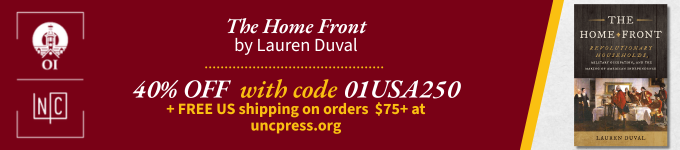
As Anglo-Canadians became restive, the habitants, or French peasants, also began pushing against elites’ efforts to control them. This constant resistance led one British officer to accuse the habitants of being “poisoned in their minds.”[11] The combination of increasing habitant assertiveness and Anglo-Canadian Whig hostility increased tensions in the colony before the arrival of Gov. Guy Carleton in 1766. Carleton, an excellent administrator, brought temporary peace, but Anglo-Canadian Whigs soon realized that Carleton’s vision of empire was similar to previous imperial servants. Carleton enforced the British policy of favoring the seigneurs, or French elite, over the Anglo-Canadian Whigs.[12] As with many other radical British Whigs, these Anglo-Canadian Whigs felt “alienated from the official world of cosmopolitan London.”[13] Their determination to resist tyranny from the metropole, particularly Parliament’s refusal to grant an assembly, led some to invite French Canadians to join the protests, radically setting aside cultural and religious differences.[14]
With the passage of the Quebec Act in 1774, some Anglo-Canadian Whigs were appalled that Parliament found it “inexpedient to call an Assembly.” Not only had the much-hated French Catholic legal system been preserved in law, but Anglo-Canadians’ right to control officials through elections was still deferred. Arriving in Canada in early September, the Act and Governor Carleton were met with warm approval by French elites, but hatred by the Anglo-Canadian Whigs. The habitants were also far from pleased with the Act. The Quebec Act pushed many habitants to be open to the influence of American revolutionary ideology and provoked resistance.[15] The Quebec Act reinstated French laws, including the much-hated tithing system, and once again restricted the habitants, negating the British rights they had come to claim. The Act provoked vandalism, general unrest, and led some French Canadians to seek an alliance with Anglo-Canadian Whigs.[16] This alliance proved to be essential for American success when they arrived in August of 1775.
“Liberty”, “Bostonians” and “Yankees”: The American Invasion
American Whigs maintained a fixation on Canada from the start of the hostilities between Britain and the colonies, writing letters that were disseminated by Anglo and French-Canadian Whigs. Congress’s first major effort to appeal to the Canadians was through an epistle sent in 1774.[17] The letter utilized French philosophy and concepts of Englishmen’s rights as reasons for Canadian collaboration with American Whigs. Congress invited the Canadians to send delegates to the next session, suggesting that the French Canadians deserved the same liberties as the “old” or English subjects.[18] Nothing resulted from the petition, and Canada lay forgotten in Congress’s calculations until the capture of Fort Ticonderoga on May 10, 1775 reoriented it’s focus.[19]
After the capture of Fort Ticonderoga, Congress sent a proclamation to Canada in both English and French seeking Canadian support.[20] This letter, written by John Jay, Samuel Adams and Silas Deane, addressed “the oppressed” Canadians and explained how a “sense of common danger” led the colonies’ rebellion. They noted that all imperial subjects’ rights were threatened by an oppressive Parliament and that the Canadians were “made slaves” by the British Crown. They appealed to the Canadians to begin, “uniting with us in the defence of our common liberty.”[21] George Washington also wrote to the Canadians stating that the arrival of an American army was “not to plunder but to protect you; to animate and bring forth into Action those sentiments of Freedom you have declared, and which the Tools of dispositism would extinguish through the whole Creation.”[22]

Generations of conflict and hatred were “artfully glossed over” to promote the benefit of “the Cause.”[23] While the overtures were at first favorably received, Congress hurt itself with its anti-Catholic rhetoric in other publications.[24] Despite Congress’s inability to fully exorcise anti-French sentiment from its halls, some French-Canadian habitants and merchants, soon to be referred to as “French Whigs,” continued to read American addresses aloud in public and continued a direct correspondence with American Whigs.[25]
Perhaps necessity forced Congress’s hand to extend fellowship to the French Canadians, but once extended it was not retracted. For those Canadians who believed Congress, “the Cause” became a rejection of the British Empire. French Whigs’ efforts led many Americans to see them as fellow revolutionaries, despite differences that earlier had made the two groups implacable enemies. While not yet a fully-fledged independence movement, the idea that the rights of Englishmen transcended cultural borders and ought be offered to all members of the empire was evident in Congress’s petition and its acceptance. This was a monumental fracturing of the previously hegemonic idea of Protestant supremacy in the empire. Commitment to rights, particularly political rights, trumped tradition and beliefs in Protestant religious superiority.
On June 27, 1775, Congress authorized Gen. Philip Schuyler to invade Canada to deter British invasions and spread American Whig ideals.[26] Not only was the army unopposed by most habitants, but it was offered food and intelligence, as an increasing number of French Canadians joined the American army.[27] James Livingston, a future colonel, reported, “The Canadians have waited with the utmost Impatience your Coming & begin to despair of Seeing you.”[28] In contrast, British officials struggled to raise sufficient forces to defend the colony, and in many parishes French and Anglo-Canadian Whigs openly defied British calls to arms.[29]
French and Anglo-Canadian Whigs’ support for the Americans perhaps stemmed from a host of reasons, including anti-British sentiment or simply the potential to be on the winning side.[30] Yet, as noted by Samuel Mott of Connecticut, ideology was certainly a factor. He stated “there was a severe engagement between the French Whigs on one side, and the French Tories and Regulars on the other side . . . The Indians of all the tribes, and the Canadians who join us, have all learned English enough to say ‘Liberty,’ and ‘Bostonian,’ and all call themselves Yankee.”[31] While perhaps exaggerated to encourage revolutionary sentiment on the home front, this letter indicates that not only had Americans conferred upon their allies the title of Whigs, transcending cultural and religious animus, but they also used ideologically charged vocabulary to teach English. An American scout, John Brown, added, “I can assure you [the French Canadians] are our friends.”[32]

It was not just the Americans who noticed this French Whig devotion to the rebellion. Thomas Ainslie, an Anglo-Canadian Loyalist trapped in the city of Quebec, vented in his journal:
In June the Canadian peasants began to shew a disposition little to be expected from a conquered people who had been treated with so much lenity by Government. The agents and friends of the Congress had not been idle- by word and by writing they had poisoned their minds- they were brought to believe that the minister had laid a plan to enslave them, and to make them the instruments of enslaving all the neighbouring provinces, that they would be continually at war, far removed from their wives and families . . . from the impressions made by these seditious people, the Canadians look upon the Rebels as their best friends, and are ready to receive them as the asserters of their rights and liberties[33]
Further evidence can be found in Livingston’s success in recruiting Canadians at Pointe Olivier in September 1775.[34] British estimates suggested that hundreds of French Canadians fought alongside the Americans.[35] Furthermore, while the Continental army was bogged down at St. Johns in an unproductive siege, Livingston’s recruits fought skirmishes against British-aligned militias in the Montreal area and helped capture Fort Chambly.[36] Edward Antill and Moses Hazen also began to recruit their own special regiments. Hazen, a former British officer and immigrant to Canada, had strong links to the locals in the Richelieu and St. Lawrence Valleys from his marriage to a French Canadian.[37]
Many Canadian Whigs arrived with General Montgomery on December 1, 1775 to aid Benedict Arnold’s besieging force surrounding Quebec and were part of the failed Battle of Quebec on New Year’s Eve.[38] Following the defeat, many left the army, recognizing the peril the Americans faced and the probable disaster facing those still with them.[39] Ideological fervor had limitations, as it did everywhere in the colonies. Furthermore, the new commander of the American forces, Gen. David Wooster, held a deep animosity for the French Canadians which deterred many would-be revolutionaries.[40] These factors led some to despair at the state of “the Cause” in Canada.
This despair was excessive and premature. Even after the defeat, Canadian Whigs continued to support the American war effort.[41] Caleb Haskell, days after the defeat recorded, “The Canadians are daily joining us.”[42] Though the lack of hard currency and other harsh realities made recruiting more difficult, several hundred Canadians still enlisted following the disaster at Quebec.[43] These French and Anglo-Canadian Whigs joined knowing full well the Americans were underequipped, malnourished, and unable to pay.[44] They fought in the battle of Trois Rivieres and in other skirmishes preceding the retreat from Canada, and many fled south to Crown Point on Lake Champlain along with the American regiments under Arnold’s command on June 17, 1776.[45] They became refugees in New York, losing their lands and communities in order to still support the American cause.
“Our Country”: Refugees in America
During the spring of 1776, the commanders let the Canadian regiments regain their strength in the Mohawk Valley and at Albany, New York.[46] Some, such as Father Lotbiniere, were excommunicated from the Catholic Church for their involvement with the Americans.[47] Many undoubtedly worried about their lands and families whom they had left behind, and those whose families had accompanied them into New York must have been concerned about feeding and clothing them, in addition to avoiding the ravages of sickness in the camp.[48] Reports also surely arrived regarding Carleton’s leniency against former rebels. To leave would have been easy for these soldiers. Remarkably, it appears that few left the American army.
During this period regimental commanders James Livingston and Moses Hazen rebuilt their units. A unique mix of Canadians, Americans from throughout the colonies, and foreigners became the lifeblood of these two regiments. Unconnected to any state, they fell under direct Congressional supervision, with all its inherent difficulties and delays.[49] After several months, the First Canadian Regiment was placed under the command of Gen. Horatio Gates of the Northern Department in the summer of 1776. The Second Regiment was transferred south to Washington’s army.
Over the next two years the regiments participated in various campaigns across the colonies. Livingston’s Canadians joined in the Saratoga campaign and other conflicts in the Northern theater.[50] Meanwhile, the Second Regiment remained a part of Washington’s army and fought in the battles of Staten Island, Brandywine, and Germantown.[51] Reminiscing about those difficult battles, Hazen declared, “The Canadian Soldiers are not inferior to any in the Regiment, in Point of Morality, Bravery, or Attachment to the Cause and Service in which they are engaged; a Proof of which one canadian only has deserted since the Regiment retreated out of Canada.”[52]
Both regiments were deployed to the Northern department in 1778. The First Canadian participated in the failed campaign to retake Newport, Rhode Island. The Second Canadian Regiment, now known as “Congress’s Own Regiment,” was placed under General Lafayette, with rumors abounding of another invasion of Canada. As the 1779 campaign season began, Hazen’s regiment was sent to build a road through the Coos region of modern-day Vermont, prompting more rumors of another Canadian campaign.[53] By the end of the year it was clear they were a decoy to draw British attention away from targets in western New York. [54] The Second Canadian was then transferred to guard New York City.[55]
In periods when they were not fighting the British, members of the Second Canadian regiment fought among themselves. In the flurry of letters defending and attacking each other, ideological undertones lace the regiment’s writings. In a letter to Washington, the officers stated:
We need not represent to you our attachments to our Country, our early embarking in the common cause, the Number of Battles we have fought, or our long marches in the dead of winter, our watchings, hunger, fatigues or dangers, as you yourself have been an Eye witness and partaker of them in common with ourselves . . . it is not enough for us barely to serve our Country, we wish to serve it with reputation.
These Canadians, though acknowledging that their physical “Country” would not be possessed by the Americans, still considered the “common cause” part of how they came to identify the American nation as “our Country.” [56]
After years of fighting, the regiments were shells of their former selves. They, like other Continental troops understood the utter inefficacy of the American government, particularly given their lack of supplies.[57] Yet, while other units in the Continental Army rebelled, the Canadians endured without incident.[58]
In a separate letter in 1780 the officers declared, “Your memorialists at an early poried [period] of the present War, draw their Swords for the protection of the Rights of their countrymen as well as their own individual Liberty, and have never hesitated to partake of the dangers and evils of war when they pointed to the path that lead to Military Glory.”[59] While written by American, European, and Canadian officers, they used “countrymen” inclusively, as well as the ideas of “rights” and “individual Liberty.” They further suggested that because of that commitment, they were willing to demonstrate their ultimate commitment of the “Cause” by facing “dangers and evils of war” to protect those inclusive ideas.
Proving their point, the men of the Second Canadian participated in combat missions during the winter of 1780-1781. They raided Staten Island in 1780 and fought Loyalist raids.[60] Francis Monty, one of the Canadians, stated he and his two sons had “Gloriously Contended” for the “power to be Free, and Enjoy that Liberty.”[61] Hazen stated, “That no Regiment in the Army has seen more or harder Service, and as it is presumed behaved better than that which your Excellency’s Memorialist has the Honour to command.”[62] Meanwhile, by 1781, the First Regiment had been reduced to less than a few hundred men and was incorporated into the Second Canadian Regiment.[63] In September, the Second Canadian was summoned for Washington’s assault on Yorktown.[64] Following the victory, the Second Canadian was assigned guard duty in Lancaster, Pennsylvania and then garrison duty in New York for the remainder of the war. During this time, they appealed for compensation from Congress, court-martialed some of their officers, and continued to suggest that a second invasion of Canada be undertaken.[65]
As the war drew to a close in 1783, the new nation began the difficult task of self-creation and reintegration of men discharged from the Continental Army. The Canadians recognized they were refugees, “not having any friends or connections in these United State[s] of America.”[66] Of the estimated 580 men remaining in the Second Canadian Regiment, about 250 men, mostly Canadian volunteers, had served over six years. These Canadians returned to Albany, New York to live with other Canadian refugees. They lived on government provisions and repeatedly petitioned Congress for land while emphasizing their ideological commitment to the “Cause.” Clement Gosselin, a French-Canadian officer, said in a letter to Washington, “I dare say, having seen better days, that all of this is very difficult, without means, and after losing my own property in Canada for the common cause of the States, alas, I do not ask for anything immense.”[67]
Hazen, writing for himself and fellow Canadians, stated “The People of Canada living in a conquered Country, their Liberties had not been infringed, their Properties endangered by Innovations from Government—nor had their been any Violation of Charters- Subjects of real complaint from the good People of these States—before the present great and important Revolution.” Hazen and the Canadians recognized that many of the problems facing the Americans prior to the war were not directly their own. Hazen reminded Congress that despite this, “many of the Canadians fled to the American Standard, and assisted in the Siege at St. Johns, and Blockade of Quebec, whilst others supported them with Provisions, Clothing, Carriages, &c. on the Faith and Credit of these States.” He emphasized that the Canadians had left their “Connections and Properties—not however with Hopes of returning in Arms victorious to their own Country and that the Same Idea has been encouraged and kept alive.” These Canadians fought with the hope that American liberty could be brought to their homeland.
These very Men who have largely shared in every Danger, Toil, and Fatigue—who have been faithful and constant in their Duty will not equally partake of the Blessings of Peace which the Citizens of these United States will perfectly enjoy. They being secluded from their native Country: they therefore, still attached to the Cause in which they have fought and bled, rather than return neglected and despised, willing to partake of those Blessings of Liberty, which they have with unremitted Pain and Fatigue assisted to obtain.[68]
Canadians saw themselves as deserving of the same benefits as other Americans, while still clinging to their identity as Canadians. Jean Goulet stated that though he was a “Poor Canadian Refuge” he suffered like “all who embraced the cause of Liberty.”[69] One historian suggests that the act of fighting perhaps enhanced the American identity of the Continental Army as well as that of the general populace.[70] Perhaps, in the eight years of fighting, commitment to the “common cause” had shown these Canadians that though they lost their lands and communities, ideology could connect them to the American nation.
Eventually, the Canadians settled near Lake Champlain, New York, aiding in extending the United States’ control to the Canadian border. Acting as a buffer for the United States, the Canadians continued their usefulness to their adopted nation. Some soldiers eventually returned to Canada, but the vast majority remained in the United States, although they reestablished connections across the border.[71] Eventually the Canadians were assimilated into American society and their story forgotten in many historical narratives.
There were certainly multiple reasons for those Anglo and French Canadians to remain in the Continental army, but the harsh realities of war could dissuade even the most eager enlistee from continued participation in the conflict, as illustrated by the numerous desertions in the Continental army. The Canadian regiments seldom strayed far enough from the border for an easy escape to be prohibitive. Some did leave, but many remained for the duration of the war. Canadian voices during and after the war showed that many were motivated by the ideology of the American Revolution. Their writings, full of words like country, common cause, liberty, and rights illustrate how they had come to identify themselves as participants in the “common cause.” Though they still claimed attachment to their homeland, which they hoped would become a part of the new American Republic, Canadians expressed their willingness to fight and die for the United States because the new nation best embodied the rights they believed were essential for prosperity and happiness. These rights were centered on the Englishmen’s rights embodied in American revolutionaries’ ideology.
This shared common cause, founded in a complex combination of ideas about Englishmen’s rights, Enlightenment philosophy, and the struggles of war, appealed across national, ethnic, and racial borders. What is remarkable is that despite the differences in language, culture, and history, these Canadians saw themselves as bearers and defenders of American ideology. They illustrate the power of ideology of the American Revolution had beyond the thirteen colonies’ borders and suggests the need for a continued and careful inclusion of American Whig ideology into narratives of the Revolution and its role in the broader Atlantic world.
[1] Matthew J. Seelinger, “2d Canadian Regiment,” The Army Historical Foundation, armyhistory.org/2d-canadian-regiment/.
[2] Holly Mayer, Congress’s Own: A Canadian Regiment, the Continental Army, and American Union (University of Oklahoma Press, 2021), 113. Moses Hazen to George Washington, December 26, 1782, in Founders Online, The National Archives, founders.archives.gov/documents/Washington/99-01-02-10303; Bartholomew Von Heer to Washington, 1783, founders.archives.gov/documents/Washington/99-01-02-12240.
[3] Holly Mayer’s Congress’s Own provides the most in-depth analysis of the regiments, its members, and their contributions to the American war effort through a borderlands perspective. See also: Allan S. Everest’s Moses Hazen and the Canadian Refugees In the American Revolution (Syracuse University Press, 1976) and Patrick Lacroix, “Promises to Keep: French Canadians as Revolutionaries and Refugees,” Journal of Early American History 9, no. 1 (2019), 59-82. Others focus on the failed Invasion of Canada and Canadians role in the campaign. See Derek Beck, The War Before Independence: 1775-1776 (Sourcebooks, 2016); Thomas A. Desjardin, Through a Howling Wilderness: Benedict Arnold’s March to Quebec (St. Martin’s Press, 2006); George Stanley, Canada Invaded, 1775-1776 (Hakkert, 1973); Harrison Bird, Attack on Quebec: The American Invasion of Canada, 1775 (Oxford University Press, 1968); Gustave Lanctot, trans. Margaret M. Cameron, Canada & the American Revolution: 1774-1783 (Clarke, Irwin & Company Limited, 1967); S.D. Clark’s Political Movements of Protest in Canada (University of Toronto Press, 1959); Thomas Raddall, The Path of Destiny: Canada from the British Conquest to Home Rule; 1763-1850 (Doubleday, 1957); Alfred Burt, The Old Province of Quebec (The University of Minnesota Press, 1933); Sebastian van Bastelaer, “That Damned Absurd Word Liberty:” The Journal of the American Revolution (August 5, 2019); Sebastian van Bastelaer, “Les Habitants: Collaboration and Pro-American Violence in Canada, 1774-1776.” Journal of the American Revolution (July 9, 2019); Mark R. Anderson, The Battle for the Fourteenth Colony (University Press of New England, 2013).
[4] This concept of the “Common Cause” lacked racial ideology suggested by Robert Parkinson’s work in The Common Cause: Creating Race and Nation in the American Revolution (University of North Carolina Press, 2016). This is not to suggest that for some Americans, the “Cause” depended upon deep racial fears to generate action and loyalty.
[5] Mayer, Congress’s Own, 24.
[6] James Murray, “General Murray’s Report of the State of the Government of Quebec in Canada June 5th, 1762,” in Documents Relating to the Constitutional History of Canada 1759-1791, ed. Arthur G Doughty and Adam Shortt (Ottawa; J de L. Tache, 1918), 79-80. Colonel Burton, “Col. Burton’s Report of the State of the Government of Three Rivers,” in Documents Relating, ed. Doughty and Shortt, 82. On the transition: Philip Lawson, Imperial Challenge: Quebec and Britain in the Age of the American Revolution (McGill-Queen’s University Press), 27-59; Stephen Conway, “The Consequence of the Conquest: Quebec and British Politics, 1760-1774,” in Revisiting 1759: The Conquest of Canada in Historical Perspective, eds. Phillip Buckner and John G. Reid (University of Toronto Press, 2012), 141-165.
[7] James Murray, “General Murray’s Report … June 5th, 1762,” in Documents Relating, 80. Ideas of French Tyranny and English liberty are excellently discussed in Linda Colley’s Britons (1992).
[8] James Murray, “General Murray’s Report … June 5th, 1762,” in Documents Relating, 65-66, 71; Egremont, “Egremont to the Lords of Trade … July 14th, 1763,” in Documents Relating, 147-148; Lords of Trade, “Lords of Trade to Egremont 8th June 1763,” in Documents Relating, 143. Donald Fyson, “The Conquered and the Conqueror: The Mutual Adaptation of the Canadians and the British in Quebec, 1759-1775,” in Revisiting 1759, 190-217.
[9] S.D. Clark, Political Movements of Protest in Canada: 1640-1840 (University of Toronto Press, 1959), 75; Linda Colley, Britons (Yale University Press, 2005), 11-54.
[10] Clark, Political Movements, 75.
[11] Coffin, The Province of Quebec, 289.
[12] Anderson, The Battle for the Fourteenth Colony, 37.
[13] Gordon Wood, Creation of the American Republic, 1776-1787 (W.W. Norton Co., 1972), 16.
[14] Clark, Political Movements, 75-77; Anderson, The Battle for the Fourteenth Colony, 38-39.
[15] Desjardin, Through a Howling Wilderness, 123-124; Bastelaer, “’That Damned Absurd Word Liberty:’”; M. de Ramsay, “Articles de Capitulation, 1759,” in Documents Relating, 3,6, 15, 30-31.
[16] Robert McConnell Hatch, Thrust for Canada (Houghton Mifflin Company, 1979), 6-8, 12; Coffin, The Province of Quebec, 493; van Bastelaer, “That Damned Absurd Word Liberty.”
[17] Clark, Political Movements, 77, 79.
[18] Van Bastelaer, “That Damned Absurd Word Liberty.”
[19] A cynical take; see: Carl Berger, Broadsides and Bayonets: The Propaganda War of the American Revolution (University of Pennsylvania Press, 1961), 17-51.
[20] Robert Middlekauff, The Glorious Cause: The American Revolution, 1763-1789 (Oxford University Press, 2005), 286.
[21] Journals of the Continental Congress: 1774-1789, V. II (Government Printing Office, 1905), 68-70.
[22] George Washington, “To The Inhabitants of Canada,” in George Washington: A Collection, ed. W.B. Allen, 46-47.
[23] Van Bastelaer, “That Damned Absurd Word Liberty.”
[24] Gustave Lanctot, Canada & The American Revolution (Harvard University Press, 1967), 34, 35-36; Extract of a letter from Canada, dated Montreal, March 24, 1775, found in Brantz Mayer, Journal of Charles Carroll of Carrollton, During His Visit to Canada in 1776 (Baltimore; John Murphy, 1876), 34.
[25] van Bastelaer, “That Damned Absurd Word Liberty:”
[26] Middlekauff, The Glorious Cause, 286. Also: Phillip Schuyler to Washington, September 20, 1775, founders.archives.gov/documents/Washington/03-02-02-0023; “Letter of an officer … November 3, 1775,” in, The Spirit of ‘Seventy-Six: The Story of the American Revolution as told by Participants, V. II, eds. Henry Steele Commager and Richard B. Morris (The Bobbs-Merrill Company Inc., 1958), 189-190. Anderson, The Battle for the Fourteenth Colony; Douglas R. Cubbison, The American Northern Theater Army in 1776 (2010), Desjardin, Through a Howling Wilderness; Hatch, Thrust for Canada; Lanctot, Canada & The American Revolution.
[27] Ed. Michael P. Gabriel, Quebec during the American Invasion, 1775-1776 (Michigan State University Press, 2005), XXXII-XXXIII; William Kingsford, The History of Canada (Rowsell & Hutchison, 1892), 425; James Livingston to Schuyler, undated, in Schuyler to Washington, August 31, 1775, founders.archives.gov/documents/Washington/03-01-02-0286. Also: Caleb Haskell’s Diary: May 5,1775—May 30, 1776, ed. Lothrop Withington (William H. Huse & Company, 1881), 13. Kingsford, The History of Canada, 425.
[28] Livingston to Schuyler, undated, in Schuyler to Washington, August 31, 1775, founders.archives.gov/documents/Washington/03-01-02-0286.
[29] van Bastelaer, “That Damned Absurd Word Liberty:”; Bird, Attack on Quebec, 132-133.
[30] Virginia Easley DeMarce, Canadian Participants in the American Revolution: An Index (1980).
[31] Samuel Mott to Jonathan Trumbull, October 6, 1775,” in The Spirit of ‘Seventy-Six, eds. Commager and Morris, 188-189.
[32] John Brown to Trumbull, August 14, 1775, in American Archives: A Documentary History, V. III ed. Peter Force (M. St. Clair Clarke, 1840), 135.
[33] Thomas Ainslie, Journal, in The Spirit of ‘Seventy-Six … V. II, eds. Commager and Morris, 187. See also: Coffin, “The Province of Quebec and the Early American Revolution,” 509; Patrick Daly, Journal, January 2, April 6, 1776, in “Journal of the Siege and blockade of Quebec by the American rebels,” Literary and Historical Society of Quebec (1875), 11, 20.
[34] Journals of the Continental Congress:1774-1789, V. III (Government Printing Office, 1905), 448; Robert K. Wright Jr., The Continental Army (Center of Military History, 2006), 59.
[35] Anderson, The Battle for the Fourteenth Colony, 107-108; Patrick Daly, Journal, (1875). A cynical take see: Burt, The Old Province of Quebec, 194.
[36] Anderson, The Battle for the Fourteenth Colony, 110-112. See also: Moses Hazen to Washington, October 28, 1780, founders.archives.gov/documents/Washington/03-29-02-0003.
[37] Mayer, Congress’s Own, 127-128.
[38] Desjardin, Through a Howling Wilderness, 111-114, 124; Francois Baby, “Diary,” in ed. Gabriel, Quebec During the American Invasion; Anderson, The Battle for the Fourteenth Colony, 109; Henry Dearborn, Journal 1775, (John Wilson and Son, 1886), 15, 19-20. Middlekauff, The Glorious Cause, 313; Hazen to Washington, November 20, 1779, founders.archives.gov/documents/Washington/03-23-02-0291; Schuyler to Washington, January 5-7, 1776, footnote 6, founders.archives.gov/documents/Washington/03-03-02-0021.
[39] Benedict Arnold to David Wooster, January 2, 1776, in Schuyler to Washington, January 22, 1776, footnote 3, founders.archives.gov/documents/Washington/03-03-02-0118.
[40] Hazen to Schuyler, in Journal of Charles Carroll of Carrollton, 16; Charles Cushing, “Camp at Crown-Point, July 8, 1776” in American Archives, Fifth Series, V. I, ed. Peter Force, (M. St. Clair Clarke, 1848), 131-132.
[41] Francois Baby, “Diary,” in Quebec During the American Invasion, ed. Gabriel.
[42] Haskell, Diary, 16.
[43] Hazen to Washington, November 12, 1780, Founders Early Access, Rotunda, rotunda.upress.virginia.edu/founders/default.xqy?keys=FOEA-print-01-01-02-3906.
[44] Douglas R. Cubbison, The American Northern Theater Army in 1776: The Ruin and Reconstruction of the Continental Force (McFarland & Co., 2010), 14, 63.
[45] Hazen to Washington, November 12, 1780, in Founders Early Access, Rotunda, rotunda.upress.virginia.edu/founders/default.xqy?keys=FOEA-print-01-01-02-3906; Moses Hazen to George Washington, March 1, 1781, founders.archives.gov/documents/Washington/03-30-02-0593.
[46] Hazen to Washington, November 12, 1780, in rotunda.upress.virginia.edu/founders/default.xqy?keys=FOEA-print-01-01-02-3906.
These numbers are higher than what Lanctot suggests. His source is from the militia captains of Loyalist Canada and is only focused on the district of Montreal. Hazen suggested he had close to 500 soldiers in his regiment prior to the evacuation of Canada, not including the regiment formed under James Livingston who likely brought several hundred Canadians into the American service. Lanctot, Canada & The American Revolution, 148. Seelinger argues the number for the 2nd Canadian is close to 250. See: Seelinger, “2d Canadian Regiment,” The Army Historical Foundation (acc. 7-3-26), founders.archives.gov/documents/Washington/03-02-02-0023.
[47] Lanctot, Canada & The American Revolution, 122-123; Wright, The Continental Army, 59-60; Martin I.J. Griffin, “A Canadian Patriot Priest of the Eighteenth Century. Father Lotbiniere, the Chaplain of the “Rebel” Canadians Who Joined the American Army During the Revolutionary War. His Trials, Distresses and Piteous Appeals to Congress For His Pay,” Records of the American Catholic Historical Society of Philadelphia 15, No. 1 (March 1904), 69-82.
[48]Hazen later wrote Canadian families, “encouraged those unfortunate Canadians and endeavoured to Inspire them with the Necessary fortitude to be steady in the cause, Looking forward to that period wherein they might assist themselves in Shaking off the yoak of British Government.” Francis Monty to Washington, April 29, 1780, founders.archives.gov/documents/Washington/03-25-02-0366; Hazen to Washington, March 26, 1781, founders.archives.gov/documents/Washington/99-01-02-08041; Edward Antill to David Humphreys, January 25, 1783, founders.archives.gov/documents/Washington/99-01-02-10493. Cubbison, The American Northern Theater Army, 127-129
[49] Wright, The Continental Army, 99.
[50] Horatio Gates to Washington, August 7, 1776, footnote 2, founders.archives.gov/documents/Washington/03-05-02-0451; John Albert Scott, Fort Stanwix and Oriskany (Rome Sentinel Company, 1927), 292.
[51] Edward G. Lengel, “The Battle of Brandywine,” George Washington’s Mount Vernon (November 14, 2019); Congress’s Own, 139-153; Hazen to Washington, March 1, 1781, founders.archives.gov/documents/Washington/03-30-02-0593.
[52] Hazen to Washington, November 20, 1779, founders.archives.gov/documents/Washington/03-23-02-0291.
[53] As late as 1781, the Canadians hoped for the addition of a “Fourteenth” state, especially after the entrance of France into the war. Hazen to Washington, March 1, 1781, founders.archives.gov/documents/Washington/03-30-02-0593; Hazen to Washington, April 22, 1782, founders.archives.gov/documents/Washington/99-01-02-08226; Udny Hay to Washington, July 5, 1781, founders.archives.gov/documents/Washington/99-01-02-06296; Hazen to Washington, March 26, 1782, founders.archives.gov/documents/Washington/99-01-02-08041.
[54] Washington to Hazen, March 6, 1779, founders.archives.gov/documents/Washington/03-19-02-0392; Hazen to Washington, March 8, 1779, founders.archives.gov/documents/Washington/03-19-02-0412; Mayer, Congress’s Own, 154-182. Hazen to Washington, November 12, 1780, founders.archives.gov/documents/Washington/03-29-02-0129.
[55] Washington to Hazen, August 28, 1779, founders.archives.gov/documents/Washington/03-22-02-0219.
[56] Officers 2nd Canadian to Washington, November 18, 1779, in Hazen to Washington, November 20 ,1779, founders.archives.gov/documents/Washington/03-23-02-0291.
[57] Joseph Reed to Washington, February 16, 1780, founders.archives.gov/documents/Washington/03-24-02-0391.
[58] Lord Stirling to Washington, March 19, 1780, founders.archives.gov/documents/Washington/03-25-02-0069; Canadian 2nd Regiment Officers to William Heath, March 3, 1781, Image 1 in George Washington Papers, Series 4, Library of Congress; Hazen to Washington, November 12, 1780, Founders Early Access, Rotunda, rotunda.upress.virginia.edu/founders/default.xqy?keys=FOEA-print-01-01-02-3906. Washington’s response: Washington to George Reid, August 6, 1782, founders.archives.gov/documents/Washington/99-01-02-09049.
[59] Canadian 2nd Regiment Officers to Washington, September 20, 1780, George Washington Papers, Series 4, Library of Congress (italics added).
[60] Washington to Hazen, January 21, 1780, founders.archives.gov/documents/Washington/03-24-02-0167; Washington to Stirling, January 13, 1780, founders.archives.gov/documents/Washington/99-01-02-10408; Hazen to Washington, January 26, 1780, founders.archives.gov/documents/Washington/03-24-02-0211; Hazen to Washington, March 1, 1781, founders.archives.gov/documents/Washington/03-30-02-0593.
[61] Francis Monty to Washington, April 29, 1780, founders.archives.gov/documents/Washington/03-25-02-0366.
[62] Hazen to Washington, February 12, 1780, founders.archives.gov/documents/Washington/03-24-02-0357.
[63] Wright, The Continental Army, 157; Hazen to Washington, January 8, 1781, founders.archives.gov/documents/Washington/03-30-02-0062.
[64] James Duncan, “Diary 1781,” in Journals and Diaries of the War of the Revolution with Lists of Officers and Soldiers: 1775-1783 ed. William Henry Egle (E.K. Meyers, 1893), 745; Lafayette to Washington, October 16, 1781, founders.archives.gov/documents/Washington/99-01-02-07176; Edward Hand to Hazen, June 23, 1782, The New York Public Library Digital Collections, digitalcollections.nypl.org/items/bcf4e50c-cc03-6423-e040-e00a18061eb6; Myer, Congress’s Own, 246-248.
[65] Hand to Hazen, June 23, 1782, The New York Public Library Digital Collections, digitalcollections.nypl.org/items/bcf4e50c-cc03-6423-e040-e00a18061eb6; Mayer, Congress’s Own, 252-262.
[66] Hazen, June 11, 1783, Furlough Return for Canadian Old Regiment, in George Washington Papers, Series 4, General Correspondence, Library of Congress. Canadian Officers declared the war they fought in a “just cause” and that they had joined and “did not hesitate to do all in their power to gain the object it has pleased God to grant us.” Canadian Officers to Washington, July 14, 1783, founders.archives.gov/documents/Washington/99-01-02-11592.
[67] Clement Gosselin to Washington, September 18, 1789, in “The Canadians of Clinton County: The First Franco-Americans,” Query the Past, ed. Patrick Lacroix, (May 5, 2018), http://querythepast.com/clinton-county-franco-americans/ (italics added).
[68] Hazen to Continental Congress, April 8, 1783, Petitions Addressed to Congress 1775-1789, Papers of the Continental Congress 1774-1789, Record Group 360, NA. Congressional response see: Journals of the Continental Congress, 1774-1789, Vol. XXIV (Government Printing Office, 1922), 497.
[69] Jean Goulet to Washington, January 1781, George Washington Papers, Series 4, General Correspondence, Library of Congress, Washington D.C.
[70] Neil L. York, The American Revolution, 1760-1790: New Nation as New Empire (Rutledge, 2016), 61.
[71] Mayer, Congress’s Own, 263-286; Lacroix, “Promises to Keep,” 59.

2 Comments
One correction to the line “Both regiments were deployed to the Northern department in 1778. The First Canadian participated in the failed campaign to retake Providence, Rhode Island. ” Providence was never occupied by the British, they occupied Newport and Aquidneck Island. The First Canadian participated in the Battle of Rhode Island which was on Aquidneck Island but did not involve Providence directly.
Hi Greg Banner,
Thank you for catching that, it has been corrected!
Much appreciation,