

On August 17, 1775 Capt. James Wood returned to his home in Winchester, Virginia from a month-long diplomatic mission to the Native American nations west of the Appalachian Mountains and north of the Ohio River.[1] Wood’s mission was vital. In one of its last official acts, the Virginia House of Burgesses appointed George Washington, Thomas Walker, James Wood, Andrew Lewis, John Walker, and Adam Stephen as commissioners to negotiate a treaty with the Ohio Indians. The Burgesses further directed Wood to travel among the Indian nations. He had three tasks: take the temperature of the western nations, assure them of the Virginia colony’s friendship, and invite them to a council meeting at Fort Pitt that September.[2]
Wood arrived in Pittsburgh on July 9, not a moment too soon. John Murray, the Earl of Dunmore and royal governor of Virginia, already had an agent working to build relations with Native Americans in the Ohio Country: Dr. John Connolly. Connolly was instrumental in Dunmore’s efforts to press Virginia’s claims in the Upper Ohio Valley. During the spring of 1775, the doctor worked to implement the Treaty of Camp Charlotte, concluding peace between the Shawnee nation and Virginia after Dunmore’s success in the war named after him. Under the terms of peace, several Indians were surrendered into Connolly’s custody at Fort Pitt as hostages. As word of fighting in the east spread to Pittsburgh, Connolly used the opportunity to inveigh against the rebellious colonists to his prisoners and any Indians in town. He walked a fine line with the local Committee of Safety and in August left to visit Dunmore, comfortable that he had won at least some Ohio Indians to the king’s cause and sufficiently poisoned them against their white neighbors.[3]
Connolly managed his duties well enough. Wood reported: “The Committee as well as Major Connollys most inveterate Enemies all agreed that he Conducted this Affair in the Most Open and Candid Manner that it was transacted in the presence of the Committee and that he laid the Governors Instructions on this Occasion.”[4] Wood believed that Connolly had reached some sort of accommodation with the Delaware and Mingo, which concerned him.[5] Nevertheless, the Virginia Convention took the time to thank Connolly for his service.[6]
If there was a cloud in this silver lining, it was the realization that the western tribes expected diplomacy to be conducted in the traditional manner—with gift giving. The burgesses had appropriated £2,000 for Wood and his mission, but capped the amount available for negotiation at £1,000. He was concerned it would not be enough, particularly given the scarcity and high prices of appropriate goods on the frontier.[7] Connolly was not particularly well-resourced either, having “first added an additional and considerable present out of my private fortune” to cover the cost of his diplomatic gifts.[8]
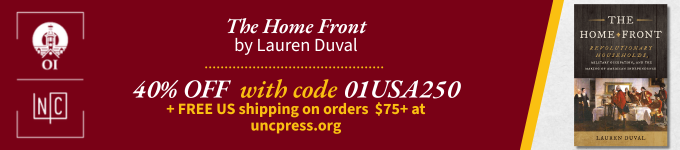
Wood began discussions with Native leaders visiting Fort Pitt before setting off on July 18. He spent the next month traveling among the Delaware, Mingo, Wyandot, and Shawnee while encountering representatives from other nations, including the Seneca, Cayuga and Odawa. He also sent messages to the nations living along the Maumee and Wabash Rivers inviting them to the Pittsburgh council.
Wood’s experience revealed some natural confusion and curiosity among the Ohio nations. Key Delaware leaders were receptive to his message. Chief Netawatwees (Newcomer) and Koquethaqechton (White Eyes), welcomed Wood’s presence and informed him of a similar British diplomatic mission from Fort Detroit. They even gave him a string of wampum from the British agents as a sign of good faith.[9] But, the confusion remained. Koquethaqechton believed Connolly had agreed to help him meet with King George III, who could guarantee Delaware independence and ownership of Delaware territory on the Muskingum River.[10] Now, Wood might help the leader reach Governor Dunmore in Williamsburg, and through the him, the king.
The Shawnee were more challenging. Three principal chiefs, Hokoleskwa (Cornstalk), Nimwha, and Waweyapiersenwaw (Blue Jacket) turned up in Pittsburgh. Hokoleskwa thought Wood’s mission a good one and asked for his assistance arranging a visit of some Shawnee to Winchester. Wood promptly fired off a note to the Frederick County Committee of Safety to smooth the way.[11] At the Shawnee towns themselves, diplomacy required more delicacy. Major combat in Dunmore’s War might have ended, but some Shawnee were dissatisfied with the outcome. They pressed Wood for information about events in the east and were particularly interested in whether a great many of Virginia’s young men had gone off to fight the “English Red Coats” and how those battles had gone. A colony denuded of its fighting-age men might be vulnerable to a renewal of the war. Wood assured the Shawnee that New England was more than capable of fighting the British on its own and, in fact, had won several battles. As important, Wood assured the Shawnee “we were in daily Expectation of all differences being settled between the two Countries to the Satisfaction of both.”[12] In other words, there was no opportunity to exploit.[13]
The Mingo Indians might well be a problem for Wood. They originated in the Haudenosaunee (Iroquois) Confederacy and had migrated into Ohio and formed their own tribal identity. Wood’s first encounter with them on this mission occurred early in his travels. The captain delivered his standard expression of peace and invitation to a council at Pittsburgh, but he “discovered that the Indians were very Angry Many of them Painted themselves black,” usually a signal of impending violence and death.[14] Indeed, the night of his arrival, one Indian kicked Wood in the head while he slept. The ad hoc diplomat awoke surrounded by armed warriors. Advised by an Indian woman to hide amongst the trees, Wood and his interpreter, Simon Girty, made themselves scarce until morning.[15]

Affairs were not much better in the light of day. Wood talked with a Cayuga warrior named Talgayeeta, whom whites called James Logan; Thomas Jefferson later made him famous by describing “Logan’s Lament” in his Notes the State of Virginia. Logan reminded Wood in English that his family had been massacred by Virginians in the spring of 1774, but that he had sated his thirst for revenge. Logan also warned Wood that the Mingo in town had been prisoners at Pittsburgh. They had escaped and wanted to kill Wood and his interpreter. He asked whether Wood was afraid. The captain said they were not and acknowledged they were at the Indians’ mercy. Logan assured them of their safety.[16]
In northwest Ohio, Wood met with the Wyandot and some Odawa. Wood recorded, “they were Much Surprized to hear that we were at War with ourselves and that there had been several Engagements at Boston.” They had heard different stories about the burgeoning conflict among whites and wanted to clarify Wood’s interests in them. He offered his best explanation about the conflict between colonists and the mother country and assured the group that the Virginians only wanted neutrality from the western tribes.[17] The Wyandot offered him a bit of surprising news: “the Huron Indians had been led to believe that the People of Virginia were a different and distinct Nation from other Colonies and that by going to War with us they need not fear the Interposition of the other Colonies.” Wood explained that the colonies were united under a Continental Congress and bound to protect one another.[18] He had noticed similar beliefs among the Shawnee, Mingo, and Delaware, which raised concerns that the western nations might perceive a weakness in Virginia.
The Wyandot also raised the issue of Kentucky and the existence of a fort in that area.[19] The Ohio nations used Kentucky as a reliable hunting ground, but the Haudenosaunee, who claimed suzerainty over the Ohio tribes, sold it to the British under the Treaty of Fort Stanwix in 1768. Subsequent treaties expanded white claims in the area. The land sale, which the Ohio nations were not direct parties to and loathe to accept, plus subsequent white immigration, grated and contributed to Dunmore’s War. Judging from Wood’s experience with the Wyandot and news from the Ohio nations on the Maumee River, developments in Kentucky still grated.
Back in Winchester, Wood sat down to craft a brief letter to Peyton Randolph, then serving as president of the Virginia Convention. He believed some 500 Indians would attend the September council in Pittsburgh and provided relevant sections of his diary, and noted “I was able to make the Indians are forming a General Confederacy against the Colony having been led to beleive that we are a people Quite different and distinct from the other Colonies.”[20] The captain also warned, “there is no Garrison at Fort Pitt that the Inhabitants in the Neighbourhood of it are in the most defenceless situation.”[21]

Whites in the Upper Ohio Valley were indeed vulnerable. Loyalties were divided, not just between Britain and radicals in the colonies, but also between Virginia and Pennsylvania. In the uncertain political environment, nobody provided security at Fort Pitt. But, Wood’s focus on security—an immediate native threat and considerable vulnerability—may have blinded him to the true state of affairs among the nations he toured. Bluntly, he was wrong about an emerging hostile Indian coalition. To be sure, there were Native Americans in Ohio who still opposed white expansion west of the Appalachians, violently. But, in 1775 tribal leaders were uncertain. Militant factions within tribes and across tribes developed at different rates in competition with those favoring neutrality or peaceful relations.[22]
The war in the west would come, but in the summer of 1775 Native Americans in the Upper Ohio valley preferred to await news and developments from farther east. Wood’s diplomatic mission may have played a small role in contributing to that state of affairs by giving the Ohio nations reason and opportunity to look for more information before making life-and-death decisions.
[1] Reuben Gold Thwaites and Louis Phelps Kellogg, eds., The Revolution on the Upper Ohio, 1775-1777, Draper Series, Volume II (Wisconsin Historical Society, 1908), 66. Wood’s Diary, on which much of this article is based, was included as part of collection of documents related to the proceedings of a meeting of commissioners who held a treaty council with Western Native nations in September 1775. Wood was born in Winchester, Virginia in 1741 and held several positions in Frederick County government. Elected to the House of Burgesses in 1766, he regularly joined others asserting colonial rights during Britain’s Imperial Crisis. He raised a militia company in 1774 and was commissioned as a captain to fight in Dunmore’s War. During the Revolution, he became colonel of the 12th Virginia Battalion and fought in the Philadelphia Campaign before returning to western Virginia and taking charge of British prisoners sent to the Shenandoah Valley for safekeeping. He returned to civil government after the war, including a stint as Virginia’s governor from 1796-1799. See: “James Wood,” Dictionary of Virginia Biography, Library of Virginia, old.lva.virginia.gov/public/dvb/bio.asp?b=Wood_James_1741-1813.
[2] Thwaites and Kellogg, eds., The Revolution on the Upper Ohio, 1775-1777, 34.
[3] John Connolly, A Narrative of the Transactions, Imprisonment, and Sufferings of John Connolly, an American Loyalist and Lieutenant-Colonel in His Majesty’s Service (London, 1783), 13-14.
[4] Thwaites and Kellogg, The Revolution on the Upper Ohio, 1775-1777, 38.
[5] Ibid., 35.
[6] John E. Selby, The Revolution in Virginia, 1775-1783 (The Colonial Williamsburg Foundation, 1988), 56. The Convention primarily concerned itself with Connolly’s actions regarding implementation of the Treaty of Camp Charlotte ending Dunmore’s War.
[7] Thwaites and Kellogg, The Revolution on the Upper Ohio, 1775-1777, 37.
[8] Connolly, A Narrative, 12.
[9] Thwaites and Kellogg, The Revolution on the Upper Ohio, 1775-1777, 47; Hermann Wellenreuther and Carola Wessel, eds., The Moravian Mission Diaries of David Zeisberger, 1772-1781 (The Pennsylvania State University Press, 2005), 279.
[10] Wellenreuther and Wessel, eds., The Moravian Mission Diaries of David Zeisberger, 279, n 665.
[11] Thwaites and Kellogg, The Revolution on the Upper Ohio, 1775-1777, 42-43.
[12] Ibid., 60.
[13] Colin G. Calloway, The Shawnees and the War for America (New York: Viking, 2007), 59. Calloway explains the different factions within the Shawnee and their relative hostility, something that Wood seems not to have fully appreciated in his diary.
[14] Thwaites and Kellogg, The Revolution on the Upper Ohio, 1775-1777, 49.
[15] Girty had been captured as a boy during the French and Indian War. He lived for a time with the Seneca and learned multiple Native languages before returning to white society, then worked as an interpreter for British Indian agents at Fort Pitt. Early in the American Revolution, he sided with rebellion, but eventually turned his coat and fought for the British, becoming more infamous on the frontier than Benedict Arnold would just a few years later.
[16] Thwaites and Kellogg, The Revolution on the Upper Ohio, 1775-1777, 49-50. See also, Glenn Williams, Dunmore’s War: The Last Conflict of America’s Colonial Era (Yardley, PA: Westholme Publishing, 2017), 70. Logan was one of the most intriguing individuals on the colonial frontier. His family was murdered by whites in the Yellow Creek massacre and he launched a campaign of revenge against frontier families that became known as “Logan’s War.” He is generally known as one of the Oneida chief Shikellamy’s sons, but there is some debate about which son he was and the accuracy of Jefferson’s presentation of the Indian’s words.
[17] Thwaites and Kellogg, The Revolution on the Upper Ohio, 1775-1777, 51-52.
[18] Ibid., 52.
[19] Ibid., 53.
[20] Ibid., 66.
[21] Ibid., 66-67.
[22] Hokoleskwa sought to maintain neutrality for the Shawnee, but was murdered by Virginia militiamen in 1777. Koquethaqechton eventually joined the Americans after his tribe split over the issue of neutrality. The bulk of the Delaware joined the British. Koquethaqechton received a captain’s commission, but died on campaign in 1778. He was most likely murdered by American militiamen.


5 Comments
Eric, your fascinating article raises the issue of white gift-giving to native nations. Typically, diplomatic gift-giving is bilateral. But that does not seem to be the case in your example. The gifts would seem to be a tribute, akin to European and American payments to Barbary States to ensure peaceful relations.
Virginia’s tributary payments reinforced that the Indians possessed the upper hand in the Ohio Valley, and the rebelling colonists viewed them as powerful actors. I wonder whether the Virginians viewed the goods offered as gifts and the Indians as tribute.
Thanks Gene. Wood didn’t dwell on either giving or receiving gifts, just the complaint about not having gifts to give. At the end of the day, he probably accomplished more by delivering invitations to the council meeting in Pittsburgh and collecting intelligence. (He was as much as source of intelligence for the Ohio nations as they were for him.) I think the conclusions he drew from the later part of his mission were flawed.
I haven’t really studied gift-giving cultures, which seemed to vary among nations. Plenty of frontier whites viewed them as tribute and resented eastern elites for that approach. On the other hand, in at least some cases annuities in the form of trade goods were often part of the payment for land acquired in various treaties. Resented though they might be, such payments were legal obligations under terms of the treaty. It’s fascinating stuff becuase it so easily leads to misunderstandings and misperceptions.
Yet more important and interesting information about the Virginia frontier most of us would never know were it not for Eric Sterner. Great work.
Thanks Gabe.
This article’s a fascinating glimpse at the complexities of Native politics. The 12th Virg is an often overlooked unit, so it’s cool to see something about their colonel, too. Well done.