

In early 1792, President George Washington was in search of a general. For the last six years, the United States had been battling Native American forces of the Western Confederacy in the modern state of Ohio, and the Americans were losing the war. Led by Little Turtle (Miami), Blue Jacket (Shawnee), and Buckongahelas (Lenape), Native resistance to western expansion had reached its high-water mark.
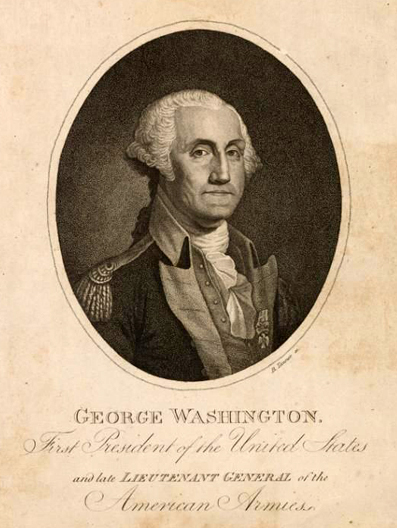
In both 1790 and 1791, President Washington sent a nascent form of the US Army to confront the confederated tribesmen, and in each instance, they were annihilated. In his fourth year as commander-in-chief, Washington took the drastic step of creating a true standing army.
At over five thousand men, this “Legion of the United States” would combine the attributes of a traditional army into one concentrated strike force. Artillery, cavalry, heavy infantry, and skirmishers rolled into one neat package . . . tailor made for the frontier. This fighting force was designed to be fast and responsive, and the President believed it needed a commanding officer that was its equal.
Ten years after the Revolution, Washington had a long list of commanders to choose from, but most were past their prime. In the end, he selected the Pennsylvanian Anthony Wayne for the task, but only after a serious consideration of many other leaders. His unedited notes in all their bitter, humorous, envious, petty glory offer a key insight into George Washington’s decision-making process, and his critical opinion of his revolutionary peers. Washington recorded his thoughts on March 9, 1792:[1]
Major General Benjamin Lincoln
Sober, honest, brave and sensible, but infirm; past the vigor of life—& reluctantly (if offered to him) would accept the appointment.
Major Genl Baron de Steuben
Sensible, Sober & brave; well acquainted with Tactics & with the arrangement & discipline of an Army. High in his ideas of Subordination—impetuous in his temper—ambitious—and a foreigner.

Major General William Moultree
Brave, & it is believed accommodating in his temper—Served the whole of last War; & has been an Officer in the preceeding one, at least had been engaged in an Expedition against the Cherokees; having defeated them in one or two considerable actions. What the resources or powers of his mind are—how active he may be—and whether temperate or not, are points I cannot speak to with decision, because I have had little or no opportunities to form an opinion of him.
Brigadier General Lachlan McIntosh
Is old and inactive; supposed to be honest and brave. Not much known in the Union, and therefore would not obtain much confidence, or command much respect; either in the Community or the Army.

Major General Anthony Wayne
More active & enterprizing than judicious & cautious. No œconomist it is feared. Open to flattery—vain—easily imposed upon—and liable to be drawn into scrapes. Too indulgent (the effect perhaps of some of the causes just mentioned) to his Officers & men. Whether sober—or a little addicted to the bottle, I know not.
Major General George Weedon
Not supposed to be an Officer of much resource though not deficient of a competent share of understanding; rather addicted to ease & pleasure; & no enemy it is said to the bottle; never has had his name brot forward on this acct.
Major General Edward Hand
A sensible & judicious man; his integrity unimpeached; and was esteemed a pretty good Officer. But, if I recollect rightly, not a very active one. He has never been charged with intemperance to my knowledge; His name has rarely been mentioned under the present difficulty of chusing an Officer to commd, but this may, in a great measure, be owing to his being at a distance.
Major General Charles Scott
Brave, & means well; but is an Officer of inadequate abilities for extensive command; &, by report, is addicted to drinking.
Major General Jedidiah Huntington
Sober, sensible, and very discreet. Has never discover’d much enterprize; yet, no doubt has ever been enter[t]ained of his want of spirit, or firmness.
Brigadier General James Wilkinson
Is, by brevet Senr to those whose names follow—but the appointment to this rank was merely honorary. and as he was but a short time in Service, little can be said of his abilities as an Officer. He is lively, sensible, pompous and ambitious; but whether sober, or not, is unknown to me.
Brigadier General Mordecai Gist
Little has ever been said of his qualifications as a General Officer. His activity, & attention to duty is somewhat doubtful; tho’ his spirit, I believe, is unimpeached.
Brigadier General William Irvine
Is sober, tolerably sensible and prudent. It is said he is an œconomist; and supported his authority whilst he was entrusted with a seperate command. But I have no recollection of any circumstance that marks him as a decidedly good, or indifferent Officr.
Brigadier General Daniel Morgan
Has been fortunate, & has met with eclat. Yet there are different opinions with respect to his abilities as an Officer. He is accused of using improper means to obtain certificates from the Soldiers. It is said he has been [(]if the case is not so now) intemperate; that he is troubled with a palpitation which often lays him up. And it is not denied that he is illiterate.
Brigadier General Otho Holland Williams
Is a sensible man, but not without vanity. No doubt, I believe, is entertained of his firmness—and it is thought he does not want activity; but it is not easy, where there is nothing conspicuous in a character, to pronounce decidedly upon a Military man who has always acted under the immediate orders of a superior Officer; unless he had been seen frequently in Action. The discipline, interior œconomy & police of his Corp is the best evidence one can have of his talents in this line and of this, in the case of Genl Williams I can say nothing; as he was appointed a Brigadier after he left the Northern to join the Southern Army. But a material objection to him is delicate health (if there has been no change in his Constitution)—for he has gone to the Sweet Springs two or three years successively in such bad health as to afford little hope of his ever returning from them.
Brigadier General Rufus Putnam
Possesses a strong mind—and is a discreet man. No question has ever been made (that has come to my knowledge) of his want of firmness. In short, there is nothing conspicuous in his character—And he is but little known out of his own State, and a narrow circle.
Brigadier General Thomas Pinckney
A Colonel since Septr 16th 1776; but appointed a Brigadr by brevet at the close of the War, only. In this Gentleman many valuable qualities are to be found. He is of unquestionable bravery—Is a man of strict honor, erudition & good sense: and it is said has made Tactic’s a study—But what his spirit for enterprize is—whether active or indolent; or fitted for arrangement, I am unable to say—never having had any opportunity to form a judgment of his talents as a Military character. The capture of Charleston put an end to his Military Services; but his junr Rank, and being little known in this part of the Union, are the two considerations most opposed to him, particularly the latter, as it is more than probable his being a prisoner prevented his promotion; which ought not to be any bar to his ranking as a Brigadier from the time that others of his standing as a Colonel, were promoted.
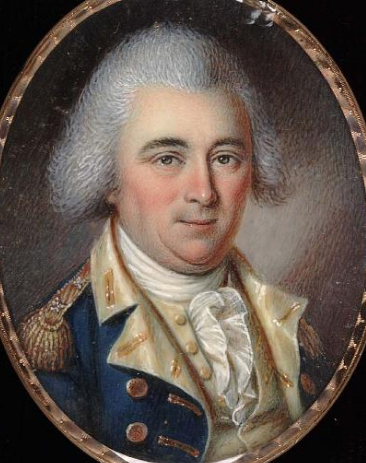
The decision to appoint Anthony Wayne to command the Legion was an important one for the President. Along with Wayne’s battlefield experience, he would also prove to be a capable diplomat.
In August of 1794, the Legion defeated the Western Confederacy at the Battle of Fallen Timbers outside of the modern city of Toledo, Ohio. In the aftermath, Wayne not only needed to negotiate with the war sachems of the west, but also with British officials stationed along the Great Lakes.
In the wake of the campaign, Wayne’s victory cleared a path for two major treaties to be signed. The first, known as the Treaty of Greenville, saw the Western tribes surrender most of Ohio to the United States. In a broader international sense, it also gave the Washington administration some added heft while it negotiated the contentious Jay Treaty with Great Britain.
[1] “Descriptions of officers, Memorandum on General Officers, March 9th, 1792,” The Papers of George Washington, Presidential Series, vol. 10, 1 March 1792 – 15 August 1792, ed. Robert F. Haggard and Mark A. Mastromarino (University of Virginia Press, 2002), 74–79.
4 Comments
This is a fascinating account of Washington’s assessment of a host of Revolutionary War generals. While societal drinking was far in excess of today, it is striking that Washington’s first consideration was the candidate’s level of alcohol consumption. This is likely due to Washington’s experience with Adam Stephen, Lord Stirling, John Sullivan, and others during the Revolution.
I think you’re absolutely right, Gene. I also think recent experience on the frontier weighed heavily on his mind. In a 1790 campaign, Josiah Harmar’s army was badly beaten, and rumors of Harmar’s drunkenness were rampant. I think they were overstated, but Washington wasn’t taking any chances.
So interesting to see into the standards Washington was pursuing among his Generals.
A who’s who of the late part of the Revolutionary War! When people need to hire someone, they often turn to those they already know, and from an Ohian we almost see Anthony Wayne here as a bit of an adopted Ohian here..ha, Elementary schools and parks named after him and so on.
Much like the natural Ohioan, U.S. Grant, people sometimes looked at both with a bit of doubt and wonder, yet all they did was win. Wayne began his late success during the 1782 campaigns of Georgia and kept going to finish what that year started in the Ohio territory later, a fitting choice and a fitting end.