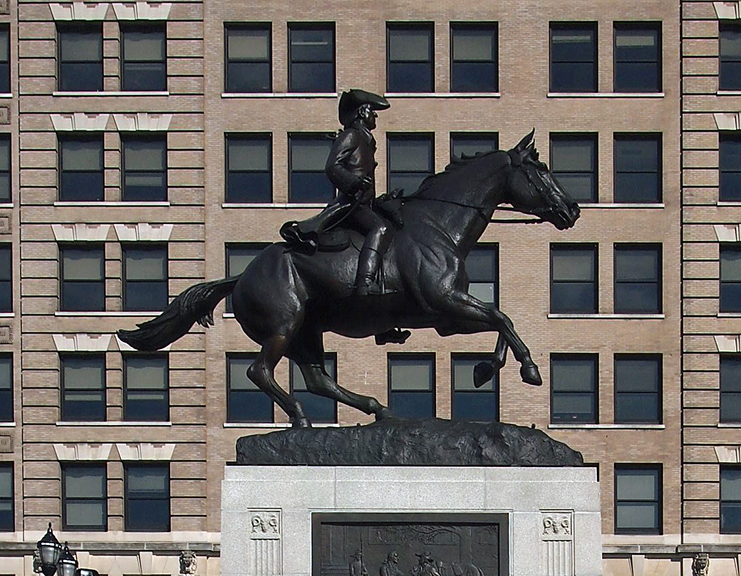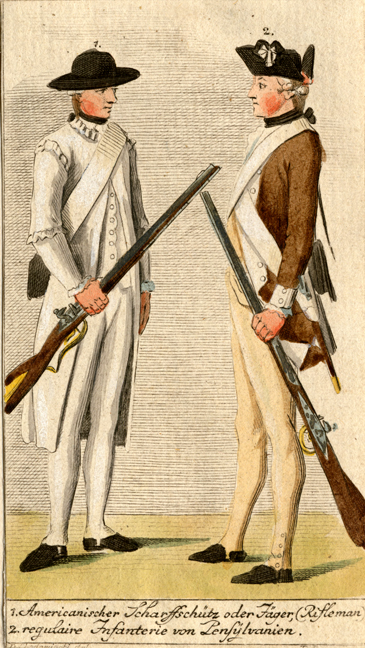

Dear Mr. History: Does General von Steuben deserve the fantastic amount of fame he gets for training the Continental Army at Valley Forge? The Continentals had been fighting for over two years by the time he showed up, so why did they need training? What was Steuben’s true impact? Sincerely, Stumped About Steuben Dear Stumped: Surely you jest, sir. Except for Washington, no one had more influence in the creation of a professional United States Army than Major General Friedrich von Steuben. Even his name was cool: Von Steuben. If he were around today he’d be a rock star. But your question is a good one, because many...
“No Taxation without Representation” (...
by J. L. Bell | 0 comments
In 1765 Parliament instituted a Stamp Act for the North American colonies, which proved wildly unpopular from Savannah to Halifax, and ultimately unworkable. The following year, there was a change of government in London. The new ministers repealed the Stamp Act, and across the ocean there was great rejoicing. However, those ministers also proposed a Declaratory Act establishing that, contrary to the arguments of Otis and others, under the British constitution Parliament did have the power to tax the colonies. One of the few Members of Parliament to speak against the Declaratory Act was Charles Pratt, first Baron Camden (1713-1794), soon to...
“No Taxation without Represention” (Pa...
by J. L. Bell | 6 comments
The primary dispute between Britain and her North American mainland colonies in the 1760s and early 1770s has often been summed up in four words: “no taxation without representation.” American Whigs declared they were loyal to the British king and constitution, but that part of that unwritten constitution was that subjects (or at least wealthy white male subjects) had to be represented in any legislature that imposed taxes on them. The American Whigs’ campaign against “taxation without representation” benefited from that pithy rhyming phrase, which boiled the complex relationship between government and subject down into an easily...
Repercussions of the Battle of Camden
by Jim Piecuch | 14 comments
One of the most striking aspects of the Battle of Camden is the vast amount of material that was written about it. Officers and soldiers who fought in Revolutionary War battles always wrote something about their experiences, but in regard to the Battle of Camden, they wrote much more than they did about other battles: a greater number of participants wrote about this battle, and they wrote at greater length and in more detail. Even more unusual is the amount of commentary on the battle written by those who did not fight at Camden. This is true of American, British, Hessian, and French observers, and extended to a variety of accounts from...
Family Dinner: Soup, Molasses Bread & Jeffers...
by Lars D. H. Hedbor | 4 comments
One of the best ways to get a visceral sense of what life in the Revolutionary Era was like is to eat the foods that they ate. Of course, there are challenges in this endeavor, not the least of which are changes in ingredient availability, cooking technology, labor availability and the overall culture of food. It is possible, though, to approximate the food that our forebears enjoyed. We can substitute an electric or gas oven, controlled with an electronic thermostat, for the wood fireplace with a bread oven built in to the side. In place of indentured servants (or, let us not shrink from the historical fact, slaves), we have our...
Battle Wounds: Never Pull an Arrow Out of a Body
by Hugh T. Harrington and Lisa A. Ennis | 4 comments
Often in western films there is a scene where an arrow is yanked from the body of a fallen comrade. As dramatic as that may be it is definitely not the recommended method for removing an arrow. Battle wounds in the American Revolutionary War were of a wide variety, none of which were easy to treat medically. One of the worst was when the victim was struck by an arrow. While the vast majority of combatants carried muskets or rifles bows and arrows were used, sometimes along with a musket, by Native Americans. Medical texts during the Revolutionary War period are silent regarding the treatment for arrow wounds. The most complete and...
Mary Hays McCauley’s Claim to Fame
by Ray Raphael | 8 comments
MYTH: “American women also won fame for their bravery during the war. Mary Ludwig Hays McCauley earned the name Molly Pitcher by carrying fresh water to American troops during the Battle of Monmouth in New Jersey in 1778. When her husband was wounded, she took his place in battle, loading cannons.” — United States: Making a New Nation (Harcourt Social Studies text, 2012) “After the battle, General Washington asked about the woman whom he had seen loading a cannon on the battlefield. In commemoration of her courage, he issued Mary Hays a warrant as a non commissioned officer.” – Wikipedia entry for Molly Pitcher, duly...
How to Treat a Scalped Head
by Hugh T. Harrington and Lisa A. Ennis | 0 comments
When one thinks of injuries received in battle during the Revolutionary War wounds from gunshots, bayonets and swords come to mind. A far less common wound was that of a scalping victim. In most cases the scalping victim was already dead or soon would be dead when the scalping took place. There were however instances where a person was scalped and either was not otherwise wounded or the wound was not mortal. The problem then becomes how to medically treat a patient with a scalped head. Despite the fact that scalping had been practiced for centuries and some victims lived through their ordeal, the literature of the period is mostly...
Tory Stories from the Simsbury Copper Mine
by Wayne Lynch | 4 comments
To be a Tory in the northern colonies was to understand and fear the consequences of confinement at the infamous copper mine of Simsbury, Connecticut. Although already in use as a Loyalist prison, the mine gained official approval for use by the Assembly early in 1776. It quickly gained a reputation as a dismal environment where “the light of the Sun and the light of the Gospel are alike shut out from the martyrs.”[i] The assembly approved an original expenditure of 37 to make the mine escape proof but they still had a good deal of trouble maintaining a lid on the prisoners below. The mine dated back to 1737 when the...


Recent Comments