



After a British army surrendered at Yorktown in October 1781, it took weeks for news of the disaster to reach London, and several weeks more for the British to decide their next move. Gen. George Washington needed no such time to decide on his. He wasted not a moment on celebrations and formalities. The day after the Yorktown surrender Washington began urging the French to continue their combined efforts in a new offensive, and in an October 20 letter to Adm. Francois-Joseph Paul, Comte de Grasse-Tilley he proposed Charles Town, South Carolina as the next target, writing that:
a perspective of the most extensive and happy consequences, engage me to renew my representations—Charles Town the principal Maritime Port of the British, in the southern parts of the Continent, the Grand Deposit and point of Support for the present Theatre of the War—is open to a combined attack, and might be carried with as much certainty—as the place which has just surrendered—This capture would destroy the last hope which induces the Enemy to continue the war.[1]
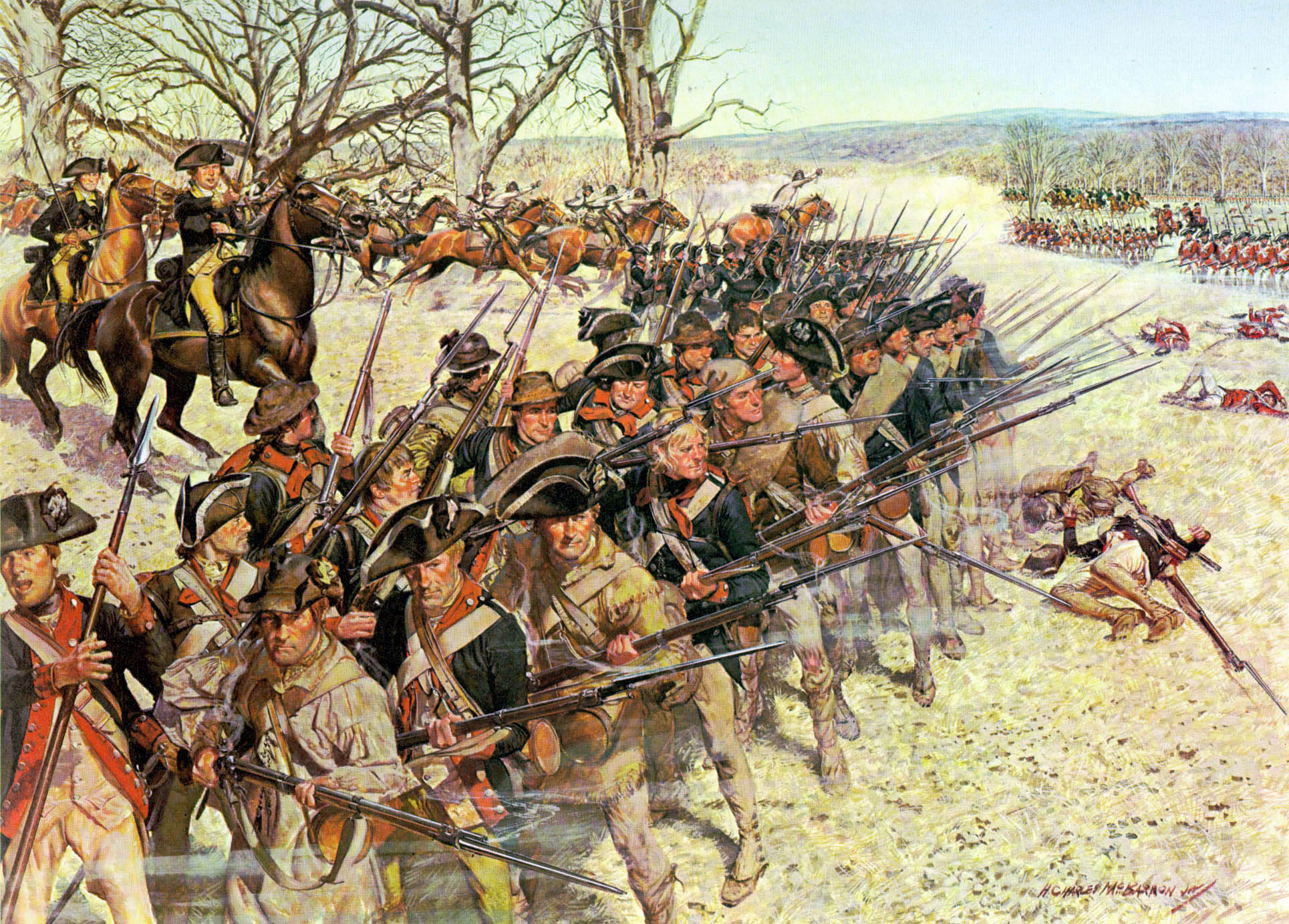
The Continental army had spent nearly the entire war at an operational disadvantage or defensive position. Yorktown removed the most significant British threat in the southern theater and Washington burned with desire to do what had eluded him throughout the war: dictate the terms of battle and press an offensive while the enemy was weak.
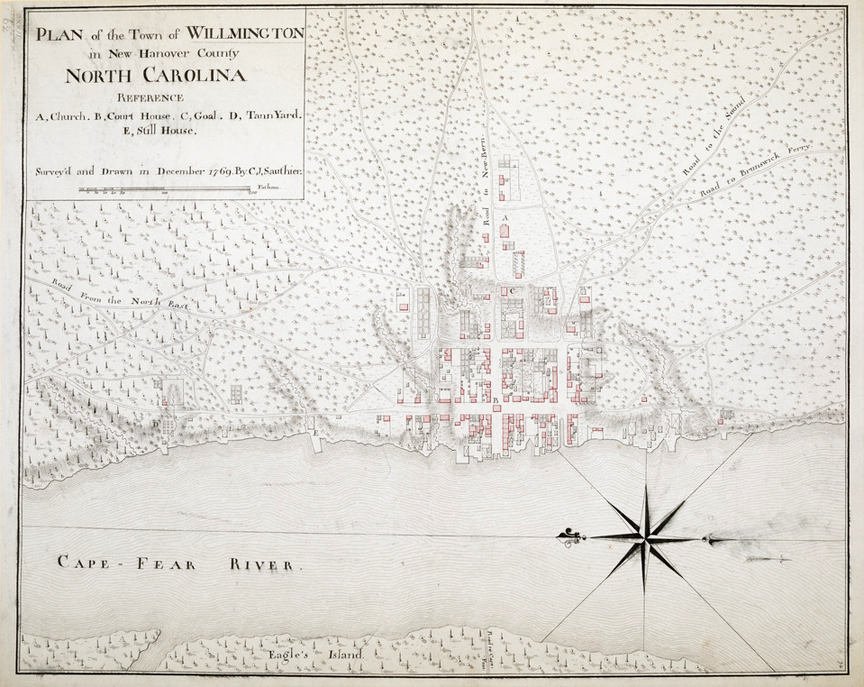
He spared nothing in his effort to convince the French, including flattery, particularly toward de Grasse, writing to him of their fortunate circumstances in having “a decisively superior fleet the fortune and talents of whose Commander overawe all the naval forces that the most incredible efforts of the enemy have been able to collect.”[2] If de Grasse was not willing to undertake an attack on Charles Town, Washington asked that he at least consider “an object, which though subordinate to that above mentioned—is of capital importance to our southern operations and may be effected at infinitely less expense, I mean the enemy’s post of Wilmington in North Carolina.”[3]

Wilmington would be no small feat. An invasion required thousands of men and a number of de Grasse’s ships to transport and cover their debarkation, a serious challenge. Liberating Wilmington would, however, free North Carolina of British regulars, place the state firmly back in American control, deprive the British of a strategic supply port and deliver it right into American hands. For a second choice it yet carried a significance that demonstrates the type of blow Washington sought to land in the days following Yorktown. Even as the weapons of the surrendered army were being carried away, he worked furiously to bring about another stroke.
The October 20 letter began a week-long correspondence between Washington and the French. The next day, Sunday, Washington traveled to the French fleet to meet with de Grasse personally. Always the proper gentleman and diplomat, he first thanked de Grasse “for his important” services to the Yorktown victory, but wasted no time in navigating the conversation toward what truly drove his visit, an immediate attack somewhere on the southern coast. He made his case to at least make the enterprise upon Wilmington, and then deployed what he hoped would be the convincing argument, telling de Grasse the Marquis de Lafayette would be in command of the attack. He recorded in his diary he left Lafayette “on board the Ville de Paris to try the force of his influence” upon the Admiral.[4] Washington’s trust in Lafayette to secure agreement for a new offensive is a testament to his belief in the Marquis, trust that extended well beyond simply using one Frenchman to convince another, and extended so far as for Lafayette to serve as the main contact for negotiations the entire week. The letters between Lafayette and de Grasse in the days that followed reveal how close they came to an operation.
Lafayette’s lobbying worked, and de Grasse, in a decision seemingly lost to history, agreed to a new offensive. Washington wrote in his diary on October 23, “The Marqs. Returned with assurances from the Admiral, that he would countenance, & protect with his fleet, the Expedition against Wilmington.”[5] Washington ordered Gen. Mordecai Gist’s and Gen. Anthony Wayne’s brigades to prepare immediately for an embarkation with sufficient artillery, weapons, and provisions to sustain the mission, and as the sun set on Washington’s camp that evening everyone went to sleep under the impression they would soon once more join the French and evict another British army. Their belief was well founded; stitching together Lafeyette and de Grasse’s letters with Washington’s own correspondence with de Grasse, along with Washington’s diary entries, reveal that Washington’s desires for an immediate offensive in conjunction with the French navy were initially met.
The plan to attack Wilmington was initially genuine on the part of de Grasse. The dispatch he sent back with Lafayette was both detailed and specific. While he agreed Charles Town was the preferred target, he explained that time did not permit his participation, but he met Washington halfway and firmly supported the plan to liberate Wilmington. He sent word that he would transport and cover the landing of two thousand troops and requested that local pilots familiar with the area be located and sent to him as soon as possible for detailed discussion on the best place to land. Lastly, he advised Washington that he was in no position to supply the American troops, but if they could supply themselves he was prepared to make the expedition on the first of November, unless favorable enough circumstances permitted them to leave sooner.[6] It seems unlikely de Grasse would have authored such a detailed dispatch to Washington and relayed his assurances personally through the trusted Lafayette if he had not been genuine in his pledge to support the attack.

Several letters a day flowed between the two camps. Col. Jean-Baptiste de Gouvion, a Frenchman serving as an engineer in the Continental army, visited de Grasse on October 24 with pilots familiar with the preferred debarkation area and discussed the potential landings.[7] At that time it seemed as if everything was moving along perfectly. Washington was pleased, if not thrilled, with the prospect of finally seizing the initiative and the French seemed perfectly content to press on with a combined offensive to strike while the iron was hot. Word had slowly trickled down to the officer corps under Washington to prepare the men and supplies, and all was moving quickly enough to have a good chance at preventing discovery by the British. The prospect of a genuine offensive with the French by land and sea was a transformational idea. The operation at Yorktown had been effected by armies marching over land; this campaign would have American troops landing from French ships.

The notion was fleeting, and the best made plans fell apart. Wednesday October 24 was the pivotal day. De Grasse spent the first half of the day with Colonel Gouvion and the pilots planning the smallest details of the operation’s debarkation, and the second half of the day firing off letters to Continental army leaders explaining to them why the campaign was no longer viable. What happened in those few hours to change his mind is not definitively known, but a chronological and thorough review of the record offers enough evidence to permit a fair analysis of de Grasse’s mindset. The commentary included in the published version of the Correspondence of General Washington and Comte de Grasse, published in 1931, proclaims that de Grasse understood “the fact obvious to him but which Washington and the other generals do not seem to have grasped, that the enemy being already conquered there was no need further to pursue him.”[8] This argument not only insults the judgement of the Continental army’s top leadership, it defies the evidence put forth in multiple studies that the British army and its Loyalist proxies were more than capable of waging war after Yorktown.[9] That was not the reason behind de Grasse’s change of mind.
The real reasoning behind the cancellation was likely much simpler. Washington’s desire to press on with an offensive was well-founded and once he received word from Lafayette that de Grasse had agreed, he was full speed ahead. The series of letters between Washington, de Grasse, and Lafayette reveals the communication time frame was as long as two days for a message to pass through all hands and place everyone on the same page. In the case of the Wilmington attack being called off, de Grasse made the decision on October 24, yet Washington did not receive the news until October 28; all the while he and his commanders were prepping men and supplies for their movement to meet de Grasse. Washington wrote a lengthy letter on October 27 to the Continental Congress laying out his war plans and featured the attack on Wilmington as a highlight:
a Body of 2000 Men, under the Direction of Major Genl the Marquis De Lafayette, will, on their Way to So. Carolina, make an Expedition against the Enemy’s Posts at Wilmington in No. Carolina—to effect which purpose, they will be transported to a proper point of Debarkation, under Convoy of The Count de Grasse, who encourages me, if Circumstances & Situation of the Water will admit, to give them his Cooperation, so long as it shall be necessary to accomplish by a Coup de Main, their Object at Wilmington[10]

One can reasonably imagine the satisfaction he might have held by writing Congress with news that it was to be the Continental army seizing the initiative.
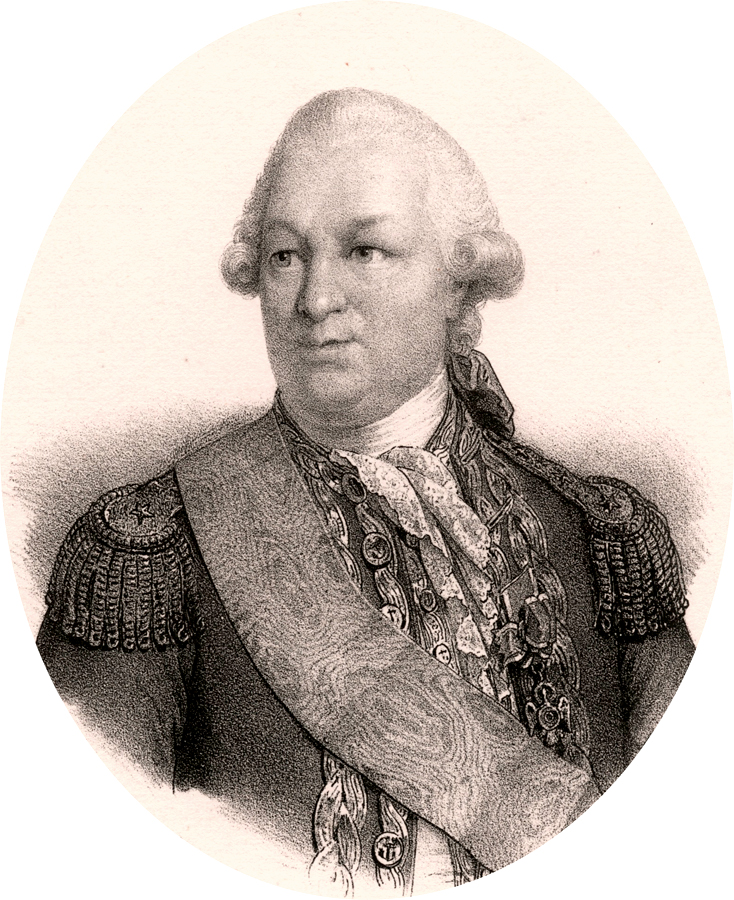
As easily as one can imagine the satisfaction such a letter may have brought, it is also no stretch to think of the anger that a man known for his temper might have exhibited when he read the two letters he received on October 28 from de Grasse informing him the attack was off. The news agonized Washington, and at that moment, he could not have known the decision seemed to have done the same to de Grasse. After de Grasse met with the pilots and discussed the operation he wrote quickly to Lafayette, “I had a talk with them, and I see the possibility of landing two thousand men in the place you desire, to safeguard the Carolinas and to invest them with advantage, but notwithstanding that every thing has shown me the possibility, I foresee endless obstacles.”[11] He opined that among the numerous obstacles prohibiting him from moving forward was that he had only frigates for the journey, which were not the best ships to use under the circumstances. The debarkation, after being fully briefed, he now viewed as incredibly time-consuming, and not the least of his issues was the idea that if his overloaded ships came within sight of the British navy he would have no way to fight, leaving him only the option to run and vacate all he had gained. With the challenges many, he told Lafayette simply, “The thing is impossible,” given the time constraints his orders placed upon him to soon be elsewhere.[12]
As commander of the operation Lafayette was the first to know, and de Grasse seemed to be searching for a way to provide at least some assistance, perhaps with Washington’s reaction to the news looming in his mind. His letter to Lafayette on October 24 offered to provide escorts and protection for a fleet if the Americans could field their own, mentioning the number of ships recently confiscated in the Yorktown victory. Yet those ships were in various states of disrepair, and as de Grasse was aware, the Americans had not enough skilled sailors to man them, increasingly leaving his offer with echoes of weighing how Washington might respond.[13] Interestingly he allowed two days to pass before writing to Washington, perhaps in the hope Lafayette would break the news and soften the blow, but that was not to be.
While the commentary to the Correspondence of General Washington and Comte de Grasse indicates that it was a copy of the letter to Lafayette that arrived to deliver the news, that statement is a bit misleading, and is taken from his postscript in the October 27-29 letter he transmitted to Congress.[14] The postscript dated October 29 informed Congress, “At the Moment of closing my Dispach, I am favored with the Definitive Determination of the Count de Grasse respecting the Troops I hoped to have transported to Wilmington by Water. The Admirals Ideas are communicated in his Letter to the Marquis De Lafayette; a Copy of which is herewith transmitted.”[15] He may have written the postscript October 29, but it was de Grasse’s letter that informed him of the news, and his diary makes clear he received it on October 28.[16]
Why de Grasse waited two days between writing to Lafayette and Washington is an unsolved mystery and nothing on the record between Lafayette and Washington helps clear up the matter. The tone of de Grasse’s letter to Washington is perhaps the only clue and open to interpretation, but it can be reasonably argued that he hoped Lafayette would be the one to inform Washington. His letter features several paragraphs of mundane information covering matters of relatively little importance in comparison to the invasion of a major port city. After covering a fair amount of news Washington was likely far less concerned with, the final paragraph dropped the revelation:
I reply to the Marquis de la Fayette on the subject of transporting troops in my large ships or frigates by the bottom of the coast; I have marked it and I repeat it in the same truth, that if it is only necessary to give the escort to ships charged with troops and ammunition to take them to a designated point, I will do what I can, but I do not promise to succeed entirely, in view of the time that presses me and the obligation I am under to be at the time indicated, on which depends the success of the combined projects of the two I am quite refusing to transport these troops.[17]
Leaving his refusal to transport the troops to the final paragraph, and the letter’s tone ahead of the revelation, perhaps reflects de Grasse’s assumption that Lafayette would have already given Washington the news, as he made clear he was but repeating what he already dispatched to the Marquis.[18]

Speculation aside, the timeline is clear, and Washington’s reaction to the news was filled with disappointment. He replied to de Grasse the same day that “the answer relative to the expedition against Wilmington was received with as much concern as disappointment.”[19] He reminded de Grasse that the decision to remove his fleet from the equation stopped not only the Wilmington operation, but also his plan to redeploy troops throughout the Southern theater, and to reset the board by pressing the British while they were weakened and before they could reinforce, which Washington was consistently convinced they planned to do. He told de Grasse bluntly, the “sudden departure of the fleet would expose us to the greatest confusion and most irreparable loss.”[20] He closed with the declaration that while he was “much afflicted” by the admiral’s decision, his desire to reestablish their partnership would remain unchanged until the day arrived to restart their combined campaign.[21]
Washington followed later that day with a second letter that made no mention of disappointments and afflictions, perhaps reflecting his mood after some time to absorb the news. He was a general used to plans encountering roadblocks; as it had many times before, his anger and disappointment faded, and he moved forward with new plans. His second letter to de Grasse made plain he had no belief the British were anywhere near done fighting in America, and he graciously accepted de Grasse’s offer to renew the fight as soon as the fleet returned from their new mission in the Caribbean, writing to him that the proposal was “too essential to the interests of the common cause not to be embraced by me with the greatest eagerness.”[22] Washington eyed a future siege of New York City or Charles Town to push the British from one of their final strongholds, and proposed to decide the target and undertake the campaign as soon as the following May when the weather permitted. If de Grasse would agree to meet him once more in Chesapeake Bay, he advised they would be centrally positioned to move on whichever city intelligence guided them toward.[23]
De Grasse’s reply the following day graciously ignored the frustrations vented by Washington in his first letter and stuck to the business of the second. From the time de Grasse decided he would no longer participate in the attack on Wilmington he maintained a remarkably consistent message that his orders required him to be at a fixed position on a preset date to carry out a new mission. He provided this to Lafayette and Washington as his reason to remove from the Wilmington campaign. He used it once more in reply to Washington’s new proposal for a campaign in the spring of 1782, telling him, “I cannot stop at any project, nor adopt it, because I do not know what commitments the court of France may have made so much with his old allies as with the new ones,” and recommended the best thing Washington could do to secure a plan for a spring offensive was “to send your plans to the court.”[24]
Washington had officially been referred to upper management for any further campaign inquiries, ending a nearly weeklong saga that began as a full-scale plan for an invasion of Wilmington, North Carolina and ended with Washington being advised to work directly with the court of King Louis XVI. Washington had clearly been ready to move forward as quickly as possible in the aftermath of Yorktown, noting the “suspense and consequent delay of 6 or 7 days” the affair had caused him.[25] The record reflects that in the first few days after Yorktown genuine mutual interest existed to press an immediate offensive with the French navy at the forefront, and the two allies came close to putting their ambition into action. In the War of Independence, however, plans changed frequently.
It would be understandable to assign some blame or assume some nefariousness to de Grasse’s, given his promise to act only to renege two days later. His enthusiasm appears legitimate, and there was no hesitation until his meeting with the local pilots who advised the procedures required to land troops. He had dismissed the Charles Town invasion immediately, aware of the difficulty of such task and the history of actions there, yet had accepted the Wilmington invasion just as quickly, likely under the impression he could assist his American partners in a much easier operation that would land a blow on their common enemy and keep everyone happy. Once the details required for a landing were clear, he quickly concluded the operation was significantly more difficult than he had anticipated and realized his commitment had been given too soon. The prospect of missing the deadline imposed by his orders clearly outranked the idea of disappointing Washington when he made his October 24 decision to forgo Washington’s ambitions.
The timing, tone, and content of his letters to Lafayette and Washington indicate careful navigation to back out of the plan. He had warned Washington in a letter on September 27 that he had received dispatches which “prescribe that I should be returned at the end of October, to the place marked where I am to be joined by forces for an expedition.”[26] This supports the prospect that he accepted the Wilmington campaign under the assumption that it would be straightforward to achieve and could be done on his way to fulfill his orders. It also lends legitimacy to the reasoning he provided to Lafayette and Washington for his exit from the theater. The relationship between de Grasse and Washington stayed positive and no one overreacted to the aborted plan.
In the final analysis, the aborted offensive had little effect on the war’s path forward. Suspecting an attack and recognizing their weak position, the British abandoned Wilmington on November 18.[27] The troops in Virginia destined for Nathanael Greene’s southern army made the trip by land, and while delayed, eventually reached their new posts. The French fleet sailed to the Caribbean, while Washington took his army back to the northern theater and moved on, all as the south exploded in violence and the post-Yorktown dominos toward peace slowly began to fall.
[1] George Washington to François-Joseph-Paul, comte de Grasse-Tilly, October 20, 1781, Founders Online, National Archives, founders.archives.gov/documents/Washington/99-01-02-07215.
[2] Ibid.
[3] Ibid.
[4] Washington, diary entry, October 21, 1781, Founders Online, National Archives, founders.archives.gov/documents/Washington/01-03-02-0007-0006-0015.
[5] Washington, diary entry, October 23, 1781, Founders Online National Archives, founders.archives.gov/documents/Washington/01-03-02-0007-0006-0016.
[6] de Grasse to Washington, October 22, 1781, in Correspondence of General Washington and Comte de Grasse, 1781 August 17-November 4 (Washington DC: Government Printing Office, 1931), 122-123.
[7] de Grasse to Marquis de Lafayette, October 24, 1781, in Correspondence, 129.
[8] Institut francais de Washington, Correspondence, 129.
[9] See allthingsliberty.com/author/josh-wheeler/ for multiple articles on British and Loyalist engagements with the Continental army among only a few of the recorded post-Yorktown engagements.
[10] Washington to Thomas McKean, October 27 to 29, 1781, Founders Online, National Archives, founders.archives.gov/documents/Washington/99-01-02-07294.
[11] de Grasse to Lafayette, October 24, 1781, in Correspondence, 129.
[12] Ibid, 130-31.
[13] Ibid, 131.
[14] See Correspondence, 133.
[15] Washington to McKean, October 27-29, 1781.
[16] Washington, diary entry, October 28, 1781, Founders Online, National Archives, founders.archives.gov/documents/Washington/01-03-02-0007-0006-0018.
[17] de Grasse to Washington, October 26, 1781, Founders Online, National Archives, founders.archives.gov/documents/Washington/99-01-02-07280.
[18] Ibid.
[19] Washington to de Grasse, October 28, 1781, Founders Online, National Archives, founders.archives.gov/documents/Washington/99-01-02-07307.
[20] Ibid.
[21] Ibid.
[22] Washington to de Grasse, October 28, 1781, Founders Online, National Archives, founders.archives.gov/documents/Washington/99-01-02-07306.
[23] Ibid.
[24] de Grasse to Washington, October 29, 1781, Founders Online, National Archives, founders.archives.gov/documents/Washington/99-01-02-07313.
[25] Washington, diary entry, October 28, 1781, Founders Online, National Archives, founders.archives.gov/documents/Washington/01-03-02-0007-0006-0018.
[26] de Grasse to George Washington, September 27, 1782, Founders Online, National Archives, founders.archives.gov/documents/Washington/99-01-02-07038.
[27] Alexander Martin to Nathanael Greene, November 28, 1781, in The Papers of Nathanael Greene, vol. 9, 11 July-2 December 1781, Dennis M. Conrad, ed. (University of North Carolina Press, 1997), 634.


10 Comments
I’ve never heard of the planned attack of Wilmington after Yorktown in 1781. It is always a joy to learn something new about the American Revolutionary War in the Southern colonies. Wilmington and Fort Fisher became a strategic location for the Confederates during the American Civil War 1861-1865.
Washington had some training in the standard tactics of war. the British would never give him a commission. He has been faulted, rightfully so, for not understanding the benefits of fighting the American war rather than fighting the British war. In other words, he was being a British gentleman going toe to toe with the enemy.
You never fight the better man’s fight.
However, Washington did understand grand tactics. He understood the benefits of solidifying gains. His push to solidify the benefits of Yorktown and press on towards a greater victory MAY have been instrumental in closing the war effort altogether. we can never know what went into the British calculations.
although Washington may not have been a great military thinker, he did understand tactics. He was a great man and this is another example of his understanding a larger picture.
Interesting research. I think we are all lucky that the proposed actions against either Charleston or Wilmington did not occur. Failure, which was a real possibility, could have had a devastating impact.
Very nice article. Wilmington would have fallen pretty easily as the garrison was less than a thousand men, and hundreds of those were militia. The troops at Charleston were in no shape or position to relieve them, with little or no Royal Navy presence around other than galleys.
Todd,
Thank you, and I must add I respect your work very much…thank you for the kind comment and your addition is correct, the British did in fact abandon Wilmington in early November knowing their situation was just as you described, and redeployed to Charleston most of their resources while they waited for word from home what to do next.
Was there any role for Rochambeau and the French army in any of this?
Hello Richard,
From what I can see, no, and I read it that way for a few reasons, even though overall I think Washington would have perhaps preferred it, because he asked for Rochambeau and his army to deploy to the south where they could assist N. Greene’s army, which they did….sort of.
First, no where in the record reflects them as being part of the plan, I only see them mentioned in correspondence later as part of the plan to supplement Greene. So I think Washington wanted his army to take this challenge on and then as the push inland developed to link up with Greene’s army, supplemented by Rochambeau.
Last, even though Rochambeau went along, only a few weeks after Yorktown his army decided on winter encampment and informed the Continentals they would only come out if absolutely necessary, in other words not for a desired offensive, but to assist an attacked Continental unit in bad shape. So overall it looks like there was no plan for them to take part in the offensive.
Thanks for reading!
Joshua,
Thank you for a fascinating account of Washington’s efforts to take the offensive against the British after Yorktown. Most accounts post-Yorktown that I’ve read skip to Newburgh and the happenings there. To get a detailed look at this exchange between Washington, deGrasse, and Lafayette is enlightening.
Edna
Edna
Thank you! And you are absolutely correct, almost all account do indeed go from Yorktown to Newburgh…..but I am filling in the gaps if you check out my other work and I am slowly but surely writing the narrative of the Continental army during that period…..I have plenty more to come…..thanks again!
Really nice piece. I always find decision-making processes fascinating and you really highlight communications issues, which often get overlooked because they can be so convoluted for readers. Kudos and thank you for walking through the details of it all.