




Francis Marion has long been celebrated as one of America’s best partisan guerrilla commanders. The nature of Marion’s tactics, such as hit and run raids, speed and surprise, and the use of violence of action, continues to captivate people. His nighttime surprise attack against Loyalist militia at Black Mingo Creek on September 17, 1780, along with a daring pre-dawn raid against a British encampment at Tearcoat Swamp that October, offer some notable examples. Marion’s first venture as a partisan commander occurred at Thomas Sumter’s abandoned Great Savannah plantation on August 25, 1780, when Marion ambushed a small British force and freed a substantial number of American prisoners. It was here that Marion carried out his first major guerrilla operation and embarked on a career that would turn him into an American legend.
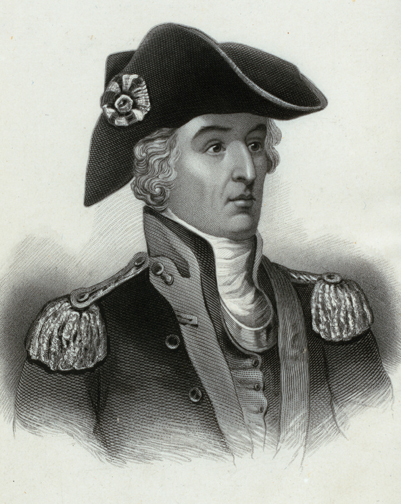
After the fall of Charlestown, South Carolina, to British forces in May 1780, Francis Marion’s regiment was destroyed, leaving him without a command. He had departed Charlestown to recuperate from an ankle injury sustained while at a party in March 1780, only months before the full capitulation of the city.[1] Once the British began moving further into South Carolina, Marion joined the re-formed Continental Army under Maj. Gen. Horatio Gates in North Carolina. Gates sent Marion to raise a militia and destroy boats along the Santee River to prevent a British escape to Charlestown in the event of a Patriot victory at Camden, South Carolina.[2]
Along the way, Marion was elected by the town of Williamsburg, South Carolina, to lead its militia. Marion was technically still a lieutenant colonel of the 2nd South Carolina, a Continental regiment, but this did not prevent the militia from falling under Marion’s command. This confusing rank structure often frustrated Marion, as he had no official authority over the militia; they could come and go as they chose.[3] Though Marion’s rank remained a nuisance, his militia was eager to serve under him and had tremendous confidence in his leadership and fighting abilities. Fifteen-year-old militia private Wiliam Dobein James wrote that upon seeing Marion for the first time, “his frame was capable of enduring fatigue and every privation necessary for a partisan. His wisdom and patriotism will become henceforth conspicuous. His character, so much venerated, even trifles become important.”[4] Most of Marion’s original militia were Scotch-Irish small farmers from the Pee Dee region whose culture centered on rejecting outside authority, making them a perfect fit to join Marion.[5]
A Stroke of Luck
The Battle of Camden on August 16 was a disaster for the American army, but Marion nonetheless proceeded with the mission that Gates had given him. After destroying boats along the Santee River, Marion and his militia moved upriver from Murrays Ferry to Nelson’s Ferry. On the night of August 24, Marion received a stroke of luck. A Loyalist deserter, an officer no less, informed Marion that a small British detachment was close to his location near Nelson’s Ferry.[6] Days before, Lt. Gen. Charles Cornwallis had decided to send American prisoners taken after the Battle of Camden to Charlestown due to overcrowding and sickness spreading in Camden.[7] The British detachment, along with the American prisoners, planned to use Nelson’s Ferry to cross the Santee River. Marion quickly realized the opportunity to surprise the British force and free the American prisoners.[8]

Marion marched with seventy militiamen to within six miles of Nelson’s Ferry at Great Savannah, the abandoned plantation home of Thomas Sumter.[9] Encamped on the plantation for the night were 150 Continental prisoners from the Maryland Continental Line.[10] Guarding them were thirty-eight men, two-thirds from the British 63rd Regiment of Foot and the Loyalist Prince of Wales Regiment, the rest Loyalist militia.[11] Cornwallis made clear in his correspondence that he saw no danger in sending the British detachment and American prisoners into the Santee Region, apparently expecting no enemy activity in the area.[12]
The Ambush
Marion biographer Mason Locke Weems wrote a vivid account of Marion’s ambush at Great Savannah. Weems wrote,
Just as the cock had winded his last horn for day we approached the house in perfect concealment, behind a string of fence, within a few yards of it. But in spite of all our address, we could not effect a complete surprisal of them. Their sentinels took the alarm, and firing their pieces, fled into the yard. Swift as lightning we entered with them, and seizing their muskets, which were all stacked near the gate, we made prisoners of the whole party, without having been obliged to kill more than three of them. Had Washington and his whole army been upon the survivors, they could hardly have roared out louder for quarter. After securing their arms, Marion called for their captain; but he was not to be found, high nor low, among the living or dead. However, after a hot search, he was found up the chimney! He begged very hard that we would not let his men know where he had concealed himself. Nothing could equal the mortification of the British, when they came to see what a handful of militia men had taken them, and recovered all their prisoners.[13]
Though entertaining, neither Weems nor his sources were present at the ambush, making his account fanciful. Nevertheless, there is no detailed, firsthand account of the ambush, leading earlier historians to accept Weems’s account. We do know that the British force present was utterly surprised by Marion’s men. In his report to Cornwallis, Maj. James Wemyss of the 63rd wrote,

I will not pretend to give my own opinion on the matter but I am afraid upon an examination things will not appear to be so right as could be wished. One thing is certain, that Captain Roberts’s party, the night that they were surprised, was not only without their accoutrements but without their coats. They were so completely surprised that about 100 infamous militia seized most of their arms without any opposition.[14]
Wemyss pinned the blame directly on the British detachment’s commanding officer, Capt. Jonathan Roberts, for allowing his men to be so ill-prepared and unable to defend themselves, accusing him of negligence. Wemyss suggested that there would be an inquiry into Roberts’ conduct, but there is no indication that he followed up on this.[15]
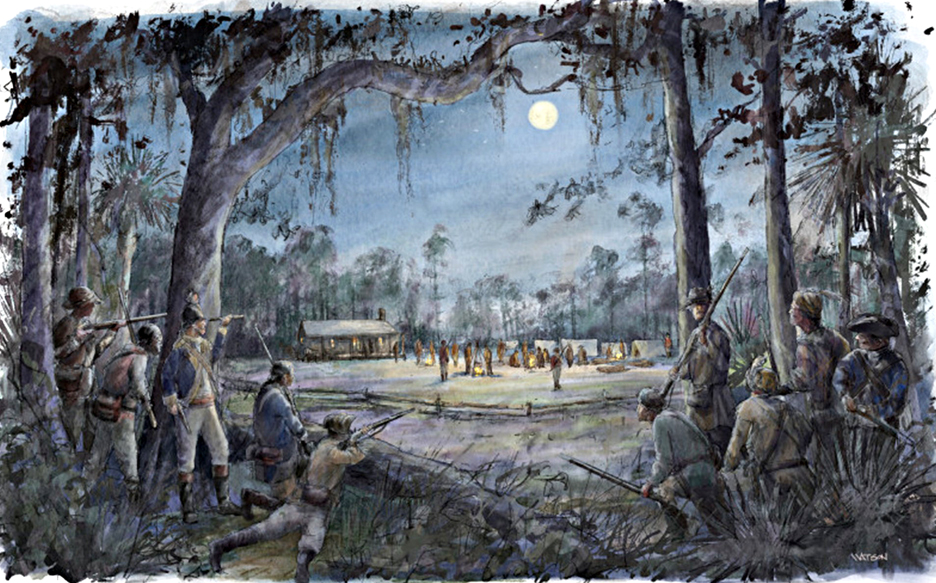
Marion’s ambush at Great Savannah killed two British soldiers and wounded five men.[16] Cornwallis listed the British captured at no more than twelve, as most of the British detachment made their escape from Marion’s ambush.[17] Marion reported that he captured two British officers, one a captain of the 63rd (presumably Roberts) and the other a lieutenant of the Prince of Wales. However, Marion’s claim is hard to reconcile because there is no evidence that Roberts himself or any provincial officer was captured by Marion.[18] If Roberts and the provincial officer were captured, they escaped or were released quickly, given that there is no mention of them as prisoners outside of Marion’s letter. Marion’s militia suffered two casualties, one man killed and one with a head wound.[19] That said, it is unclear whether any organized resistance occurred during the ambush. The sources suggest the British detachment was completely surprised by Marion’s attack, and lacked the ability to respond effectively. During the ambush, Marion accomplished his main goal of freeing the 150 prisoners from the Maryland Line on their way to further captivity at Charlestown.[20]
Aftermath
After the Continental prisoners were freed, they refused to cooperate with Marion. Marion wrote to Gates,
I should be glad to hear from you and what I shall do with the Continentals I retook. I could wish you could send some officers to take charge of them, as they are much dissatisfied to be commanded by any Officers of their own, and I am certain that they will desert, to a man, without it. Several have already gone off.[21]
Cornwallis was pleasantly surprised to hear that eighty-five Continentals refused to join Marion’s force and insisted on continuing the march to Charlestown.[22] Eventually, Marion decided to send the Continentals to Wilmington, North Carolina, as he “could not possibly keep them any longer.”[23] Whether it was due to low morale or battle fatigue, the Continentals had no wish to participate in Marion’s emerging guerrilla campaign.
Though the ambush at Great Savannah was small in scale, it was Marion’s first major guerrilla action of his famed exploits in the second half of 1780. The engagement set the tone for the future operations Marion conducted, which usually relied on surprise nighttime attacks like the one at Great Savannah. From Great Savannah, Marion built on his victory by severely damaging loyalist opposition in the region. Moving forward, Marion was able to carry out a largely successful guerrilla war due to isolated British posts that lacked the manpower to adequately enforce British control over the vast Carolina frontier.[24] Though Marion’s legend was yet to fully form, its roots took shape at Great Savannah.
[1] John Oller, The Swamp Fox: How Francis Marion Saved the American Revolution (Boston: Da Capo Press, 2016), 4.
[2] South Carolina American Revolution Sesquicentennial Commission, The Francis Marion Papers, Volume One, 1759–1780, ed. David Neilan, G. Richard “Rick” Wise, and Benjamin H. Rubin (South Carolina250, 2025), 200.
[3] Francis Marion to Horatio Gates, Francis Marion Papers, 201.
[4] William Dobein James, A Sketch of the Life of Brig. Gen. Francis Marion (Project Gutenberg, 2008), Ch. 2, www.gutenberg.org/files/923/923-h/923-h.htm.
[5] James, Francis Marion, Ch. 2; Oller, The Swamp Fox, 6.
[6] Charles Cornwallis to Henry Clinton, August 29, 1780, in Ian Saberton, ed. The Cornwallis Papers, Vol. 2: The Campaigns of 1780 and 1781 in the Southern Theatre of the American Revolutionary War (Uckfield, UK: Naval & Military Press, 2010), 2:37.
[7] Ibid., 2:41.
[8] Marion to Gates, August 29, 1780, Francis Marion Papers, 201.
[9] Marion to Peter Horry, August 27, 1780, Francis Marion Papers, 199.
[10] Cornwallis to George Germain, September 19, 1780, The Cornwallis Papers, 2:41.
[11] Cornwallis to Clinton, August 29, 1780, The Cornwallis Papers, 2:41.
[12] Ibid.
[13] M. L. Weems, The Life of General Francis Marion: A Celebrated Partisan Officer in the Revolutionary War Against the British and Tories in South Carolina and Georgia (Philadelphia: J.B. Lippincott, 1857), 117.
[14] Wemyss to Cornwallis, September 3, 1780, The Cornwallis Papers, 2:213.
[15] Ibid.
[16] Marion to Gates, August 29 1780, Francis Marion Papers, 201.
[17] Cornwallis to Clinton, August 29, 1780, The Cornwallis Papers, 2:42; Cornwallis to John Harris Cruger, August 27, 1780, The Cornwallis Papers, 2:172.
[18] None of Cornwallis’s correspondence with Wemyss or Lieutenant General Henry Clinton mentions Roberts’s capture.
[19] Marion to Gates, August 29 1780, Francis Marion Papers, 201.
[20] Marion to Gates, August 29, 1780, Francis Marion Papers, 201; Marion to Horry, August 27, 1780, Francis Marion Papers, 199.
[21] Marion to Gates, August 29 1780, Francis Marion Papers, 201.
[22] Cornwallis to Cruger, August 27, 1780, The Cornwallis Papers, 2:172.
[23] Marion Gates, September 15, 1780, Francis Marion Papers, 205.
[24] Cornwallis to Germain, September 19, 1780, The Cornwallis Papers, 2:36.

Recent Articles
Surprise Attack at Great Savannah
The New Dominion: Virginia’s Land in The Northwest
Lineage: Genealogy and the Power of Connection in Early America
Recent Comments
"Coup D’oeil: William Washington..."
Great article. I am reminded of a point only incidentally mentioned, the...
"Thomas and Peter Costner..."
Thanks for your wonderful article. As we study the Revolutionary War, we...
"The Revolutionary War Letter..."
Superb storytelling!