
In the dead of winter, the commandant of the Continental Army’s garrison on the Mohawk River received an unwelcome visitor. A batteau from downriver in the direction of Albany appeared at Fort Schuyler’s landing unannounced and set down a man named Grant Cottle and a shipment of one-hundred-and-eleven gallons of spirituous liquors.
In short order, Col. Samuel Elmore of Connecticut concluded the man’s presence represented an unacceptable threat to military discipline at his post and to diplomatic relations with the Oneida allies of the Six Nations of the Haudenosaunee in the vicinity. Such a quantity of liquor in the hands of an unscrupulous merchant, who carried no other wares, meant trouble. So-called dram sellers carried a reputation for sly dealings and evading rules designed to prevent drunkenness among indigenous people and the soldiery. Warnings from New Jersey Col. Elias Dayton, whom he had relieved at the post in October 1776, made Elmore especially wary. Accordingly, he refused to allow the man to set up shop and took steps to confiscate his inventory. The story of Grant Cottle’s vigorous objection to the commandant’s order provides a window into the management of spirituous liquors by senior officers of the Continental Army during the war.
Controlling consumption of spirits in the military was an ongoing issue in both major wars in America during the eighteenth century. Drunkenness and the resultant misbehavior led to disciplinary problems. At times, the upper command responded by punishing indiscriminate sutlers and limiting stores. For example, at Crown Point in 1760, during the French and Indian War, British Gen. Jeffery Amherst restricted the distribution of rum to daytime hours. Two sutlers who were found to have violated his orders were banished and their inventory destroyed. The general orders read: “A sutler of ye Rangers, and George Morris of the market who had their liquor stove this day to quit Crown point immediately. If they are hereafter found at any post between this and Albany, they will be whipped and drummed out.”[1] The following year, Amherst confiscated a store of rum from two sutlers at Fort Ticonderoga.
Then, in 1762, with the war mostly won, Amherst banned rum altogether at Crown Point. He wrote from New York to Connecticut’s Col. Nathan Whiting, who commanded the provincial army battalion that was on fatigue full-time building fortifications. “Rum is Expressly prohibited, as I am Determined to put a Total Stop to the Sale of that pernicious Liquor, wherever there are any Soldiers.”[2] Samuel Elmore, serving as a captain under Whiting, witnessed first-hand the ramifications of Amherst’s draconian order on troop morale in camp.[3] He no doubt recollected the episode when he assumed responsibility for regulating access to liquor at a frontier garrison in the Revolution.


When he first began his missionary work among the Oneida at their nearby castle in the summer of 1766 during the French and Indian War, Rev. Samuel Kirkland was disturbed by his congregants’ heavy consumption of rum, deeming both men and women as having a tendency to become drunk and either listless or belligerent. His proposed temperance program—complete abstinence—was consented to at a tribal meeting. It held up roughly three months and then was undone by eighty gallons of rum freely given by local traders, on the condition their customers abandon the temperance resolution.[4] Kirkland conceded defeat but continued his attempts to mitigate the deleterious effects of excessive rum consumption on the Oneida. In the Revolutionary War, he worked with traders and garrison commanders to release supplies gradually.
The difficulty liquor posed to the Continental Army appeared early on at the Siege of Boston. In August 1775, Gen. George Washington threatened severe punishment to “anyone so daring as to supply the Soldiers with immoderate Quantities of Rum, and other spiritous Liquors … without an order in writing from the Captain of the company to which such non-Commissioned Officer and Soldier belongs.”[5] On September 6, he again addressed the issue in general orders, this time threatening seizure of liquor for redistribution by the army:
Whereas a number of pretended Sutlers utterly disregarding the good of the service, sell Liquor to everyone indiscriminately, to the utter subversion of all order and good Government; the troops being continually debauched, which causes them to neglect their duty, and to be guilty of all those crimes which a vicious, ill habit naturally produces. The Delinquent to be punished with having their Effects applied for the relief of the Fatiguemen, and out Guards belonging to the brigade.[6]
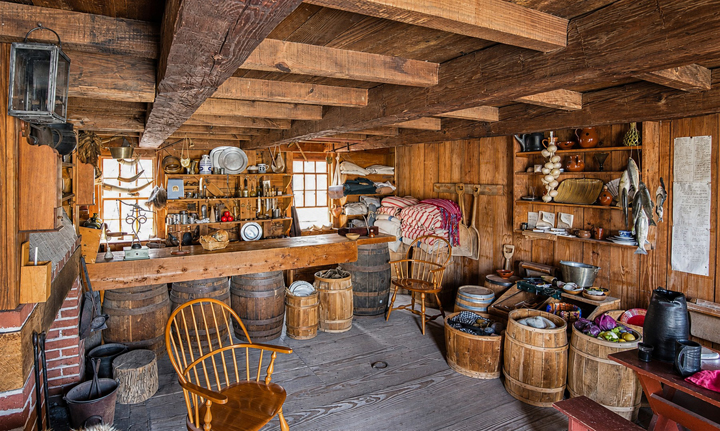
Despite these orders, a host of itinerant sutlers followed the battalions on their movements, providing a wide variety of goods to supplement the army’s government-issued “necessaries” and rations. These wares included everything from tobacco, sugar, rum, edge weapons, clothing, blankets and candles, to chocolate, molasses and foodstuffs. Per the Continental Army’s Articles of War, sutlers were given access to forts and camps at the sole discretion of the brigade’s commanding officer.[7] They were often provided quarters within the barracks of a post to conduct their business. At times, price controls were imposed to deter profiteering.

At the outset of hostilities, commander-in-chief Maj. Gen. Philip Schuyler of the Northern Department of the Continental Army faced a daunting challenge arranging logistical support for the 1775-1776 expedition to Canada. A wealthy merchant and accomplished master of logistics, he managed a vast network of suppliers, batteaux men, waggoneers, artisans and sutlers from his Albany headquarters. Operating in a commercial environment rife with dishonesty, underhanded business practices and individuals on the make served to make him jaded and wary.
Troubles on the Mohawk River arose when Schuyler invited all Six Nations of the Iroquois to a treaty originally scheduled for July 6, 1776 at German Flatts on the Mohawk River. His highest priority was to convince the Indians to remain neutral or better yet, side with the Americans. Sachems and warriors at the council eventually numbered about 1,200, but were very slow to gather. Schuyler waited impatiently on site as the start of formal sessions was repeatedly postponed. The delegates were still trickling in at month’s end.
Colonel Dayton’s 3rd New Jersey Regiment, called the New Jersey Greys, were posted at the Flatts and were building a picket fort, which became Fort Dayton. General Schuyler decided to put aside formal notification to the Indians of his intentions to rebuild and reoccupy Fort Stanwix at the Oneida Carry and sent Dayton’s regiment upstream to take possession. The fort’s location was considered strategically important as a defensible barrier against the threat of a British invasion from the northwest. A military coalition of British, Loyalists and four of the Iroquois Six Nations was massing in Canada. The coalition generated a constant flow of feints and false rumors of a surprise attack on the local white settlements and the Oneida’s castle to keep their enemy off balance. In case of a successful campaign, even Albany could be at risk.
While a restless commander-in-chief cooled his heels awaiting the arrival of the more distant delegates at the Flatts, there was plenty of time for entertainment, including athletic competitions between the individual Nations, idling and drinking. In accordance with traditional practice, Schuyler distributed trade goods as gifts to the delegates, including a quantity of rum. An overlay of additional liquor distributed by sutlers pushed conditions over the edge. The resulting outbreak of misbehavior eventually forced him to issue particular orders regarding liquor:

All sutlers in and about the German Flats are hereby strictly charged not to sell any liquor to any of the soldiers quartered in this place, not to any Indians attending the treaty, nor to any persons that will supply the soldiers or Indians with liquor. All sutlers and retailers of liquors are also forbid giving, carrying or sending any liquors to Fort Stanwix without the express leave of the commanding officer at Fort Stanwix.[8]
Thirty miles upriver, Dayton’s troops garrisoned the fort (renamed Fort Schuyler) until they were relieved by Colonel Elmore’s Connecticut Regiment in mid-October. A group of sutlers serviced the troops and sold their wares to local Indians as well as a community of camp followers, settlers and trappers. Goods were obtained at wholesale from as far away as New York City and transported to the frontier by waggoneers and bateaux men.
Some of the merchants were wily, adept at evading the rules, selling liquor to both enlisted men and the indigenous people. In September, Colonel Dayton banished a sutler named Armstrong who “had repeatedly disobeyed my orders by selling Rum to the Indians and my men. The Indians he has frequently made drunk and from one he took a gun for a gallon of Rum.”[9] One of Dayton’s lieutenants, Ebenezer Elmer, observed in his journal that “Rum is now selling at a Dollar a quart, and yet men will buy and drink, when they have money, even to drunkeness.”[10]
Dayton also confronted the very same man Colonel Elmore would encounter a couple of months later. “One Grant Cottel a Papist Sutler” was court-martialed “for sundry Crimes, who was immediately ordered from this place.” Cottle was charged with “defrauding Corporal Hood of 7 shillings & Disorderly behavior.” Per a witness, Hood paid a dollar for a pint of rum to share with a comrade and was due seven shillings change. “He was on guard and the drums beat. He chose to let it be till the next morning.” The following day, Cottle denied the existence of the debt and refused to pay.[11]
In a separate incident, a “riot” was broken up by two ensigns in which Cottle allegedly snapped a loaded pistol at a soldier and threatened to shoot him. The court found Cottle guilty of fraudulently retaining the seven shillings from Hood and ordered confinement until he made restitution. Further, he was fined one-sixth of a dollar for “profanely Swearing.” Lastly, he was found “Guilty of Disorderly behavior & insolent conduct to this Court, and are of the Opinion that the Said Cottle is a dangerous popish Person and do order that He be prevented selling any more Liquors & ordered to depart immediately from Fort Schuyler.”[12]
Samuel Elmore’s Connecticut Regiment relieved the 3rd New Jersey Regiment at Fort Schuyler and two other posts along the Mohawk River on October 17. A steady stream of enemy threats continued to emanate from the north over the ensuing winter. The fort’s roughly 220 soldiers constantly scouted northward to a twenty-five-mile distance, at times on snowshoes.[13]
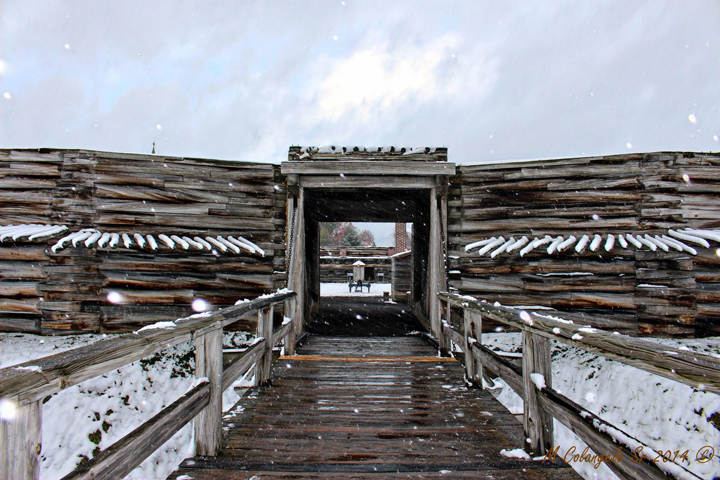
Protecting Albany’s western flank at the post in closest proximity to Canada, Elmore’s orders prioritized maintaining the allegiance of the Oneida as an absolutely vital element to the strategic interests of the American side. Under the influence of Reverend Kirkland, the Oneida welcomed the protective presence of the Connecticut battalion in the vicinity of their nearby castle and sent out their own scouting parties. At times, individual Indians were paid for intelligence. Kirkland himself had been singled out and threatened with kidnapping or murder by prominent Loyalist Guy Johnson.[14] At the request of his congregation and for his own safety, he mostly lodged at the fort. Beginning in February 1777, he led an extended tour of New England and New Jersey with a small delegation of Oneida leaders and appears not to have returned until early spring. During his absence, Colonel Elmore had to carry on without his services as an interpreter.[15]
In October 1776, Schuyler had instructed Dayton to leave the following message for his successor at the change of command:
Coll Dayton begs leave to recommend it to Coll Elmore by no means to Suffer the Indians to get too much rum at this place, for if they get drunk he will find them very troublesome nor Suffer them to run in & out of the fort as they please and also keep a watchful eye over the Tories & dram sellers here else they may do great mischief among the Indians and men.[16]
Colonel Elmore and his officers worked to maintain military discipline and morale under the tedium of garrison life and the necessity of remaining constantly vigilant in wintry weather. In their off-duty hours, the officers and enlistees enjoyed various entertainments and recreation, often accompanied by rum drinking. Traders were only too happy to accommodate them. Absent regimental orders to the contrary, the only constraints were availability and the limits of their customers’ disposable income. Privates in the Continental Army of 1776 received pay of six dollars a month.[17]
On occasion, Indians managed to drink excessively, despite the best efforts of the garrison command. One November night, it led to an important intelligence finding. During a celebration, an itinerant Indian visiting the post became drunk and passed out. An incriminating letter from Mohawk Chieftain Aaron Kanonraron in Canada was discovered in the courier’s clothing. It warned his brother David Kanonraron, then living in the lower Mohawk castle at Tiononderoge, against taking “an active part with the Bostonians while you live in the midst of them.” It went on to disclose the governor of British intentions to take Ticonderoga and Albany by marching from Quebec Province. Colonel Elmore sent Kirkland’s translation of the letter to General Schuyler by express. [18]
Undeterred by his previous banishment by Colonel Dayton, Grant Cottle thought to try his luck a couple of months later with the new commandant from Connecticut. He hired bateaux men to transport a shipment of liquor up the Mohawk River and appeared unannounced at the gates of Fort Schuyler. Much to his chagrin, the Yankee colonel refused him permission to sell any of his stock to the garrison or the local Oneida, and sent him away.
Afterward, Cottle made his way to Albany and registered a complaint with Philip Schuyler, who in turn requested an explanation as part of a letter of instructions to Elmore.
I enclose a paper delivered up by Grant Cottel – pray advise me minutely of every circumstance that Justice may be done – If the charge he makes that your officers sell Rum to their soldiers is just, their conduct is most scandalous – Inform me particularly on this head, for if it be true, as he alleges it is, such officers will certainly be dismissed from the service, if the Fact is proved.[19]
Schuyler’s threat to cashier Elmore’s officers can be construed as pro forma. Its placement at the end of a long letter ranks it as a low-priority item and implies a measure of skepticism of Cottle’s complaint. A guilty verdict would require irrefutable evidence of the officers selling liquor to their men. Barring personal grievances it was hard to imagine a group of soldiers testifying against their captains, under whom they had served for many months, in favor of an itinerant merchant-stranger of questionable character. And who would risk their commission for the sake of making a profit selling liquor to his men? Walker’s account apparently settled the matter. Any record of further action is not apparent in Schuyler’s papers. None of the officers were dismissed from the service.
Colonel Elmore’s Capt. Robert Walker provided the garrison’s version of the episode in an official reply to Schuyler.
John Cottle a Transient Person arrived on the Ground with a Quantity of Liquor to sell, he apply to Col. Elmore for Liberty to sell his Liquor. The Colo forbid him, being informed of said Cottle’s caracter heretofore. Considered him as a person inimical. The next morning he call upon the Col. Made the 2nd request for Liberty, the Col. then informed him that he should not sell any whatsoever.
Said Cottle then pretended he was persuaded to come up with his Liquors by some of the Officers & thought it very hard he would not be permitted to sell after all this trouble … The Col in answer said that, if the Officers wanted for their own stores he might have Liberty to supply them & ordered him to call within a half an hour from that time & he should have an answer. Also ordered him to not send off his Battoes till he has received the answer. He returned about an hour after for his answer.
The Colonel Informed him that the Officers had concluded not to purchase any of his Liquors; as they imagined he came with a view to insult authority & impose upon the Garrison by his former conduct & the Extravagant Prices upon his Articles: 40 s/ per Gallon Rum & Geneva. Upon this information he apply’d that it was beyond his Power to go off, for the battoes were gone and left his Liquors, by which it appeared he meant to act in contempt of Authorship.[20]
While he was making repeated attempts to negotiate with the colonel, Captain Walker wrote:
Cottle’s Pretended wife had been Retailing the Liquor to the Soldiers knowing it to be contrary to the commanding officer’s orders. The Col’l perceiving his Designs ordered him confined for disobedience of orders and his Liquors put into the Public Stores.[21]
A court of inquiry convened under the senior captain, Theodore Woodbridge, found Cottle guilty and appointed three officers to appraise the liquors. After deliberations, the court recommended confiscation of Cottle’s entire inventory of twenty-five-and-a-half gallons of spirits (rum) and eighty-five-and-a-half gallons of Geneva (gin). The fair market value was set at £28.1 for the rum and £76.19 for the Geneva, including transportation costs. A fine of £13.6.10 was assessed for disobedience of orders. Cottle was paid £91, for which he gave a receipt, and was sent on his way.
Walker’s letter to General Schuyler concluded by stating that Colonel Dayton had confiscated Cottle’s entire inventory in October without recompense. If true, by paying for the inventory, Elmore was going out of his way to be lenient.
Col’l Elmore being informed that the s’d Cottle by his Bad Conduct while Col’l Dayton Resided here was ordered off the Ground & his Liquor taken from him for the Bad use he made of the Same. [22]
Due to the British embargo, distillers in New York and elsewhere began to produce rum, Geneva and other liquors locally in the early days of the war. The source of Cottle’s supply is unknown; New York distiller Richard Deane advertised Gin and Brandy at four shillings per gallon. He claimed to be the first distiller in America, and promised not to be undersold.[23] If Cottle had bought the stock in New York at wholesale from Richard Deane or someone like him at four shillings per gallon and succeeded selling it at forty shillings per gallon, he would have realized something on the order of £200 above the purchase price, before transportation and other expenses.
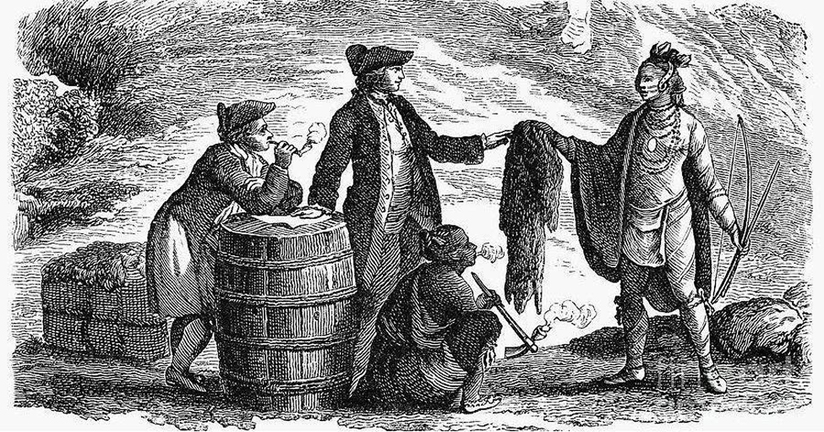
Cottle’s pricing at forty shillings per gallon was deemed “extravagant” by the court of inquiry. However, liquor was already expensive and much in demand at Fort Schuyler before Colonel Elmore’s arrival. In September 1776, New Jersey Lieutenant Elmer reported that rum at Fort Schuyler was selling for one dollar a quart, or four dollars a gallon. At the New York rating of eight shillings to the Spanish dollar, this was equivalent to about thirty-two shillings New York currency per gallon. Four months later, Cottle’s stock was reportedly priced at forty shillings per gallon, a 25 percent increase.
The appraised values arrived at by the court-of-inquiry work out to twenty-two shillings per gallon of rum and eighteen shillings per gallon of Geneva. The regiment’s commissary and two experienced officers would have had a practical understanding of the market for spirits. And the officers had another reason to assign realistic values to Cottle’s confiscated stock. They deliberated knowing that its valuation would likely be reviewed by General Schuyler, himself an experienced Albany merchant thoroughly familiar with the prevailing prices of spirits.
As to the Oneida, they were very pleased when a dedicated trading post for them opened inside the fort that December. Schuyler dispatched a trusted sutler carrying gifts, including rum, as well as trade goods and a welcome supply of blankets at below market pricing. When present, Samuel Kirkland worked with the sutler to release the rum gradually. At the request of the sachems, Colonel Elmore supplied a quantity of ammunition for the hunting season. Most importantly, despite intense pressure from their Iroquois brethren, the Oneida remained steadfast allies throughout the war, notably fighting alongside the Americans at the Battle of Oriskany the following summer.
Col. Samuel Elmore’s handling of a deceitful dram seller did not exceed his authority or set a policy precedent for the service. It conformed to General Washington’s authorization for seizure of liquor in general orders issued at Cambridge in 1775. And it anticipated future army-wide regulations later issued at Valley Forge in 1778. Price controls, a limit of one sutler per brigade, expulsion of violators and seizure of inventories from sutlers without payment were all authorized in the new policy.[24]
As for the “person inimical,” Grant Cottle, a man of the same name leased two lots at 290 Broadway in New York City beginning in 1794. He listed his occupation as an upholsterer and paper stainer.[25] In October 1800, he was indicted for attempted rape; the victim, his daughter Maria Cottle. There was no proceeding. He was listed as “absconding from justice” in the October 15 issue of New York’s Mercantile Advertiser.[26]
[1] Orderly Book and Journal of Major John Hawks on the Ticonderoga-Crown Point Campaign, Under General Jeffery Amherst, 1759-1760 (H.K. Brewer & Co. 1911), 81.
[2] Jefferey Amherst to Nathan Whiting, New York, July 4, 1762, Nathan Whiting Papers (MS 552). Manuscripts and Archives, Yale University Library. (transcript).
[3] Jefferey Amherst to Nathan Whiting, July 25, 1762. George Ellis Baker Autograph Collection, Mss:999 1709-1886, B167, Box 1 Folder 6. Baker Library Special Collections and Archives, Harvard Business School, nrs.harvard.edu/URN-3:HBS.BAKER.GEN:41541549-2019:VIEW?page=480023135. Carlos A. Bates, Rolls of Connecticut Men in the French and Indian war, 1755-1762 (Connecticut Historical Society, 190), 2:335.
[4] Herbert John Lennox, Samuel Kirkland’s Mission to the Iroquois (Department of Church History, The University of Chicago, 1935), 4.
[5] General orders, July 11, 1775, Founders Online, National Archives. founders.archives.gov/documents/Washington/03-01-02-0055. Washington’s order responded to a recommendation from the Massachusetts Provincial Congress that he “suppress retailers of Spirituous liquors within and near the camps.”
[6] General orders, September 6, 1775, Founders Online, National Archives. founders.archives.gov/documents/Washington/03-01-02-0310.
[7] Lennox, Samuel Kirkland’s Mission to the Iroquois, 4; Articles LXIV, LXV, LXVI, Journals of the Continental Congress, 1774–1789, ed. Worthington Chauncey Ford, vol. 2, May 1775 to September 1775 (Government Printing Office, 1909), 111-123.
[8] Ebeneezer Elmer, “Journal of Lieutenant Ebeneezer Elmer of the Third Regiment of New Jersey Troops in The Continental Service,” Proceedings of the New Jersey Historical Association (New Jersey Historical Association, 1847), 2:146.
[9] Elias Dayton to Philip Schuyler, September 28, 1776, Fold3.com, Image #342620.
[10] Elmer, “Journal of Lieutenant Ebeneezer Elmer,” 3:25.
11 “Pay of a Battalion in Continental Service,” Hartford Courant, August 26, 1776.
[11] “Some Unpublished Revolutionary War Transcripts, XXV Proceedings of A Court Martial,” Proceedings of the New Jersey Historical Society, vol. 13 (1846), 149-150.
[12] “Some Unpublished Revolutionary War Transcripts,” 149-150.
[13] In January, Philip Schuyler ordered fifty pair of snowshoes to be made. Philip Schuyler to Samuel Elmore, January 5, 1777, Philip Schuyler Letterbook of General Orders, New York Public Library Online Collections, 4:350, 1418.
[14] Samuel Kirkland list payments to Indians for intelligence in a travel expense report. Manuscripts and Archives Division, The New York Public Library. Philip Schuyler Papers “1765, 1775-1776.” New York Public Library Digital Collections, 62-64, digitalcollections.nypl.org/items/287188d0-3735-0134-8b26-00505686d14e. Barbara Graymont, The Iroquois in the American Revolution (Syracuse University Press, 1972), 70. Loyalist Guy Johnson, a nephew of Sir William Johnson, was a leader with the coalition forces based in Canada.
[15] Manuscripts and Archives Division, The New York Public Library. Philip Schuyler Papers “1765, 1775-1776.” New York Public Library Digital Collections, 62-64, digitalcollections.nypl.org/items/287188d0-3735-0134-8b26-00505686d14e. An orderly book for this period has not been identified. James Dean, Kirklan’s fellow missionary may have been present at times to serve as an interpreter.
[16] Coll Dayton to Coll Elmore, Fort Stanwix, September 7, 1776, Peter J. Gansevoort, Jr. Military Papers, New York Public Library; Also quoted in David A. Ranzan and Matthew J. Hollis, ed., Hero of Fort Schuyler, Selected Correspondence of Brigadier General Peter Gansevoort, Jr. (McFarland & Company, Inc., 2014), 22.
[17] “Pay of a Battalion in Continental Service,” Hartford Courant, August 26, 1776.
[18] Samuel Elmore to Philip Schuyler, note on verso of Samuel Kirkland’s translation of Aaron Kanonraron to David Kanonraron, November 11, 1776, Butler-Gunsaulus Collection, Box 2, Folder 72, Hanna Holborn Gray Special Collections Research Center, University of Chicago Library, www.lib.uchicago.edu/e/scrc/findingaids/view.php?Q=BUTLER&eadid=ICU.SPCL.BUTLERGUNSAULUS&utm.
[19] Schuyler to Elmore, January 5, 1777, Philip Schuyler Letterbook of General Orders, New York Public Library Online Collections, vol. 4 350, 1418. For the relevant regulations see “Journals of the Continental Congress – Articles of War, June 30, 1775”, The Avalon Law Project, Lillian Goldman Law Library, Yale Law School, Articles LXIV, LXV, LXVI, avalon.law.yale.edu/18th_century/contcong_06-30-75.asp.
[20] Robert Walker to Schuyler, January 18, 1777, Philip Schuyler Papers, New York Public Library Digital Collections, Letters Received, Box 10 Folio13, .digitalcollections.nypl.org/items/07d288c0-632f-0134-620b-00505686a51c.
[21] Walker to Schuyler, January 18, 1777.
[22] Walker to Schuyler, January 18, 1777.
[23] “A New Advertisement by Richard Deane, Distiller,” Rivington’s New-York Gazetteer, April 13, 1775.
[24] General orders, April 16, 1778, Founders Online, National Archives, founders.archives.gov/documents/Washington/03-14-02-0483.
[25] Charles D. Cheek, Ph.D. and Daniel E. Roberts, RPA, The Archaeology of 290 Broadway, The Secular Use of Manhattan’s African Burial Ground (Jacobs Edwards and Kelcey and U.S. General Services Administration, 2009), 47.
[26] “The People v Grant Cottle, 9 Oct. 1800,” Court of General & Quarter Sessions of the Peace (New York City & County) Minute Books, 1684-1839, New York County Clerk, Department of Old Records. Cited by John Wood Sweet, “Sexual Assault Prosecutions, New York City, 1734-1820,” Accused id. #33, www.johnwoodsweet.com.

Recent Articles
Last Call for a Dram Seller on the Mohawk River
Payback: Attack on the DeLancey House
A Dear-Bought Victory: The Battle of Bunker Hill and the Siege of Boston, 1775-1776
Recent Comments
"Payback: Attack on the..."
Fascinating account and detailed illustration of how much the AWI also was...
"Shenandoah Martyr: Richard Campbell..."
My ancestry points to this being my grandfather on my mother’s paternal...
"Payback: Attack on the..."
Yes, indeed, a great read as previously commented. And a great fascination...